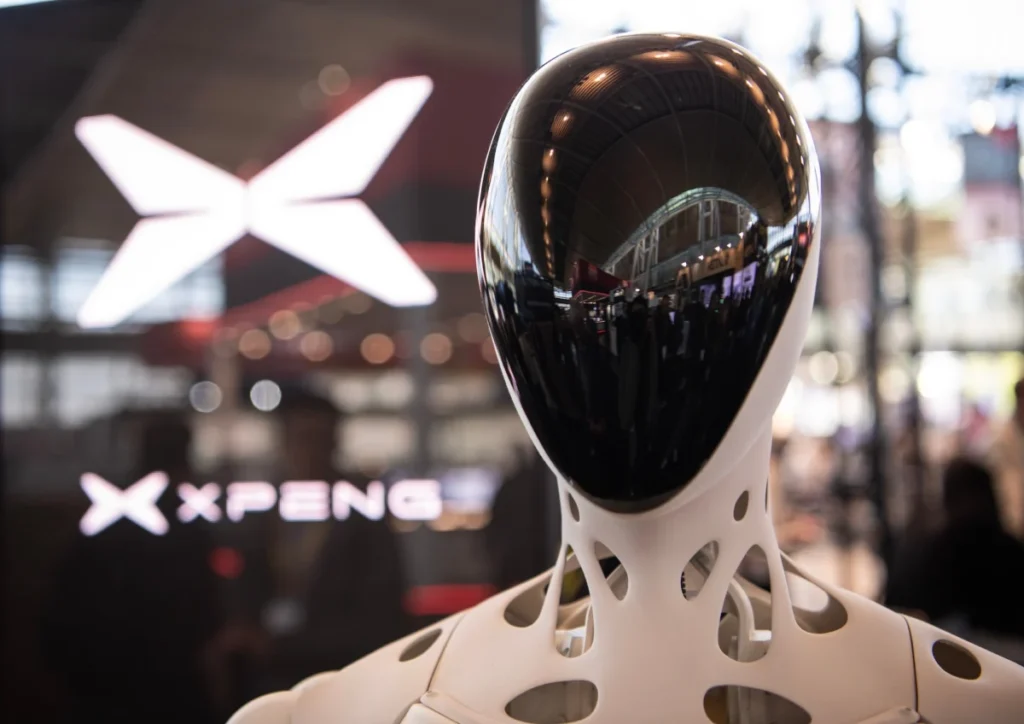
The vision of a mechanical workforce moving seamlessly through human spaces has long been the domain of science fiction, sustained by viral videos of backflipping robots and the relentless promotional machine behind Tesla’s Optimus. However, the narrative has shifted from spectacle to strategy. We are witnessing a fundamental convergence of two disparate industrial worlds: the high-volume manufacturing prowess of global automotive giants and the rapid, transformative evolution of "Embodied AI"—the integration of Large Language Model (LLM) intelligence into physical, humanoid forms.
As traditional automotive profit margins face the dual pressures of market saturation and the transition to electric powertrains, major manufacturers are pivoting. They are no longer just building cars; they are building the brain and body of the next industrial revolution.
The New Industrial Gold Rush: Chinese Automakers Lead the Charge
While Tesla initially captured the public imagination, a massive wave of capital and innovation is surging out of China. Chinese automakers, already masters of scaling complex hardware, have identified humanoid robotics as the most logical extension of their existing supply chains and expertise.
Leading this charge is Xpeng’s robotics unit, which recently secured a landmark $900 million in private funding, propelling its post-money valuation to over $6.3 billion. The round, backed by heavyweights including IDG Capital, Tencent, and Alibaba, represents the largest single-round private financing in China’s burgeoning embodied AI sector.
This is not an isolated phenomenon. The ecosystem is rapidly densifying:
- AiMOGA: The robotics arm of Chery Automobile is reportedly preparing for an initial public offering (IPO) with an eye toward international markets by 2026.
- BYD: The electric vehicle giant has unveiled "Xiao Di," its entry into the humanoid space.
- Sector-wide Adoption: Companies including Changan, GAC, Li Auto, SAIC, and Seres are all deep in the R&D phases of humanoid robotics, signaling a systemic shift across the Chinese automotive landscape.
Michael Dunne, CEO of the advisory firm Dunne Insights, notes that among these, Xpeng stands out for its aggressive alignment with the Tesla model of autonomy. "It’s the most focused on autonomy, and it’s the first to commit in a big way to humanoid robots," Dunne explains. According to him, the impetus is simple: with car profits narrowing, executives are looking for the next high-margin frontier. The conviction is so strong that Xpeng founder He Xiaopeng and co-president Brian Gu have personally invested $100 million into the company’s robotics unit—a rare "skin in the game" move that underscores their long-term belief in the platform.
A Chronology of the Humanoid Surge
The current momentum is the result of years of incremental technological breakthroughs.
- Pre-2020: The Era of Specialization: Robotics was dominated by academic research and specialized industrial machines. Boston Dynamics set the pace for mobility, while AI was largely confined to software silos.
- 2021–2023: The LLM Catalyst: The explosion of generative AI and Large Language Models provided the "missing link." Researchers realized that the same transformers powering chatbots could be used to translate human intent into physical motor commands, allowing robots to learn tasks without being explicitly programmed for every movement.
- 2024–2025: The Corporate Pivot: Automakers began recognizing that their factory floors—full of complex logistics and repetitive assembly tasks—were the perfect "gyms" for training humanoid AI.
- 2026: Commercialization Focus: The focus has shifted toward manufacturing and scalability. Startups like Figure, Apptronik, and Agility Robotics are now racing to move from prototypes to factory-floor deployment.
Supporting Data and the Manufacturing Edge
The competitive advantage held by automakers is grounded in one word: infrastructure. While tech-first startups struggle to build the physical hardware, automakers already possess the manufacturing, mechanical engineering, and supply chain logistics to produce thousands of units.
"They have all the hardware to get the job done," says Dunne. "The question is if they can catch Tesla on the AI side of the equation."
The stakes are high. The industry is currently divided between two philosophies: the "General Purpose" approach (robots like Optimus or Xpeng’s Iron, designed to perform a wide variety of tasks) and the "Specialized Purpose" approach (like Rivian’s Mind Robotics spinout, which focuses on specific industrial utilities).
Data from the market suggests that the total addressable market for embodied AI could reach trillions of dollars if these machines can achieve the "Goldilocks" state: high dexterity, low latency, and a price point that makes them cheaper than human labor.
Global Responses: Hyundai and the "Robot Metaplant"
The race is not confined to China or the United States. Hyundai, through its subsidiary Boston Dynamics, is pioneering a model for real-world integration. Rather than treating robotics as a side project, Hyundai is embedding it into its core production strategy.
The company is currently preparing to deploy the next-generation Atlas robot into its Georgia factory later this year. By 2028, the goal is to have these robots integrated into critical tasks like parts sequencing. Perhaps most significantly, Hyundai is opening a "Robot Metaplant Application Center" in the U.S. This facility serves as a digital twin-style training ground where robots learn the nuances of human movement—lifts, turns, and adjustments—in a controlled environment that mimics the chaotic reality of a factory floor. Their partnership with Google’s DeepMind serves as the "brain transplant" necessary to ensure these robots can interpret complex, unstructured instructions.
Other players are betting on acquisitions to bridge the gap. Mobileye’s $900 million acquisition of Mentee Robotics earlier this year demonstrates that even companies focused on automotive vision software view humanoid robotics as the natural evolution of their proprietary technology.
Implications: The Future of Labor and Economics
The implications of this movement are profound and multifaceted:
1. The Death of the "Fixed" Factory
The traditional assembly line is static, rigid, and expensive to reconfigure. A humanoid-ready factory is fluid. If a model change occurs, the robots don’t need to be replaced; they simply need to be "re-trained" via software updates. This could lead to a massive reduction in capital expenditure (CAPEX) for automakers.
2. The AI Talent War
The competition is no longer just about engineers who understand suspension systems or battery chemistry; it is about hiring the world’s top machine learning and reinforcement learning specialists. The company that wins the humanoid race will likely be the one that best integrates proprietary data from their own factories into their AI models.
3. Economic Disruption
If successful, the widespread deployment of humanoid robots will inevitably trigger debates regarding labor displacement. Automakers argue that robots will take on "dull, dirty, and dangerous" tasks, but the shift will fundamentally alter the nature of manufacturing employment.
4. Regulatory and Safety Hurdles
As robots move from cages to collaborative workspaces, the legal frameworks governing AI safety will be tested. Who is responsible when a humanoid robot makes a physical error? The software provider? The manufacturer? Or the fleet operator? These questions remain largely unanswered.
Conclusion
The "hype" phase of humanoid robotics has officially ended, replaced by a cold, hard, and extremely well-funded race for commercial viability. The entrance of Chinese automakers like Xpeng, combined with the established efforts of companies like Hyundai and the persistent innovation of startups like Figure and Agility, indicates that we are on the precipice of a new era.
Whether these machines will truly revolutionize the factory floor or remain expensive experiments remains to be seen. However, one thing is certain: the world’s largest automakers have placed their bets. They believe that the future of mobility isn’t just about the vehicles we drive—it’s about the machines that build them. The coming years will reveal which companies can successfully marry the physical precision of automotive manufacturing with the fluid intelligence of the modern AI era.