By Dani James | Retail Dive | Published August 27, 2026
Build-A-Bear Workshop, the long-standing icon of experiential retail, is navigating a challenging mid-year transition as it contends with shifting consumer preferences and the volatility of wholesale distribution. In its latest quarterly earnings report released on Wednesday, the company disclosed a performance that fell short of internal expectations, largely driven by a miscalculation in its seasonal merchandising strategy and delays in its broader wholesale expansion efforts.
While the retailer has long been a master of the "in-store experience," the recent results highlight the increasing difficulty of balancing core customization pillars with the rapid innovation cycles demanded by modern consumers.
Main Facts: The Q2 Earnings Reality
For the second quarter of fiscal 2026, Build-A-Bear reported results that highlighted a divergence from the company’s growth trajectory. Executives, led by CEO Chris Hurt, acknowledged that while a difficult first half of the year had been anticipated, the severity of the Q2 performance was an unwelcome surprise.
The primary friction point for the quarter was a "summer trend" merchandise collection that failed to gain traction among its core demographic. This failure was particularly poignant given that the summer of 2025 had served as a high-water mark for the brand, creating an exceptionally difficult year-over-year comparison.
Financially, the company’s commercial and international franchise revenues took a notable hit, totaling $8.8 million—a 9% decline compared to the same period in the previous year. Despite these headwinds, the company maintained a footprint of 674 global locations, balancing the opening of five corporate-owned and six franchise stores against the closure of four partner-operated units.
Chronology: A Summer of Missteps
To understand the current impasse, one must look back to the high-performing summer of 2025. Last year, Build-A-Bear benefited from a series of successful product launches that resonated deeply with its audience, reinforcing the brand’s relevance in an increasingly digital toy market.
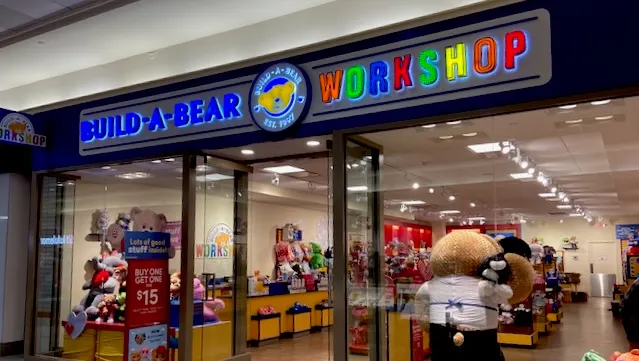
Early 2026: Build-A-Bear leadership entered the fiscal year with a cautious outlook, anticipating that the record-breaking comps from the prior year’s summer season would be difficult to replicate.
Q2 2026 (April–June): The company rolled out its highly anticipated summer trend merchandise. Designed to push the boundaries of the brand’s traditional offerings, the collection sought to introduce new styles and themes to keep the store experience fresh. However, by mid-June, internal data began to show that the product was not moving as expected.
Late July 2026: As the quarter closed, the realization set in that the "innovation" attempted in the summer line had backfired. Instead of delighting customers, the products were viewed as disconnected from the core Build-A-Bear value proposition.
August 2026: The company formally addressed the shortfall during its earnings call, pivoting its strategy to address the "product-market fit" issues that plagued the last three months.
Supporting Data: Where the Strategy Broke Down
The failure of the summer collection was not merely a matter of bad luck; it was a fundamental breakdown in product design philosophy. Build-A-Bear’s business model is predicated on the "customization experience"—the ability for a child to pick, stuff, dress, and name their furry friend.
According to CEO Chris Hurt, the summer line suffered from a lack of "dressability." By attempting to push for high-concept, trend-driven merchandise, the company inadvertently sacrificed the very interactivity that draws customers to its workshops. "The reality is, we pushed it too far," Hurt admitted. "That product did not resonate as well with our consumers. It wasn’t as dressable. It didn’t go through the full customization experience, and as a result, we saw weaker results from that product line."
Furthermore, the wholesale channel—a critical pillar for the company’s long-term growth strategy—hit a wall. The company was unable to replicate a previously successful multimillion-dollar program with Walmart. While the Walmart initiative had proven that Build-A-Bear’s non-licensed, branded products could move volume in a big-box setting, the inability to repeat that specific win, combined with slower-than-anticipated progress in other retail partnerships, significantly dampened the quarterly revenue profile.

Official Responses and Strategic Shifts
During the analyst call, the tone from Build-A-Bear leadership was one of candid assessment. CEO Chris Hurt emphasized that the brand remains fundamentally strong, even if the execution in the last quarter left room for improvement.
"Summer is when we traditionally push that innovation," Hurt noted. "The failure here wasn’t a rejection of the brand, but a rejection of a specific product direction that didn’t allow for the level of engagement our customers have come to expect."
Regarding the wholesale segment, the company remains bullish despite the current setbacks. Hurt pointed out that the data from the Walmart experiment remains a success story in terms of brand reach. The company is currently re-evaluating its wholesale pipeline to ensure that future partners and product distributions align better with the brand’s core identity.
The company also highlighted its commitment to store-led growth. By adding five global experience locations and six franchise locations, Build-A-Bear is signaling that its physical footprint remains the bedrock of its business. The net decline of four partner-operated locations is being framed as part of a portfolio optimization strategy, rather than a retreat from the market.
Implications: What This Means for the Future of Experiential Retail
The struggles faced by Build-A-Bear this quarter offer a broader lesson for the retail sector at large: the danger of over-innovation in legacy brands.
1. The "Customization Trap"
Build-A-Bear operates in a unique niche where the process is as valuable as the product. By prioritizing "trend" over "customization," the brand alienated its customer base. For other retailers, the lesson is clear: do not iterate away from your core value proposition in the name of chasing transient trends.
2. Wholesale Volatility
The company’s experience with its wholesale channel highlights the difficulty of scaling an "experience-based" brand into a "product-based" distribution model. Relying on large-scale third-party partnerships requires a consistent supply chain and a product that can stand alone on a shelf without the benefit of a store-based "heart ceremony" or expert staff guidance.

3. The Need for Agility
The fact that Build-A-Bear identified the issue, articulated it clearly to investors, and is already pivoting for the next season is a testament to its operational maturity. The market will now be watching to see if the company’s Q3 and Q4 results can recover the ground lost during the summer.
4. Market Resilience
Despite the 9% drop in commercial and international franchise revenue, Build-A-Bear’s global footprint of 674 stores remains significant. The company has a massive captive audience. If it can return to its core competencies—high-engagement, highly-customizable plush toys—it is well-positioned to bounce back.
Conclusion
As Build-A-Bear moves into the final half of 2026, the focus will shift from experimental product lines back to the fundamentals. The company has demonstrated that it is capable of reaching consumers beyond its traditional channels, but it has also learned that its brand equity is tethered to the quality of the interaction provided.
The coming months will be a test of whether the company can refine its wholesale strategy and restore the "magic" of its in-store experience, proving that even after decades of operation, a retail giant can still stumble—and more importantly, recover. Investors and consumers alike will be watching to see if the upcoming holiday season brings a return to the playful, customizable innovation that made Build-A-Bear a household name.