Beneath the tranquil waves of the East China Sea, south of Japan’s Kyushu island, lies a geological titan. The Kikai caldera, a volcanic system responsible for one of the most cataclysmic eruptions in human history, is showing signs of renewed life. A groundbreaking study led by geophysicists at Kobe University has revealed that the colossal reservoir of magma that once leveled entire landscapes is not merely a relic of the past; it is actively refilling.
This discovery, published in the journal Communications Earth & Environment, offers a rare, high-resolution glimpse into the life cycle of Earth’s most dangerous volcanoes. By utilizing advanced seismic imaging, researchers have confirmed that fresh, molten material is currently infiltrating the subterranean chambers beneath Kikai. While this does not signal an imminent eruption, it provides a vital case study for understanding how “super-volcanoes”—such as Yellowstone in the United States and Toba in Indonesia—recharge their lethal potential.
Chronology of a Catastrophe and its Aftermath
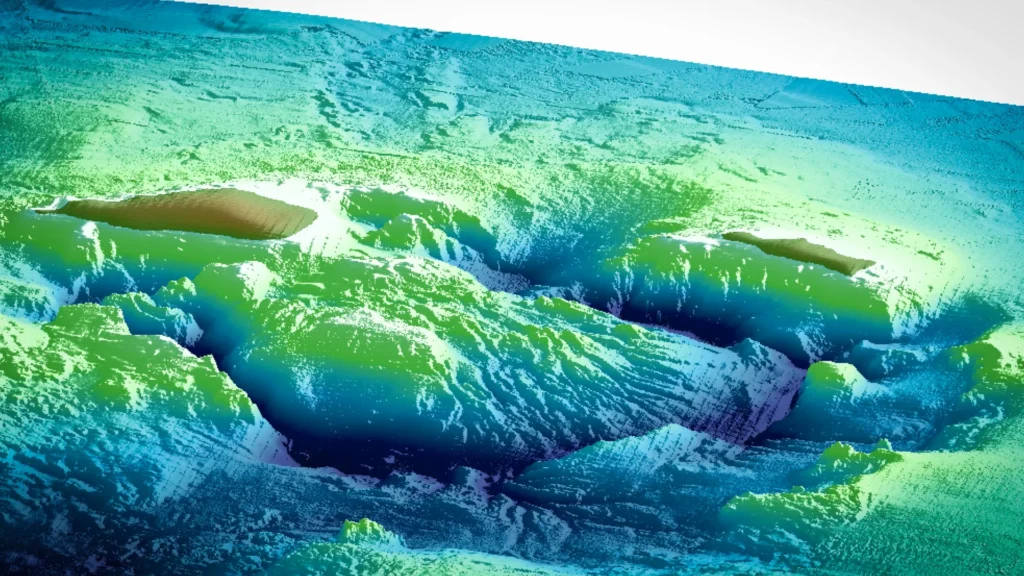
To understand the gravity of the current findings, one must look back to the Holocene epoch. Approximately 7,300 years ago, Kikai unleashed an eruption of such staggering magnitude that it remains the largest of the current geological period. This event was a “caldera-forming” eruption—a phenomenon so violent that it expelled a volume of magma so immense that the ground above the reservoir collapsed into the vacated space, creating the broad, submerged depression that characterizes the caldera today.
The scale of this event defies human comprehension. The volume of material ejected during the Kikai event would be sufficient to bury New York City’s Central Park under a layer of rock and ash 12 kilometers deep. In the millennia following this disaster, the site transitioned into a phase of relative quiescence, yet it never truly went dormant.
The modern chronology of Kikai’s recovery began roughly 3,900 years ago, when a lava dome began to form near the center of the caldera. Unlike the explosive nature of the ancient eruption, this lava dome development was a sign of a more measured, viscous ascent of magma. By tracking the chemistry of this lava, scientists have determined that the material is distinct from the remnants of the prehistoric explosion. This confirms that the caldera is not simply “leaking” old magma, but is actively being replenished by new, fresh injections from deep within the Earth’s crust.
Mapping the Abyss: Listening to Seismic Waves
The primary challenge in studying volcanoes like Kikai has always been their geography. Because the majority of the caldera is submerged beneath the ocean, traditional monitoring techniques are often limited. However, for the Kobe University research team, this proved to be a distinct advantage.
“The underwater location allows us to implement systematic, large-scale surveys,” explains Kobe University geophysicist Nobukazu Seama. By collaborating with the Japan Agency for Marine-Earth Science and Technology (JAMSTEC), the team orchestrated an ambitious geophysical campaign.
The methodology relied on seismic tomography—the volcanic equivalent of a CT scan. The researchers deployed an array of airguns from a survey vessel, which emitted controlled seismic pulses that penetrated the seafloor. Simultaneously, a grid of seismometers was anchored to the ocean floor to record the echoes of these pulses as they traveled through the crust.
Because seismic waves behave differently depending on the density and state of the material they encounter—slowing down significantly when passing through molten or partially molten rock—the team was able to map the subsurface structure with unprecedented clarity. The resulting images revealed a substantial, magma-rich reservoir directly beneath the caldera’s epicenter, perfectly aligned with the location of the ancient eruption.
Supporting Data: The Anatomy of a Reservoir
The findings indicate that the current reservoir is not a new feature, but a continuation of the plumbing system that fed the 7,300-year-old cataclysm. “Due to its extent and location, it is clear that this is in fact the same magma reservoir as in the previous eruption,” Seama noted.
However, the composition of the magma tells a more complex story. Geochemical analysis of the lava dome samples reveals a chemical signature that differs significantly from the ancient eruptive deposits. This leads to a critical conclusion: the system is being "recharged."
The data suggests a cyclical model of caldera evolution. After a massive eruption empties the chamber, the system enters a dormant phase. Over time, fresh, mantle-derived magma begins to intrude into the cool, crystal-rich remains of the previous cycle. This process, known as “re-injection,” is the engine of volcanic recovery. As this fresh, buoyant material accumulates, it creates the heat and pressure necessary to push magma toward the surface, as evidenced by the slow, continuous growth of the current lava dome.
Official Responses and Scientific Context
The research was supported by the Ministry of Education, Culture, Sports, Science and Technology (MEXT) through the Third Earthquake and Volcano Hazards Observation and Research Program. This funding reflects the Japanese government’s ongoing commitment to mitigating volcanic risk in a nation situated on the volatile “Ring of Fire.”
The scientific community has lauded the study for its methodological rigor. By successfully bridging the gap between offshore marine exploration and terrestrial volcanology, the Kobe University team has provided a blueprint for how to monitor other, similarly situated volcanic systems worldwide.
While the study is a triumph of geophysical imaging, researchers are careful to manage public expectations. The presence of a magma reservoir does not equate to an impending disaster. Volcanic systems operate on geological timescales, often spanning thousands of years between major events. The current activity at Kikai is characterized by the steady, slow-growth behavior of the lava dome rather than the rapid pressure buildup that precedes an explosive eruption.
Implications for Global Volcanic Risk
The most significant implication of this study lies in its applicability to other “super-volcanoes.” Giant caldera systems, including Yellowstone and Toba, have long been a source of anxiety for geologists and policymakers alike. The uncertainty surrounding how these systems accumulate such vast quantities of magma has historically made them difficult to forecast.
The Kikai model—a system that undergoes a catastrophic eruption, enters a long period of quiescence, and then begins to rebuild through steady magma re-injection—provides a unified framework for understanding these monsters. If the magma re-injection model is indeed universal, it suggests that scientists can use similar seismic imaging techniques to monitor the “health” of reservoirs beneath Yellowstone and Toba.
“We want to refine the methods that have proved to be so useful in this study to more deeply understand the re-injection processes,” Seama said. “Our ultimate goal is to become better able to monitor the crucial indicators of future giant eruptions.”
Future Directions
As technology advances, the ability to monitor these reservoirs will only improve. Future research is expected to focus on:
- Continuous Monitoring: Moving from a "snapshot" seismic survey to permanent, real-time ocean-floor monitoring arrays to detect changes in magma volume as they happen.
- Chemical Fingerprinting: Developing more precise methods to analyze gas emissions and lava chemistry, which can provide early warnings of when a reservoir is transitioning from a "recharging" phase to a "pre-eruptive" phase.
- Cross-Caldera Comparison: Applying the Kikai seismic imaging protocols to other submerged or partially submerged calderas to determine if the rate of magma re-injection is consistent across different tectonic settings.
Ultimately, the Kikai caldera serves as a reminder of the Earth’s dynamic nature. The reservoir beneath the seafloor is a living, breathing component of our planet’s crust. By peering into the depths of the Kikai system, researchers are not just documenting the history of a single volcano; they are deciphering the complex, hidden processes that dictate the long-term survival of life on a geologically active planet. While the sleeping giant remains relatively still for now, the data provided by the Kobe University team ensures that if the mountain decides to wake, we will be watching.