In an era defined by the rapid digitalization of finance and the increasing sophistication of transnational criminal syndicates, the necessity for robust, collaborative, and agile legal frameworks has never been more pressing. Addressing this global imperative, ICC FraudNet—the preeminent worldwide network of independent lawyers specializing in fraud and asset recovery—has officially released its fifth edition of the Global Annual Report on Fraud and Asset Recovery.
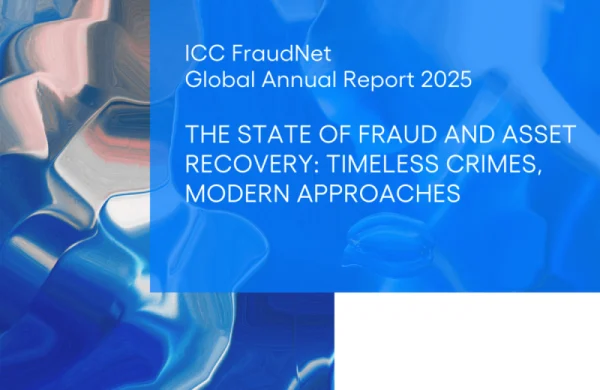
Titled "The State of Fraud and Asset Recovery: Timeless Crimes, Modern Approaches," this landmark publication arrives as a definitive resource for practitioners, regulators, and scholars. As the landscape of financial crime evolves from traditional embezzlement to AI-driven cyber-manipulation, the report provides a vital roadmap for those tasked with tracing and reclaiming misappropriated assets across international borders.
I. Main Facts: A Global Collaborative Effort
Founded in 2004 under the auspices of the International Chamber of Commerce (ICC) Commercial Crime Services, ICC FraudNet has spent two decades building a formidable bulwark against financial misconduct. Today, the network comprises 125 leading legal experts and 8 strategic partners operating across 81 jurisdictions.
The 2025 Report is not merely a collection of essays; it is a sprawling, 23-paper compendium authored by 37 of the world’s most respected investigators and legal minds. The contributors represent a truly global cross-section of expertise, hailing from jurisdictions as diverse as the United Kingdom, the United States, Japan, Singapore, South Africa, Panama, the Cayman Islands, and beyond. By synthesizing insights from such varied legal systems—ranging from civil law to common law traditions—the report offers a holistic view of how fraud manifests and how it can be countered in the 21st century.
II. Chronology: The Evolution of FraudNet’s Thought Leadership
The release of the fifth edition marks a significant milestone in the organization’s history. To understand the significance of this report, one must look at the progression of the network’s intellectual output:
- 2004: The establishment of ICC FraudNet, created to combat the growing problem of international commercial fraud by connecting victimized corporations and states with specialized local counsel.
- 2020–2023: The inception and early development of the Global Annual Report series. These initial editions focused on establishing a baseline of best practices for cross-border cooperation in the wake of shifting global financial regulations.
- 2024: A year of transition, as the report began to pivot heavily toward the integration of technology in legal practice, setting the stage for the deep-dive analysis found in the current edition.
- 2025: The current launch of the Fifth Edition. This edition represents a paradigm shift, moving beyond basic recovery tactics to address the existential challenges posed by artificial intelligence, Large Language Models (LLMs), and decentralized cyber-financial crimes.
III. Supporting Data: Structuring the Fight Against Corruption
Nicola Stenhouse, Executive Secretary of ICC FraudNet, has emphasized that this year’s report is meticulously structured to provide a logical framework for tackling complex fraud. The report is categorized into six key pillars, each designed to offer actionable intelligence:
1. Perspectives on AI
As AI technologies become more accessible, they have become a "double-edged sword." The report investigates how AI is being used by perpetrators to facilitate fraud while simultaneously providing investigators with predictive modeling tools to identify patterns of illicit activity.
2. Enforcement and Regulation
This section analyzes the regulatory gaps that exist between different nations. It highlights the friction points that prevent effective cross-border asset recovery and suggests harmonized approaches for international enforcement bodies.
3. Asset Recovery Investigations: Criminal, Civil, and Technological Perspectives
This pillar serves as the core technical manual of the report. It bridges the divide between traditional forensic accounting and the new age of "digital asset tracing," focusing on how evidence is gathered in a world where data is increasingly stored in decentralized, encrypted, or remote environments.
4. Cybercrime
A dedicated deep dive into the mechanics of modern digital theft, including ransomware, phishing, and the subversion of digital identities. The report warns that the speed of digital transactions often outpaces the speed of judicial intervention, necessitating "emergency" legal measures.
5. Tackling Fraud, Corruption, and Money Laundering
This section remains the bedrock of the report. It addresses the "timeless" aspect of the theme—the underlying human greed and systemic corruption that underpin most fraudulent schemes, regardless of the technology used to execute them.
6. Practical Perspectives
Perhaps the most valuable section for the frontline practitioner, this segment provides case studies and "field-tested" strategies that can be implemented immediately in active investigations.
IV. Official Responses: The Expert View
Dr. Dominic Thomas-James, the Editor of the 2025 Report, has been instrumental in shaping the document’s focus on the intersection of technology and law. Reflecting on the editorial process, he highlighted the duality of the modern technological landscape.
"Tales of caution about AI’s ability as a manipulator, as well as encouragement as to its helpful role in investigations, are all considered in the Global Annual Report," Dr. Thomas-James stated. He noted that the report explores not just the legal outcomes, but the process of AI-driven decision-making in litigation. The consensus among the 37 authors is that while AI can assist in the discovery of hidden assets, it also introduces significant risks regarding the authenticity of digital evidence and the potential for "hallucinated" or manipulated data to derail court cases.
Nicola Stenhouse added that the primary goal of the fifth edition is utility. "Each part offers not only thoughtful analysis but also practical tools and strategies to navigate today’s complex landscape," she remarked. The intent is to provide a "living document" that aids practitioners who are currently struggling with the jurisdictional hurdles of recovering assets in an increasingly fragmented geopolitical environment.
V. Implications: The Future of Global Asset Recovery
The publication of this report comes at a critical juncture for international law. As states and private entities grapple with the fallout of sophisticated financial crimes, the "timeless" nature of fraud is becoming obscured by the "modern" complexity of its execution.
The Rise of AI-Assisted Fraud
The report identifies a looming threat: the "industrialization" of fraud through AI. When fraud is automated, the volume of cases can overwhelm traditional legal systems. The authors argue that the legal community must adopt similar technological efficiencies—using machine learning to trace illicit fund flows in real-time—to maintain a competitive advantage over criminal syndicates.
The Jurisdictional Challenge
The 2025 Report highlights that despite globalization, legal borders remain firm. The papers included in the volume provide specific guidance on how to navigate the differences between common law and civil law systems, particularly when attempting to freeze assets in jurisdictions with bank secrecy laws or decentralized financial frameworks.
A Call for Global Solidarity
Ultimately, the message of the report is one of collaboration. Fraudsters rely on the "siloing" of information to keep their illicit gains hidden. By sharing knowledge through this report, ICC FraudNet is attempting to dismantle these silos. The insights provided by contributors from China to the British Virgin Islands demonstrate that financial crime is a global issue that requires a synchronized, global response.
Conclusion
The 2025 Global Annual Report on Fraud and Asset Recovery is an essential read for anyone operating in the high-stakes world of international law and finance. It successfully bridges the gap between scholarly theory and the brutal reality of the courtroom, providing a comprehensive toolkit for those fighting to recover what has been stolen.
As the world continues to digitize, the "modern approaches" outlined in this report will likely become the standard operating procedure for fraud investigators everywhere. For legal professionals and policy makers, the report serves as both a warning of the challenges to come and a guide to the sophisticated strategies necessary to meet them.
To access the full analysis and download the 2025 Global Annual Report, please visit the official ICC FraudNet website.