

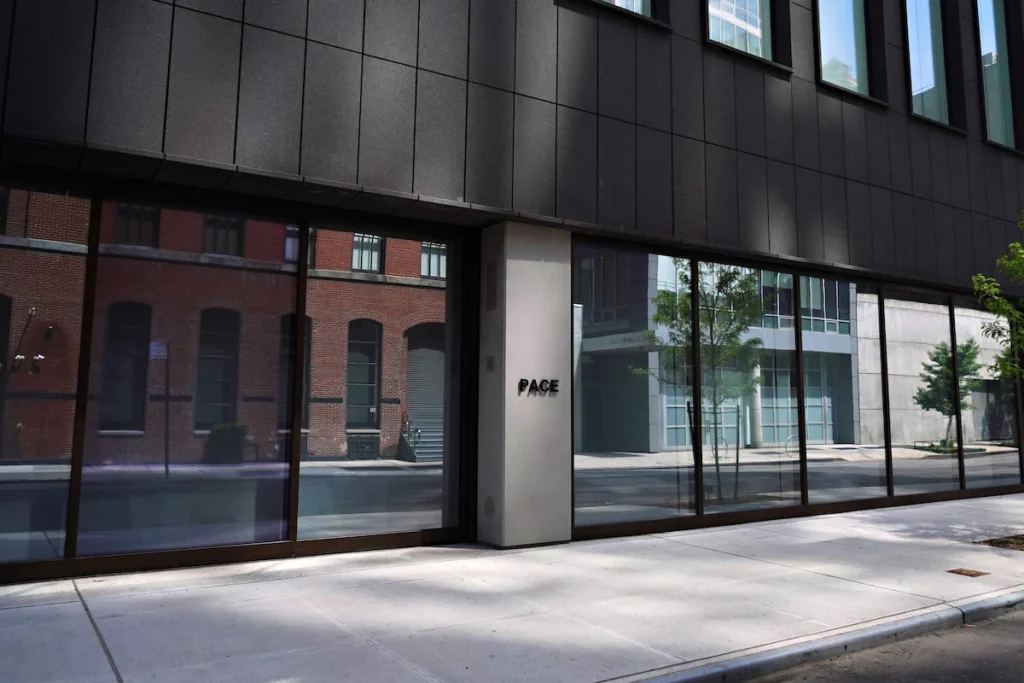
The glass-and-steel monolith at 540 West 25th Street was once hailed as the ultimate symbol of the 21st-century art market’s indomitable ascent. When Pace Gallery opened its eight-story, 75,000-square-foot global headquarters in New York’s Chelsea district in 2019, it represented the pinnacle of the "mega-gallery" phenomenon—a sprawling architectural marvel designed to house not just art, but an entire ecosystem of commerce, research, and corporate administration.
However, five years after its grand debut, the narrative surrounding the building has shifted from expansion to optimization. In a move that signals a significant tightening of the belt for one of the world’s most powerful art institutions, Pace Gallery is officially seeking a tenant to occupy one or more portions of its flagship headquarters. This decision follows a year of radical restructuring, staff layoffs, and roster trimming, marking a definitive end to the era of unchecked growth and the beginning of what CEO Marc Glimcher describes as a return to the gallery’s "roots."
Main Facts: Subdividing the Chelsea Giant
The news of Pace’s search for a sub-tenant first emerged via reports from Puck’s Wall Power and Julie Davich’s The Appraisal. These reports indicated that the gallery is looking to lease out significant square footage within its eight-story complex. While the exact amount of space available remains unspecified, the move is intended to offset the massive overhead costs associated with maintaining a building of this scale in the heart of Manhattan’s premier gallery district.
A spokesperson for Pace Gallery confirmed the move to ARTnews, clarifying that the search for a tenant is a strategic decision focused on "operating costs" rather than a reduction in the gallery’s public-facing footprint. The spokesperson emphasized that the exhibition spaces—the areas where collectors and the public interact with the art—will remain untouched.
“Given the size of our building, we are exploring opportunities for a tenant to occupy a portion of our space to share in the operating costs,” the spokesperson stated. “This space is not part of the gallery’s public areas and is not used by artists, collectors, or visitors, so there will be no impact on our exhibitions, programs, or visitor experience.”
Despite these assurances, the decision to subdivide the building is a clear admission that the "bigger is better" philosophy of the mid-2010s is no longer sustainable in the current economic climate. The move is aimed primarily at the gallery’s back-of-house operations, including administrative offices and storage areas that have become surplus to requirements following recent staff reductions.
Chronology: From Expansion to Contraction
To understand Pace’s current real estate maneuver, one must look at the timeline of the gallery’s trajectory over the last decade.
- 2015: The Conception. During a period of "frothiness" in the global art market, Marc Glimcher and the Pace leadership team greenlit the plans for a massive new headquarters. The goal was to consolidate several smaller Chelsea locations into one vertical powerhouse that could compete with the likes of Gagosian and David Zwirner.
- 2019: The Grand Opening. The building at 540 West 25th Street opened to much fanfare. Designed by Bonetti/Kozerski Architecture, it featured a research library, a 10,000-volume resource center, and specialized galleries for New Media and performance art. It was a statement of intent: Pace was not just a gallery, but a cultural institution.
- 2020–2023: Global Flux. While the pandemic initially slowed the market, Pace continued to expand globally, opening spaces in Seoul and Los Angeles. However, the costs of maintaining a global footprint and a massive New York headquarters began to weigh heavily as interest rates rose and the secondary market cooled.
- June 2024: The Restructuring. Pace announced a sweeping "overhaul" of its business model. This included the departure of approximately 20% of its staff (roughly 50 employees) and the removal of nearly 50 artists from its roster. Glimcher framed this as a necessary "recalibration" to escape the cycle of rising costs.
- Late 2024: The Real Estate Pivot. Following the downsizing of its staff and roster, Pace put its Hanover Square gallery in London on the rental market and began seeking a tenant for its Chelsea headquarters.
Supporting Data: The Financial Weight of 540 West 25th Street
The financial figures surrounding the Chelsea flagship are staggering, even by the standards of the New York real estate market. The building was a joint venture between Pace and developer Weinberg Properties.
According to reports from The Appraisal, the construction of the shell alone cost approximately $100 million. Pace reportedly invested an additional $18.2 million into the interior build-out to ensure the space met the exacting standards of a world-class art venue.
The annual operating costs are equally imposing. While Pace has never officially confirmed its rental agreement, the Financial Times reported that the gallery’s annual rent is estimated at roughly $9 million. In a market where sales volumes have dipped and the cost of capital has increased, a $750,000 monthly rent check represents a significant hurdle, especially after the gallery reduced its administrative headcount.
The building’s design, while aesthetically praised, also presents logistical challenges for subdivision. Glimcher himself admitted to the Financial Times that the building was not originally designed to be shared. "That building was what I call a 2015 decision," Glimcher said, acknowledging that the optimism of that era led to a design that prioritized scale over flexibility. However, he noted that the abundance of office space makes a partial lease-out a viable, if complex, solution.
Official Responses: A Strategic Reframing
In public statements, Pace leadership has been careful to frame these changes not as a retreat, but as a modernization of the gallery model. Marc Glimcher has been unusually candid about the flaws of the "mega-gallery" arms race.
Speaking to ARTnews earlier this year, Glimcher explained that the goal of the restructuring was “to break the… self-reinforcing cycle of rising costs and rising prices.” He argued that the traditional model—where galleries must constantly grow larger to justify higher prices—was becoming detached from the actual needs of artists and collectors.
Regarding the real estate specifically, Glimcher has characterized the move as a way to maintain the gallery’s "public-facing presence" while shedding the "corporate" weight that no longer serves the gallery’s mission. By bringing in a tenant, Pace effectively subsidizes its high-profile exhibition space, allowing it to remain in Chelsea without the full burden of the $9 million annual rent.
This sentiment was echoed in the gallery’s approach to its London presence. By moving out of the 8,600-square-foot Hanover Square space and looking for something "less corporate," Pace is signaling a shift toward a leaner, more agile operation that prioritizes the "visitor experience" over administrative grandeur.
Implications: The End of an Era for the Art Market
The decision to lease out parts of the Chelsea headquarters is more than just a real estate story; it is a bellwether for the wider art industry. For decades, the "mega-gallery" model—defined by Gagosian, Hauser & Wirth, David Zwirner, and Pace—was predicated on the idea of infinite expansion. If a gallery wasn’t opening a new five-story building or a satellite office in a tax-haven city, it was seen as falling behind.
Pace’s current trajectory suggests that this model has reached its limit. The implications are three-fold:
1. The Rationalization of the Mega-Gallery
We are likely entering a period of "rationalization," where the world’s largest galleries will stop seeking more square footage and start focusing on the profitability of their existing assets. Pace’s move to share its space could become a blueprint for other galleries facing similar overhead pressures. The "2015 decisions" are being replaced by "2024 realities."
2. A Shift in the Artist-Gallery Relationship
By cutting 50 artists from its roster, Pace signaled that it can no longer afford to "warehousing" talent. A smaller roster requires less administrative staff, which in turn requires less office space. This suggests a move toward a more boutique, high-touch service model for a select group of blue-chip artists, rather than the "supermarket" approach of the last decade.
3. The Changing Landscape of Chelsea
Chelsea remains the heart of the New York art world, but the nature of its inhabitants may change. If Pace successfully brings in a non-gallery tenant—perhaps a tech firm, a high-end architecture studio, or a fashion brand—it will further the "gentrification of the gallery district," where art spaces become multi-use commercial hubs.
Conclusion: A Leaner Future
Pace Gallery’s search for a tenant at 540 West 25th Street marks a pivotal moment in its 64-year history. It is a pragmatic response to a cooling market and a recognition that the architectural ambitions of the past decade may have outpaced the economic realities of the present.
By subdividing its headquarters, Pace is attempting a difficult balancing act: maintaining the prestige and scale required to represent the world’s most famous artists while adopting the fiscal discipline of a much smaller firm. If successful, Pace will emerge as a leaner, more sustainable version of its former self. If not, it may serve as a cautionary tale about the perils of "2015 decisions" in a 2024 world. Regardless of the outcome, the era of the monolithic, single-occupant mega-gallery flagship appears to be drawing to a close.



