In an era defined by rapid digital transformation and evolving public safety concerns, the retail sector stands at a critical crossroads. New research from Genetec has illuminated a sobering reality for industry leaders: the path to a high-tech, secure future is being blocked by the crumbling foundations of the past. As retailers struggle to balance the need for cutting-edge loss prevention with the logistical nightmare of maintaining legacy systems, a clear picture of the industry’s "modernization mandate" has emerged.
The data indicates that retail organizations are no longer prioritizing expansion at any cost. Instead, the focus has shifted toward a cautious, deliberate effort to replace obsolete physical and IT infrastructures before attempting to integrate advanced technologies like artificial intelligence or unified security platforms.
Main Facts: The Four Pillars of Operational Friction
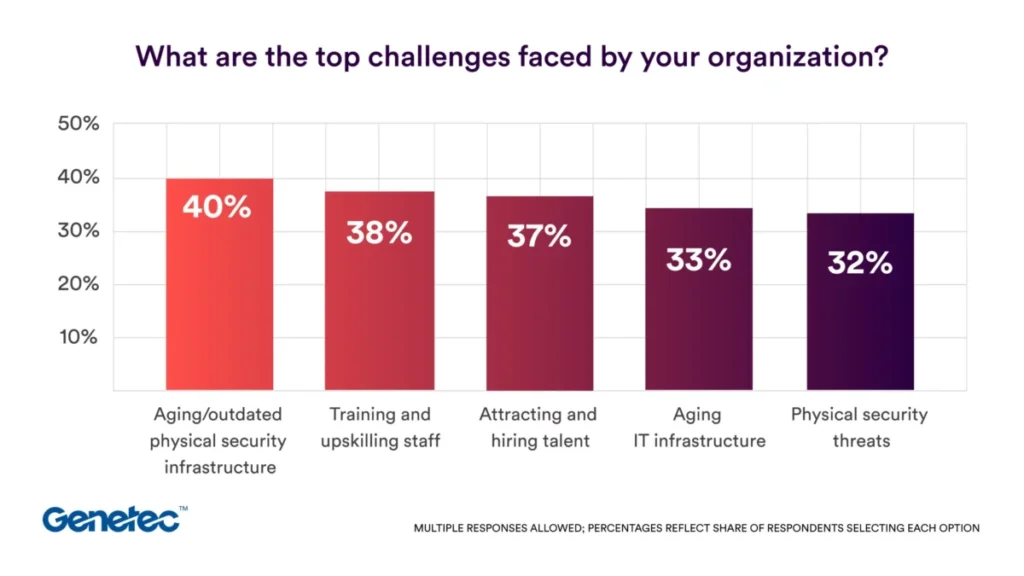
According to the latest Genetec State of the Industry report, retail organizations are currently grappling with four primary operational hurdles that threaten to derail their security objectives. The research highlights a sector held back by its own history, with 40% of surveyed retailers identifying outdated physical security infrastructure as their single greatest challenge.
This is closely followed by a human capital crisis, with 38% of respondents citing staff training and upskilling as a critical bottleneck, and 37% struggling with the recruitment of qualified talent. Rounding out the top four is the reliance on outdated IT infrastructure, which impacts 33% of retail operations. These figures are not merely administrative inconveniences; they represent systemic weaknesses that hinder the ability to respond to modern threats, ranging from organized retail crime (ORC) to workplace violence.
A Chronology of Retail Security Evolution
To understand why these challenges have reached a boiling point in 2026, one must look at the recent timeline of retail evolution:
- 2020–2021: The Pandemic Pivot. The global health crisis forced retailers to prioritize contactless transactions and rapid e-commerce expansion. Security infrastructure took a backseat to digital customer experience.
- 2022–2023: The Rise of Organized Retail Crime. As stores reopened, the industry saw an unprecedented spike in brazen, large-scale thefts. Existing security systems—many installed in the pre-cloud era—proved incapable of tracking these sophisticated criminal rings.
- 2024: The Integration Gap. Retailers attempted to bolt on AI-driven analytics and cloud-based monitoring to their existing analog systems. The resulting "Frankenstein" architectures created significant cybersecurity vulnerabilities and data silos.
- 2025–2026: The Modernization Mandate. Recognizing that they cannot build advanced defenses on broken foundations, the industry has entered a phase of consolidation. Retailers are now systematically retiring legacy hardware in favor of unified, scalable platforms.
Supporting Data: Mapping the Infrastructure Gap
The Genetec report provides a stark visual representation of this struggle. When retailers are asked about their primary operational obstacles, the data creates a "Perfect Storm" of technological and human resource debt.
The Breakdown of Hurdles
| Challenge Category | Percentage of Impact |
|---|---|
| Outdated Physical Security Infrastructure | 40% |
| Staff Training and Upskilling | 38% |
| Hiring Specialized Talent | 37% |
| Outdated IT Infrastructure | 33% |
This data suggests a fundamental disconnect. Retailers are eager to deploy advanced video management software (VMS) and access control, but the underlying hardware—cabling, legacy cameras, and outdated server rooms—cannot support the bandwidth or processing power required. Consequently, IT departments are increasingly finding themselves in a tug-of-war with security operations centers (SOCs) for budget and maintenance priority.
Official Responses and Strategic Shifts
Industry experts suggest that the "overhaul" mentality of the last decade is being replaced by a "measured modernization" strategy. Rather than attempting a "rip-and-replace" approach—which is often financially prohibitive and operationally disruptive—retailers are moving toward phased upgrades.
"The goal is no longer to achieve total modernization overnight," says one industry analyst. "It is about building a scalable framework where legacy devices can be bridged to modern, cloud-enabled software. Retailers are looking for ‘future-proof’ platforms that allow them to swap out a camera or a reader without having to replace the entire security ecosystem."
This strategic shift is also impacting how retailers hire. The demand is no longer just for security guards; it is for "security technologists"—professionals who understand both the physical security of a building and the digital security of the networks that power it. The 38% figure regarding training and upskilling reflects the massive effort required to bring legacy personnel up to speed on cybersecurity best practices and software-defined security management.
Implications for the Retail Landscape
The implications of these findings are profound. If the retail sector fails to modernize its infrastructure, the consequences extend far beyond simple inventory loss.
1. Increased Vulnerability to Cyber-Physical Threats
As physical security devices (cameras, locks, sensors) are increasingly connected to the internet, they become potential entry points for hackers. An outdated IT infrastructure is significantly more susceptible to ransomware, which could lock a retailer out of its own security system during a critical event.
2. The Talent Exodus
Retailers who fail to provide their staff with modern, intuitive tools face higher turnover rates. Employees are increasingly frustrated by clunky, failing technology that makes their jobs harder. By investing in modern infrastructure, retailers are not just improving security; they are improving employee morale and retention.
3. Regulatory and Compliance Risks
With increasing regulations surrounding data privacy (such as the use of facial recognition or biometric data in stores), retailers using legacy software that lacks modern data management capabilities risk heavy fines and reputational damage. Modernizing infrastructure is a prerequisite for legal compliance in the current digital landscape.
4. The Shift to Unified Security
The most successful retail organizations are moving away from proprietary, "siloed" systems. The trend is toward unified platforms that integrate VMS, access control, point-of-sale (POS) data, and AI analytics into a single pane of glass. This allows for real-time, data-driven decision-making, such as linking a specific transaction at a register to a video clip of the person making that purchase.
Conclusion: The Path Forward
The Genetec research serves as a wake-up call for the retail industry. The era of "good enough" security is over. As threats become more sophisticated and digital and physical boundaries continue to blur, retailers must commit to a deliberate, long-term strategy of modernization.
The path ahead is clear: prioritize the upgrade of core IT and physical infrastructure, invest heavily in the upskilling of existing security teams, and adopt unified platforms that offer the flexibility to adapt to future challenges. While the hurdles of 2026 are significant, they are not insurmountable. By acknowledging the limitations of legacy systems, retailers can finally lay the groundwork for a safer, more efficient, and more resilient future.
The modernization mandate is no longer an optional upgrade; it is the essential requirement for survival in the modern retail environment. As the industry moves forward, those who successfully navigate this transition will find themselves not only better protected, but better positioned to compete in an increasingly complex global marketplace.