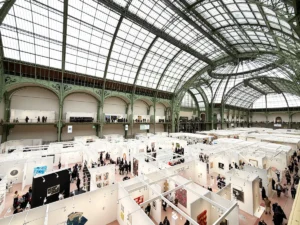

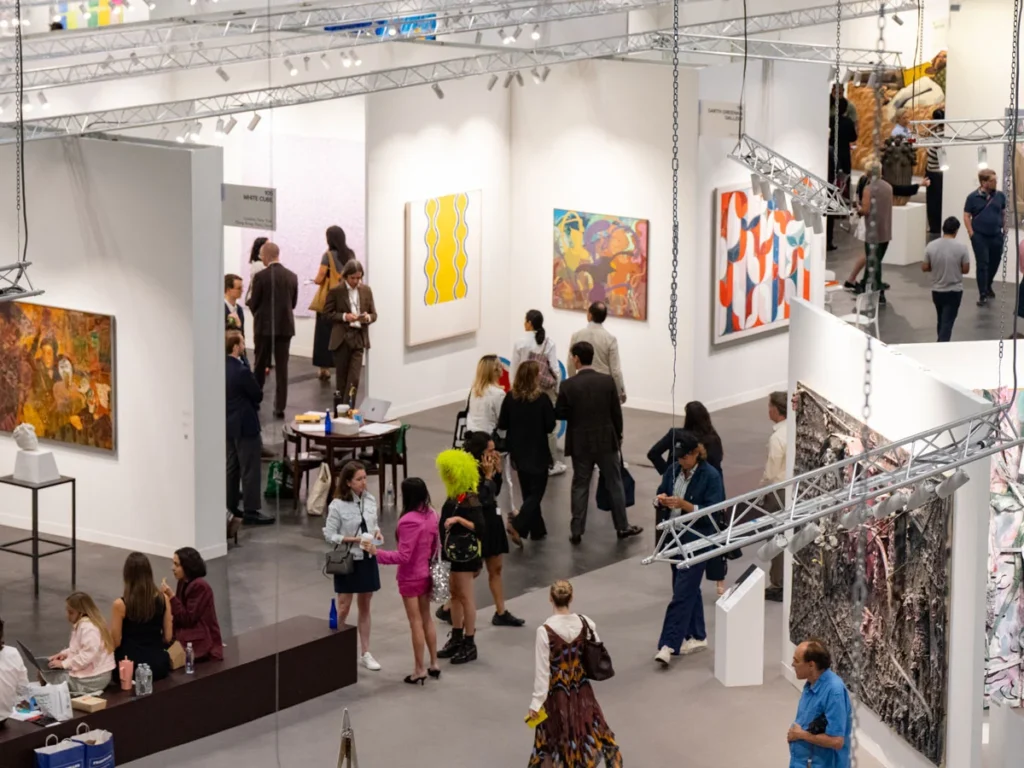
The Armory Show, a cornerstone of the global contemporary art calendar and a defining fixture of New York City’s cultural landscape, has announced a series of landmark initiatives for its upcoming edition. Set to take place from September 24 to 27, the fair continues its evolution under the leadership of Director Kyla McMillan, unveiling two significant museum acquisition prizes and a curatorial program that emphasizes regional depth, particularly within the Caribbean diaspora. These developments signal a strategic shift toward deeper institutional integration, providing a vital bridge between the commercial art market and the permanent collections of major American museums.
As the fair prepares to transform the Javits Center into a hub of international exchange, the introduction of the Pérez Art Museum Miami (PAMM) Acquisition Prize and the Bronx Museum Acquisition Prize marks a pivotal moment. These prizes do more than offer financial support; they provide "institutional validation," a high-stakes currency in the contemporary art world that can trajectory-shift an artist’s career from emerging to established.
Main Facts: A New Era of Institutional Support
The core of this year’s announcement revolves around the establishment of formal mechanisms for museum acquisitions. The Armory Show has long been a place where curators scout for new talent, but the formalization of these prizes guarantees that significant works will move from the fair floor into the public trust.
The Pérez Art Museum Miami (PAMM) Acquisition Prize
The PAMM Acquisition Prize is a recurring $20,000 commitment intended to bolster the museum’s permanent collection and the Green Family Foundation Caribbean Cultural Institute (CCI). This prize is specifically tied to the fair’s Focus section. This year, the Focus section is dedicated to artists with ancestral or professional ties to the Caribbean. Curated by María Elena Ortiz, a highly respected curator at the Modern Art Museum of Fort Worth, the section aims to dismantle monolithic views of Caribbean art, presenting instead a nuanced tapestry of the region’s diverse aesthetic and political histories.
The Bronx Museum Acquisition Prize
Looking toward the future, the fair also announced the Bronx Museum Acquisition Prize, which will debut in full for the 2026 cycle with an annual allocation of $15,000. This prize targets the Presents section, a platform reserved for emerging galleries (those in operation for ten years or less). By focusing on this section, the Bronx Museum reaffirms its historic mission of championing underrepresented voices and artists at "pivotal moments" in their professional development. For the current edition, the Presents section features 55 galleries, serving as the primary scouting ground for the museum’s curatorial team.
Curatorial Highlights and Sectional Themes
Beyond the prizes, the fair has detailed its expansive programming:
- Platform Section: Titled "Passages and Threshold," curated by Jovanna Venegas of SculptureCenter. This section features large-scale installations and site-specific works.
- Armory Sculpture: An outdoor and large-format indoor display featuring heavyweights like Sonya Clark and Rafael Ferrer.
- Armory Spotlight: This year, the spotlight falls on El Museo del Barrio, which will host a participatory textile installation by Lulu Varona.
- Live Performance: A new work by Tavares Strachan, Special Blue: Act I, sponsored by Marian Goodman Gallery.
Chronology: The Evolution of The Armory Show
To understand the significance of the 2026 edition, one must look at the fair’s trajectory over the last decade. Originally founded in 1994 as the Gramercy International Art Fair, the event was rebranded as The Armory Show in 1999, moving to the 69th Regiment Armory. For years, it was synonymous with the piers on Manhattan’s West Side (Piers 92 and 94).
However, the last five years have seen a radical restructuring. In 2021, the fair made the strategic move to the Javits Center, a move that coincided with a shift in dates from the traditional March "Armory Week" to September. This shift was intended to align the fair with the start of the fall gallery season in New York, effectively capturing the energy of the city’s post-summer reopening.
The appointment of Kyla McMillan as Director followed the fair’s acquisition by Frieze (under Endeavor), though The Armory Show has maintained its distinct identity as a "New York fair for the world." The 2026 programming represents the culmination of this transition—a fair that is no longer just a trade show, but a curated biennial-style event that integrates performance, scholarly discourse, and institutional philanthropy.
Supporting Data: By the Numbers and Curatorial Scope
The scale of The Armory Show remains one of its most impressive attributes. The upcoming edition will feature over 200 galleries from across the globe, but it is the specialized sections that provide the most critical data points for the industry.
The Focus Section: Caribbean Connectivity
The decision to focus on the Caribbean is a data-driven response to the growing market and academic interest in the region. María Elena Ortiz has selected artists who challenge colonial narratives. The $20,000 PAMM prize ensures that this curatorial effort results in a tangible legacy. By integrating the Green Family Foundation Caribbean Cultural Institute, the fair is tapping into a network of scholars and collectors specifically dedicated to this demographic.
The Presents Section: The Engine of Growth
With 55 emerging galleries in the Presents section, the fair acts as a primary incubator. Statistical trends in the art market show that artists who debut in "emerging" sections of major fairs like The Armory see a 30-40% increase in secondary market interest within three years. The Bronx Museum’s $15,000 prize acts as a "seed investment" in these careers.
Platform and Scale
The Platform section, "Passages and Threshold," includes seven primary highlights:
- María Magdalena Campos-Pons: Known for her explorations of Afro-Cuban identity.
- Hew Locke: Whose work often deals with themes of royalty and colonial power.
- Bony Ramirez: A Dominican-born artist whose distorted figures have become a sensation in contemporary figurative painting.
- Lucia Hierro: Utilizing soft sculpture to critique consumer culture.
- Valerie Brathwaite: Bringing an abstract, organic sensibility.
- Margarita Cabrera: Addressing border issues and social justice.
- Curtis Talwst Santiago: Famous for his intricate dioramas in jewelry boxes.
Official Responses: Voices from the Leadership
The leadership behind these initiatives emphasizes a shared vision of community and longevity.
Franklin Sirmans, Director of PAMM, highlighted the organic connection between the prize and the museum’s home city:
"We are excited to be expanding the footprint of the Green Family Foundation Caribbean Cultural Institute at PAMM by participating at The Armory Show… This acquisition represents and reflects Miami’s identity and deep ties to the Caribbean." Sirmans’ comments underscore a shift in museum strategy—where acquisitions are no longer just about aesthetic value, but about reflecting the specific demographic and cultural DNA of the museum’s local community.
Shamim M. Momin, Director and Chief Curator of the Bronx Museum, focused on the professional impact on the artists:
"The Bronx Museum is honored to receive this new Acquisition Prize… it is a meaningful investment in the Museum’s work to support diverse voices in contemporary art and provide vital support to artists at pivotal moments in their careers." Momin’s statement reflects the museum’s long-standing reputation as a social-justice-oriented institution that prioritizes "diverse voices" over market trends.
Kyla McMillan, Director of The Armory Show, framed the changes as a way to enhance the "Armory Week" experience:
"The 2026 edition reflects our ambition to create a more connected experience for audiences… With new dates and an intentionally extended Armory Week, we are introducing and expanding initiatives that create greater visibility and engagement for artists, galleries, curators, and collectors."
Implications: The "Institutional Turn" of the Art Fair
The introduction of these prizes and the specific curatorial focus on the Caribbean have several long-term implications for the art world.
1. The Blurring of Commercial and Curatorial Lines
Traditionally, art fairs were purely commercial, while museums were purely curatorial. The Armory Show is actively blurring these lines. By bringing museum directors and curators into the heart of the fair’s prize-giving structure, the fair becomes a sanctioned extension of the museum world. This provides galleries with a powerful selling point: the possibility of a museum placement, which is the ultimate goal for any serious contemporary artist.
2. The Caribbean as a Global Focal Point
For too long, Caribbean art was relegated to "regional" categories. By making it the "Focus" of one of the world’s largest art fairs, The Armory Show is participating in a global decolonization of the art canon. This will likely lead to increased representation for these artists in European and Asian markets as international collectors follow the lead of PAMM and the Armory curators.
3. Economic Impact and "Armory After Hours"
The debut of "Armory After Hours," featuring a processional performance led by DJ Foreigner, suggests a move toward "experiential art tourism." This initiative is designed to keep collectors and visitors engaged with the fair beyond the traditional 10 am–6 pm window, benefiting local hospitality and nightlife sectors. It positions the fair as a lifestyle event, similar to Art Basel Miami Beach, but with a distinctly New York intellectual edge.
4. Supporting the "Gallerist of Tomorrow"
The Bronx Museum’s focus on the "Presents" section is a crucial lifeline for small galleries. In an era where "mega-galleries" dominate the market, the survival of small-to-mid-tier galleries is often precarious. An acquisition prize specifically for this section provides these smaller businesses with the prestige needed to retain their top talent and attract new collectors.
As The Armory Show approaches its September opening, it stands as a testament to the resilience and adaptability of the New York art scene. Through its new prizes, thematic depth, and commitment to institutional partnership, it ensures that while the art may be for sale, its cultural value is being preserved for the public for generations to come.