The global art ecosystem is currently undergoing a period of significant recalibration, marked by high-level leadership transitions, substantial philanthropic injections, and a luxury market that continues to redefine the boundaries between private collecting and public-facing institutionalism. From the quiet coastal galleries of Connecticut to the bustling canals of Venice and the turquoise waters of the Bahamas, the industry is witnessing a series of moves that signal both growth and a deepening complexity in how art is produced, displayed, and funded.
This comprehensive report explores the recent wave of appointments at major institutions, the strategic expansion of commercial gallery rosters, the vital role of foundation-led grants, and the logistical challenges facing the most ambitious artistic endeavors on the world stage.
Main Facts: A Summary of Recent Industry Developments
The late summer and early autumn of 2024 have proven to be a pivotal period for administrative and curatorial shifts. Central to these changes is the Bruce Museum in Greenwich, Connecticut, which has finalized its leadership structure by appointing Kathy Fredrickson as the Chief of Curatorial Affairs and Experience. This move follows the museum’s massive recent expansion, positioning the institution as a major regional powerhouse in the Northeastern United States.
Across the Atlantic, the Towner Eastbourne in East Sussex has secured a new captain in Martin Clark, who will transition from the Camden Art Centre to lead the British institution into its next chapter. Simultaneously, the commercial sector is seeing a flurry of activity. Sargent’s Daughters in New York has bolstered its sales team, while the Bahamas-based TERN and the Mexico City/New York-based JO-HS have expanded their rosters to include emerging voices that challenge traditional genre boundaries.
In the realm of philanthropy, two major foundations—the Jorge M. Pérez Family Foundation and the Graham Foundation—have collectively funneled over $1.1 million into the arts nonprofit sector. These grants are specifically targeted at promoting diversity, architectural inquiry, and community-based arts programming.
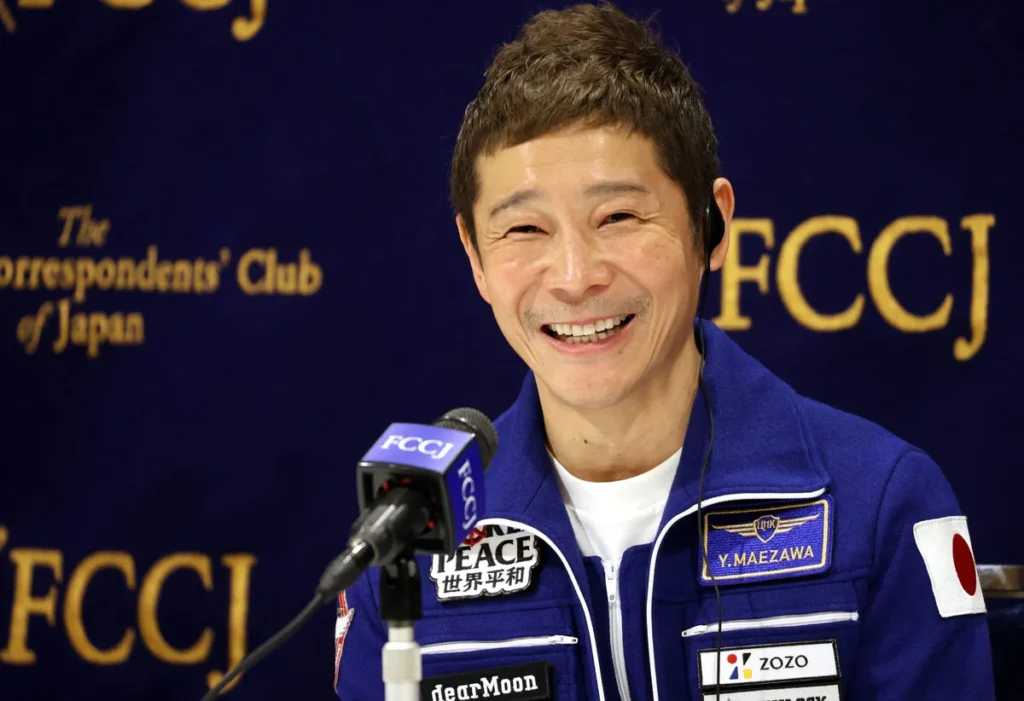
However, perhaps the most striking headline comes from the intersection of ultra-high-net-worth collecting and maritime engineering. Japanese billionaire Yusaku Maezawa has reportedly invested $350 million in a custom superyacht, the Nausicaä, which doubles as a floating private museum for his blue-chip collection. While Maezawa pushes the limits of private display, the Venice Biennale is facing a practical reckoning regarding the sustainability of performance art, as critics and organizers grapple with the labor costs of "live" pavilions.
Chronology of Events: From Curatorial Strategy to Global Exhibition
The current momentum can be traced through a series of key dates and milestones that have shaped the industry over the last twelve months:
- October 2023 – July 2024: Kathy Fredrickson serves as a curatorial strategy consultant for the Bruce Museum, laying the groundwork for the institution’s post-expansion programming.
- August 3, 2024: Fredrickson officially assumes the role of Chief of Curatorial Affairs and Experience at the Bruce Museum, moving from her previous post at the Corning Museum of Glass.
- Late Summer 2024: The Jorge M. Pérez Family Foundation announces the recipients of its CreARTE grant program, distributing $720,000 to 32 Miami-based organizations.
- September 2024: The Graham Foundation releases its list of 45 organizational grant recipients, totaling $451,000 in support for architecture and design projects.
- Late 2024: Yusaku Maezawa takes delivery of the Nausicaä, a 375-foot superyacht designed by Marc Newson and built by Lürssen, signaling a new era of "mobile" collecting.
- January 2025 (Projected): Martin Clark is scheduled to officially begin his tenure as CEO and Director of Towner Eastbourne.
Supporting Data: The Financial and Institutional Footprint
To understand the scale of these developments, one must look at the specific data points that define the current market and institutional health.
Philanthropic Injections
The Jorge M. Pérez Family Foundation’s $720,000 grant cycle is a critical lifeline for the Miami art scene. The 32 beneficiaries include:
- Museum of Contemporary Art (MOCA) North Miami: Focused on community engagement and contemporary discourse.
- Oolite Arts: One of Florida’s largest support organizations for visual artists.
- Women Photographers International Archive (WOPHA): An organization dedicated to researching and promoting the contributions of women photographers.
The Graham Foundation’s $451,000 distribution is equally targeted, supporting 45 organizations. Key projects include:
- An exhibition on landscape and design at the Cooper Hewitt, Smithsonian Design Museum.
- A Paul R. Williams survey at the Los Angeles County Museum of Art (LACMA).
- A solo exhibition for Amanda Williams at the Museum of Contemporary Art Chicago.
The $350 Million Floating Gallery
Yusaku Maezawa’s Nausicaä represents a staggering investment in the preservation and display of contemporary masterpieces. The vessel’s specifications include:
- Length: 375 feet (114 meters).
- Design: Marc Newson (Exterior/Interior) and Lürssen (Shipyard).
- Features: Nine guest cabins, a sushi bar, and a two-story art gallery.
- Inventory: Works by Andy Warhol, Jeff Koons, Richard Prince, and Christopher Wool.
Labor in Performance Art
At the Venice Biennale, the "liveness" of pavilions has reached an all-time high. The Dutch Pavilion, overseen by Dries Verhoeven, serves as a primary case study for the logistical strain of modern performance:
- Performance Frequency: Six performances daily.
- Staffing Requirements: Three rotating teams of performers to prevent burnout.
- Support Staff: Includes an on-call doctor to monitor the physical well-being of the dancers and actors.
Official Responses and Strategic Visions
The leaders and organizations involved in these moves have expressed a clear vision for the future of their respective institutions.
At the Bruce Museum, the appointment of Kathy Fredrickson is seen as a strategic move to bridge the gap between traditional curatorial excellence and modern "experience-based" museum-going. As the museum integrates its new $67 million wing, Fredrickson’s background in collections management at the Corning Museum of Glass is expected to provide the technical rigor necessary for a rapidly growing permanent collection.
In the United Kingdom, Martin Clark’s move to Towner Eastbourne is viewed as a major win for the East Sussex coast. Clark, who has been praised for his adventurous programming at the Camden Art Centre, stated that he is joining Towner at a "pivotal moment," following the gallery’s successful hosting of the Turner Prize in 2023. His leadership is expected to further solidify the region’s reputation as a cultural destination outside of London.
Regarding the philanthropic sector, the Pérez Family Foundation reiterated its commitment to making Miami a global "arts capital." Their CreARTE program is designed not just to fund exhibitions, but to build the infrastructure of the city’s creative economy by supporting mid-sized and grassroots organizations that often struggle to find consistent capital.
Implications for the Future of the Art Market
The convergence of these events suggests several emerging trends that will likely dominate the art world for the remainder of the decade.
1. The Professionalization of "Experience"
The Bruce Museum’s decision to include "Experience" in Fredrickson’s title reflects a broader institutional shift. Museums are no longer merely repositories for objects; they are becoming sites of curated experiences. This requires leadership that understands both the academic weight of a collection and the hospitality-driven demands of a modern audience.
2. The Sustainability Crisis in Performance
The New York Times critique of the Venice Biennale, authored by Laura Cappelle, highlights a growing ethical and financial dilemma. As curators increasingly favor performance art to "activate" spaces, the industry must confront the reality of labor. Unlike a painting, which requires climate control and security, a performance requires human capital, health insurance, and fair wages for grueling physical work. The "on-call doctor" at the Dutch Pavilion may soon become a standard requirement for major biennials, significantly increasing the cost of participation for national pavilions.
3. The Decentralization of Art Hubs
The growth of TERN in the Bahamas and the continued investment in Miami by the Pérez family indicate a shift away from the traditional New York-London-Paris triad. The Caribbean and the American South are emerging as self-sustaining ecosystems with their own rosters of internationally recognized artists, such as Gio Swaby and Richard Nattoo.
4. The Yacht as a Sovereign Cultural Space
Yusaku Maezawa’s $350 million yacht is more than a luxury purchase; it is a statement on the privatization of art. By housing masterpieces like those of Warhol and Koons on a mobile, private vessel, Maezawa bypasses the geographic limitations of traditional museums. This trend toward "ultra-private" museums—whether in bunkers, high-security warehouses, or superyachts—poses a challenge to the public’s ability to access significant cultural heritage.
As the industry moves into 2025, the balance between private wealth, institutional responsibility, and the physical limits of artistic labor will remain the central tension of the global art market. Whether through the appointment of new directors or the distribution of hundred-thousand-dollar grants, the goal remains the same: ensuring the survival and relevance of art in an increasingly complex world.