By Yi Fuxian
August 17, 2026
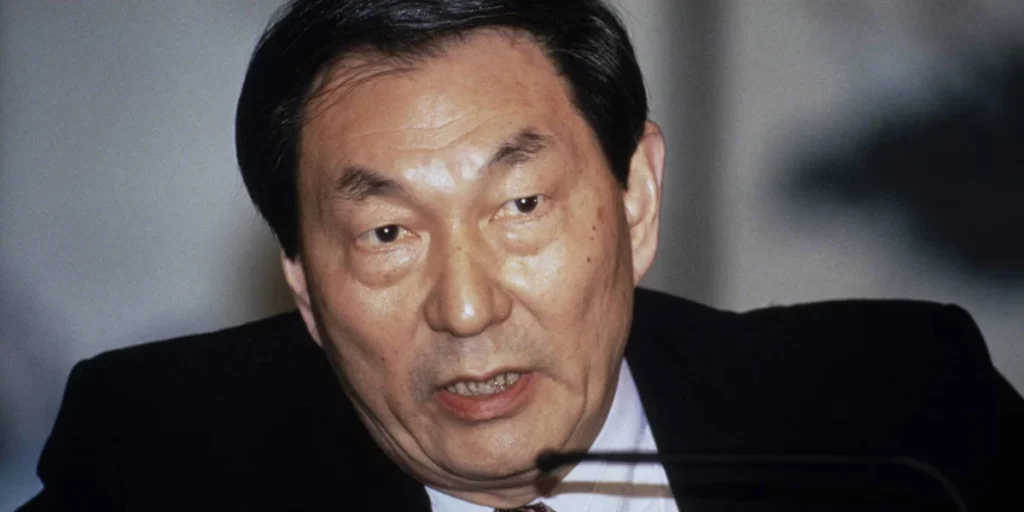
The passing of former Chinese Premier Zhu Rongji at the age of 97 marks the end of an era. Known colloquially as "the Boss" for his uncompromising management style and his reputation as an economic "firefighter," Zhu was the primary architect of the structural reforms that transformed China from a struggling agrarian state into the world’s manufacturing powerhouse.
As tributes pour in from global leaders and economists, the narrative is largely one of unbridled success: the dismantling of bloated state-owned enterprises (SOEs), the modernization of the financial sector, and the integration of China into the global trade apparatus. However, a dispassionate historical analysis suggests a more complex reality. While Zhu’s policies acted as a powerful engine for GDP growth, they also entrenched structural imbalances that have left the modern Chinese state grappling with a profound demographic crisis and an unsustainable economic model.
The Main Facts: An Era of Radical Reform
Zhu Rongji served as Premier from 1998 to 2003, though his influence as the de facto economic czar began years earlier during his tenure as Vice Premier starting in 1991. His hallmark was "market-oriented reform," a philosophy that prioritized efficiency, fiscal centralization, and international competitiveness.
His most consequential moves—the 1994 tax-sharing system and the 2001 accession to the World Trade Organization (WTO)—fundamentally altered the relationship between Beijing and the provinces. By centralizing tax revenue while offloading social expenditures to local governments, Zhu created a fiscal incentive structure that forced local officials to become "land developers" to maintain budget solvency. This shift, while fueling a massive infrastructure boom, set the stage for the hyper-urbanization and the cost-of-living surges that now discourage modern Chinese families from having children.
Chronology: A Roadmap of Transformation
To understand the current economic and demographic landscape, one must trace the timeline of Zhu’s most pivotal interventions:
- 1991–1993: Zhu takes charge of the economy, curbing the runaway inflation that threatened the legitimacy of the Communist Party following the 1989 social unrest.
- 1994: The implementation of the Tax-Sharing System. This centralized a larger share of fiscal revenue to Beijing, leaving local governments with the responsibility for education, healthcare, and infrastructure without sufficient funding.
- 1997–1998: During the Asian Financial Crisis, Zhu oversees the aggressive "grasp the large, let go of the small" policy, which saw the privatization or closure of thousands of SOEs and the layoff of millions of workers.
- 2001: China officially enters the World Trade Organization. This move integrated China into global supply chains, leading to an export-led growth miracle that lasted two decades.
- 2002: Zhu steps down as Premier, leaving behind a nation that had become the "world’s factory."
- 2026: Following his passing, researchers analyze the long-term impact of his tenure, noting that the demographic decline now facing China is a direct byproduct of the socio-economic pressures catalyzed by the reforms of the late 1990s.
Supporting Data: The Cost of Growth
The data supporting Zhu’s success is incontrovertible, yet the data reflecting the side effects is equally stark. During his tenure, China’s GDP growth consistently hit double digits. However, the internal distribution of that wealth was skewed.
According to World Bank and internal national data, the share of household income as a percentage of GDP plummeted during the early 2000s. As the government prioritized infrastructure and export capacity, the social safety net—which had been provided by the "iron rice bowl" of the SOE system—was severely curtailed.
Furthermore, the "urbanization rate" exploded. By pushing rural residents into cities to provide cheap labor for the export factories, Zhu’s policies accelerated the "demographic transition." In rural areas, extended families once provided childcare and eldercare. In the dense, high-cost urban centers that emerged from the 2001 WTO boom, those support systems vanished. The cost of housing, coupled with the competitive pressure of the "996" work culture (working from 9 a.m. to 9 p.m., six days a week), has led to one of the lowest fertility rates in human history.
Official Responses: A Legacy of "Iron-Fisted" Governance
The official Chinese response to Zhu’s passing has been one of solemn reverence. The state media emphasizes his role in "stabilizing the economy" and "fighting corruption." His reputation for being "incorruptible" and his famous quote—that he had "prepared a hundred coffins" for corrupt officials—remains a cornerstone of his public image.
However, internal discussions within the halls of the current administration are more nuanced. There is an unspoken acknowledgement that the "Zhu model" reached its natural limits. The reliance on land sales to fund local government spending—a direct consequence of the 1994 tax reform—is now widely viewed as the root cause of the current real estate crisis. The central government is currently attempting to pivot toward "common prosperity," a tacit admission that the extreme inequality generated during the early 2000s is no longer politically or socially sustainable.
Implications: The Demographic Reckoning
The most enduring, and perhaps tragic, legacy of Zhu Rongji’s tenure is the demographic time bomb that now threatens China’s future as a global superpower.
The Urbanization Trap
Zhu’s reforms prioritized the migration of labor to coastal manufacturing hubs. While this served the immediate need of integrating China into the global economy, it hollowed out the social fabric of the countryside and created unsustainable living conditions in cities. Young Chinese today find themselves in a "Goldilocks" trap: they are too educated to accept the menial labor of the 1990s, but too burdened by the high cost of urban life to afford the child-rearing costs that were once absorbed by the community.
The Fiscal Imbalance
The 1994 tax-sharing policy created a structural dependence on real estate. Because local governments were stripped of revenue, they turned to land auctions to finance growth. This inflated property values to the point where, for the average young couple, a home purchase necessitates a lifetime of debt. In such an environment, the decision to delay or forgo marriage and childbirth is a rational economic response, not a cultural choice.
The Global Perspective
Zhu’s entry into the WTO provided the world with cheap goods, effectively suppressing global inflation for two decades. Yet, the cost was the rapid depletion of China’s human capital. By the time the government realized the demographic damage—leading to the end of the One-Child Policy and the eventual push for a Three-Child Policy—the societal shift toward small families was already entrenched.
Conclusion
Zhu Rongji was a man of his time, and his reforms were undeniably effective in achieving the stated goal of his era: the rapid modernization and economic empowerment of the Chinese state. He dragged China into the 21st century with the force of his personality and the rigor of his policies.
However, history is a patient judge. As we look at China in 2026, we see a nation that is wealthier, more connected, and more powerful than the one Zhu inherited in the 1990s. Yet, it is also a nation that is aging rapidly, struggling with a debt-laden real estate sector, and facing a demographic deficit that may prove to be the ultimate constraint on its future growth. Zhu Rongji’s life reminds us that economic policy is never neutral; every reform that builds a factory also shapes a society, and the structures built to drive growth today may well become the barriers to survival tomorrow.