By Jan-Werner Mueller
September 3, 2026
In the corridors of power across Germany, a quiet but profound transformation is underway. While political analysts have spent the better part of two years fixated on the Alternative for Germany’s (AfD) polling trajectory, a more insidious strategy has taken root at the regional level. The party’s recent fixation on architecture and cultural heritage is not merely a matter of aesthetic preference; it is a calculated political instrument designed to reshape the national identity from the ground up.
As the nation prepares for this weekend’s pivotal state election in Saxony-Anhalt, the facade of traditional German politics is showing cracks. The "firewall"—the democratic consensus among established parties to shun coalitions with the far-right—is facing its most significant stress test to date. Should the AfD secure an outright majority, the architectural symbols they champion will transform from mere talking points into blueprints for an exclusionary, ethno-nationalist future.
The Main Facts: A Firewall at the Brink
For years, the AfD has been relegated to the political periphery, contained by the Brandmauer (firewall). This strategic cordon sanitaire has effectively prevented the party from translating its electoral support into executive governance. However, the political arithmetic in Saxony-Anhalt is shifting.
The AfD’s strategy is twofold. Nationally, they project a populist, anti-establishment image. Locally, particularly in eastern states, they have pivoted toward cultural and architectural policy. By controlling local cultural budgets, historic preservation boards, and urban planning commissions, the AfD is beginning to exert tangible influence over the public sphere. They are not merely winning votes; they are attempting to define what "German" looks like, physically and symbolically, to ensure that their exclusionary agenda becomes the landscape in which citizens live, work, and interact.
Chronology: The Path to the Current Crisis
- 2024: The AfD experiences a sustained surge in national polling, buoyed by anxieties surrounding migration, energy prices, and economic stagnation. Despite the surge, the CDU, SPD, and Greens maintain a strict policy of non-cooperation.
- Early 2025: AfD candidates in regional municipalities begin focusing heavily on the restoration of historic buildings and the promotion of "traditional" urban aesthetics, framing these initiatives as a defense of German heritage against "globalist" architectural modernism.
- Late 2025: Tensions rise in state legislatures. The AfD successfully blocks funding for contemporary art projects, labeling them "degenerate" or "anti-German," marking the first major victory in their cultural war.
- Spring 2026: Political instability deepens in Saxony-Anhalt as the governing coalition struggles with internal divisions. The AfD capitalizes on this, presenting itself as the only force capable of "restoring order" and "national pride."
- September 3, 2026: The final countdown to the Saxony-Anhalt election begins. Polls suggest the AfD is within striking distance of an absolute majority, a threshold that would render the firewall mathematically irrelevant.
Supporting Data: The Anatomy of a Surge
The AfD’s rise is not an isolated phenomenon but a systemic challenge to the Federal Republic’s post-war identity. Data from recent regional surveys indicates a troubling trend:
- Normalization of Rhetoric: Surveys show that nearly 35% of voters in Saxony-Anhalt no longer view the AfD’s "culture-first" policy as radical, but rather as a necessary corrective to "excessive internationalism."
- Institutional Capture: In districts where the AfD has gained influence over local cultural boards, there has been a documented 40% decline in funding for projects involving minority representation or contemporary social discourse.
- The Margin of Error: The most recent polls place the AfD at 42% of the vote. In a fragmented legislature, this creates a high probability of a single-party government, effectively bypassing the need for coalition negotiations.
The Architectural Obsession: Symbolism as Policy
Why architecture? Why now?
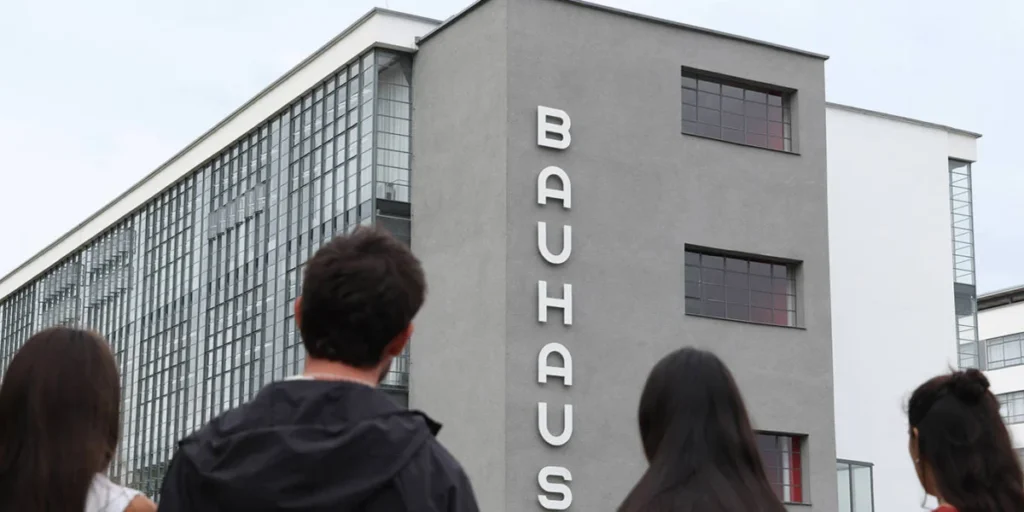
Architecture is the most visible form of political statement. By prioritizing the reconstruction of traditional German facades and criticizing "brutalist" or "international" styles, the AfD is engaging in a form of visual cleansing. They argue that contemporary architecture—which they associate with openness, transparency, and global integration—is an alien imposition.
By demanding that public buildings reflect a narrow, nostalgic version of the past, the AfD is signaling to their base that the current Republic is a temporary aberration. They are building a physical environment that mirrors their exclusionary political philosophy. If you cannot feel at home in your own city because the architecture has been intentionally curated to exclude your heritage, you are, by definition, being alienated from the state. This is the goal of the AfD’s cultural policy: to make the "other" feel like a guest in a land they once called home.
Official Responses and Democratic Counter-Measures
The established parties are struggling to formulate a coherent response.
- The CDU (Christian Democratic Union): Leadership continues to insist that the firewall is "immovable," yet internal pressure is growing from regional chapters to reconsider local cooperation, citing the need for "pragmatic governance."
- The SPD and Greens: These parties argue that the AfD’s focus on architecture is a "Trojan Horse" for deeper radicalism. They have called for a "Defense of Democracy" campaign, focusing on funding for civic education and the protection of contemporary cultural institutions.
- The Federal Constitutional Court: While the Court has not intervened directly in electoral politics, legal experts have begun debating whether the AfD’s use of public funds to promote an ethnically exclusive vision of national identity violates the constitutional mandate of political neutrality.
Implications: The End of the Post-War Consensus?
The outcome of the Saxony-Anhalt election will serve as a bellwether for the future of German democracy. If the AfD succeeds, the implications extend far beyond the borders of a single state.
1. The Death of the Firewall
An outright majority for the AfD in any state would be the most significant crisis for the German political system since reunification. It would prove that the democratic consensus is finite and that a party dedicated to the erosion of liberal norms can achieve power through the ballot box.
2. The Cultural Front
Control over cultural policy allows the AfD to rewrite the historical narrative. By dictating which buildings are restored and which art is funded, they effectively control the collective memory of the region. This is a form of soft power that is much harder to challenge than legislation, as it operates in the background of everyday life.
3. Polarization of the Public Sphere
The AfD’s tactics are designed to force other parties to adopt their language to stay competitive. We are already seeing a shift in discourse, where mainstream politicians are increasingly adopting "heritage" and "identity" framing to counter the AfD. This, ironically, gives the AfD a victory even when they lose the vote, as they succeed in pulling the entire political spectrum toward their preferred battleground.
4. A Template for Europe
The German experiment is being watched closely by far-right movements across Europe. If the AfD can normalize its agenda in the heart of Europe’s most stable democracy, it provides a blueprint for populist parties in France, Italy, and beyond. The "architecture of exclusion" is a portable strategy—easy to implement, visually striking, and deeply effective at fostering a sense of belonging for some while signaling the marginalization of others.
Conclusion: The Final Verdict
As voters head to the polls this weekend, they are not just choosing a government; they are deciding on the soul of their local communities. The AfD’s focus on architecture is a sophisticated, long-term play for the psychological landscape of the country. By embedding their ideology into the very stone and mortar of the state, they are attempting to ensure that their vision persists long after the election cycles have ended.
The firewall has served its purpose in keeping the AfD from executive power, but it was never intended to be a permanent substitute for a vibrant, inclusive democratic discourse. The true danger is not that the AfD will tear down the walls of the Republic, but that they will slowly, brick by brick, reshape them until we no longer recognize the home we once lived in. Whether this weekend marks a turning point or a temporary setback remains to be seen, but one thing is certain: the era of architectural neutrality in German politics has come to an end.