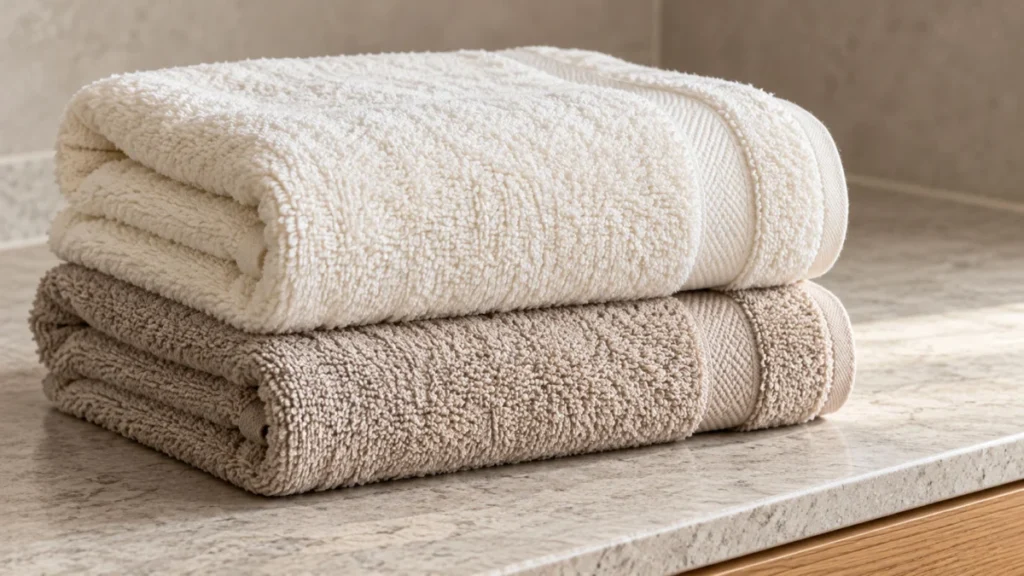
The common mantra—"replace your towels every two years"—is a staple of household management advice, yet it is often criticized by textile experts for being reductive. Like many domestic guidelines, it provides a convenient shorthand while ignoring the complex variables of daily life. A towel subjected to the humid environment of a shared bathroom in a bustling household undergoes entirely different physical stressors than a guest towel used once a month.
To determine the true lifespan of your linens, one must look past the arbitrary date on a calendar and instead evaluate the structural integrity and hygiene of the fibers themselves.
Main Facts: The Anatomy of a Towel’s Decline
At its core, a towel’s performance is a function of its fiber architecture. When a towel is new, the loops of the pile—the "terry" texture—are upright and uniform, maximizing surface area to wick moisture away from the skin. Over time, these loops become matted, the fibers lose their elasticity, and the internal structure begins to break down.
The most critical realization for the modern consumer is that age is a weak indicator of utility. A high-quality, long-staple cotton towel, when cared for with proper drying cycles and gentle detergents, can outlast a lower-quality counterpart by a significant margin. The "two-year rule" is not a expiration date; it is merely a suggestion that, by that point, most average-quality towels will have begun to lose their efficiency.
Key Indicators of Impending Replacement:
- Reduced Absorbency: The most scientific way to test a towel is to observe its interaction with water. If, upon touching water, the liquid beads on the surface rather than being instantly drawn into the pile, the fibers have become coated with detergent residue or fabric softener, or they have simply lost their absorbent structure.
- Persistent Odor: A "sour" or musty smell that lingers immediately following a high-temperature wash cycle is a definitive indicator of deep-seated biological growth. When mildew or bacteria penetrate the core of the fibers, they are no longer just on the surface; they are embedded in the textile itself.
- Structural Breakdown: Fraying edges, thinning patches in the center, and loose, dangling threads are not just aesthetic issues. They indicate that the warp and weft of the fabric are failing.
Chronology: Understanding the Lifecycle of Linens
Not all towels are created equal, nor are they utilized in the same manner. Understanding the typical lifecycle of your bathroom linens requires categorizing them by their function and intensity of use.
The Washcloth (6–12 Months)
The washcloth is the most heavily taxed item in your bathroom. Because it is used in direct contact with skin, oils, dead skin cells, and soap residue, it becomes a magnet for organic matter. This necessitates frequent, harsh washing, which accelerates the degradation of the fabric.
The Hand Towel (1 Year)
Hand towels exist in a state of constant, high-frequency use. They are touched by multiple people, often with damp or incompletely rinsed hands, and they spend the majority of their time hanging in a state of partial moisture. This environment is ideal for bacterial proliferation, necessitating a shorter replacement cycle.
The Bath Towel (1–4 Years)
- High-Frequency (Daily Use): A bath towel used every single day by a single person will typically show signs of structural fatigue within 18 to 24 months.
- Low-Frequency (Light Use): A towel used in a guest bathroom, which sees only occasional activity and benefits from long periods of complete drying, can reasonably last up to four years, provided it is stored in a well-ventilated area.
Supporting Data: Why Fiber Quality Matters
The manufacturing process plays a pivotal role in the longevity of a textile. Textiles are categorized by their "staple length"—the length of the individual cotton fibers.
Short-staple cotton is prone to shedding and fraying, as the shorter ends of the fibers are more easily pulled from the weave. Conversely, long-staple cotton (such as Egyptian or Pima) features fibers that are significantly longer and stronger. Because these fibers are longer, they have fewer "ends" exposed per square inch of fabric. This results in a smoother, more durable surface that resists piling and breaking.
When cross-referenced with usage data, towels made from long-staple fibers consistently maintain their "hand-feel" and absorbent capacity for 30% to 50% longer than standard, short-staple alternatives. Furthermore, incorporating bamboo fibers—which are naturally antimicrobial and highly absorbent—can extend the interval between deep-cleaning cycles, thereby reducing the stress placed on the fabric by the washing machine.
Official Responses and Expert Perspectives
Industry experts and textile engineers emphasize the distinction between sanitization and structural integrity. While home economics experts often conflate the two, they are distinct processes.
"Washing frequency is a hygiene protocol," says one textile consultant. "If you wash your towels every three to four uses, you are maintaining a clean environment. However, you are also subjecting the towel to the mechanical agitation of the washing machine. Over two years, that is roughly 150 to 200 cycles. Eventually, the mechanical wear of the machine will outweigh the benefits of the cleaning process."
Furthermore, environmental organizations have noted that the "fast fashion" approach to home goods—buying cheap, low-quality towels with the intent of replacing them annually—contributes significantly to landfill waste. The industry consensus is shifting toward a "quality over quantity" model: investing in high-GSM (grams per square meter) towels that, while more expensive upfront, require less frequent replacement and provide a superior user experience.
Implications: The Intersection of Hygiene and Sustainability
The decision to replace a towel has implications that reach beyond the linen closet. It is an intersection of personal hygiene, financial management, and environmental stewardship.
The Hygiene Implication
Keeping a towel past its prime is not merely a matter of comfort; it is a matter of skin health. A towel that no longer absorbs water effectively will leave the skin damp, which can contribute to irritation or, in the case of those with sensitive skin, foster the growth of bacteria on the body. A "sour" towel, even if it feels dry, is effectively a petri dish of microbial life.
The Economic Implication
Frequent replacement of low-quality items is a false economy. Calculating the "cost per use" reveals that a premium towel lasting three years is significantly cheaper than replacing a budget towel every nine months. By opting for better construction—such as double-stitched hems and reinforced loops—consumers can effectively double the lifespan of their investment.
The Environmental Implication
The textile industry is one of the world’s largest consumers of water. Extending the life of a towel by even one year has a measurable positive impact on water conservation and chemical runoff from detergents. By moving away from the "two-year" mindset and toward a "condition-based" replacement model, households can reduce their environmental footprint while simultaneously upgrading their quality of life.
Conclusion: Making the Shift to Condition-Based Care
The "two-year" rule is a vestige of a time when textile quality was less transparent. In the modern era, the discerning consumer should rely on physical assessment rather than the calendar.
Checklist for your next linen audit:
- The Absorbency Test: If water beads on the surface, your towel is failing.
- The Smell Test: If a fresh wash doesn’t yield a fresh scent, the bacteria have won.
- The Visual Inspection: Look for thin spots against a light source; if you can see through the weave, the towel is nearing the end of its life.
By monitoring these three markers, you can ensure that your home remains both hygienic and comfortable. Whether you choose to invest in high-end bamboo blends or premium long-staple cotton, the best towel is one that you treat with the care required to maximize its natural lifespan. Replace only when necessary, and your linen closet—and the planet—will be better for it.