Main Facts: A Strategic Pivot Hits a Rough Patch
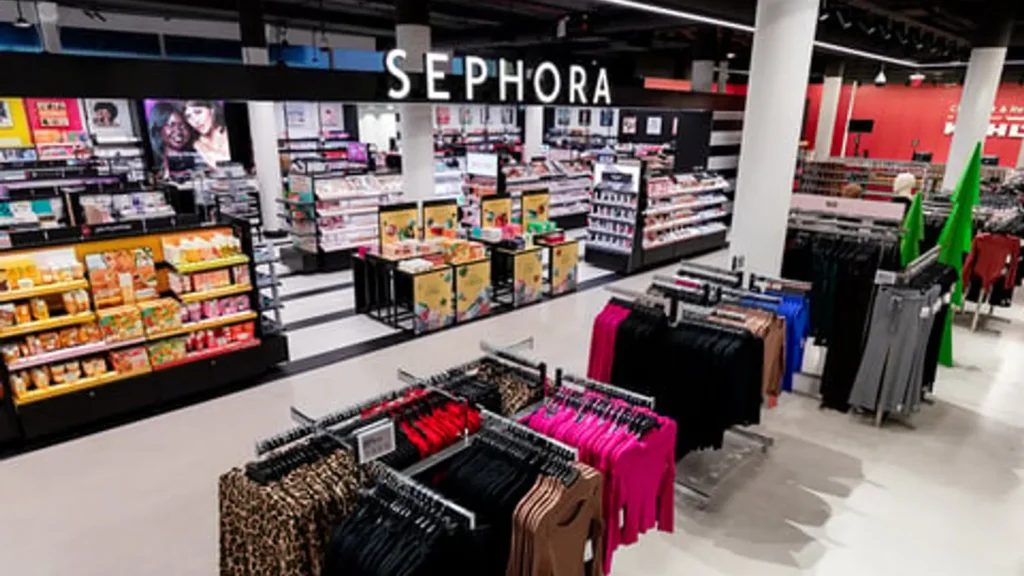
For years, the partnership between retail giant Kohl’s and beauty powerhouse Sephora was heralded as the "gold standard" of department store reinvention. By embedding a prestige beauty experience within the aisles of a mid-tier retailer, Kohl’s successfully lured younger, more affluent shoppers who might otherwise have bypassed the store. However, the momentum has shifted.
In a stark revelation during the company’s Q2 2026 earnings report, Kohl’s disclosed that sales at its Sephora shop-in-shops fell for the second consecutive quarter. The decline, a 4% drop in the second quarter following a dip in the first, marks a significant change in fortune for what was previously the company’s primary engine for growth. While Kohl’s leadership maintains a long-term bullish outlook, the immediate reality is that one of the department store’s most critical traffic-drivers is struggling to keep pace with the broader beauty market.
Chronology of a Partnership
To understand the current downturn, one must look at the rapid, aggressive rollout of the Sephora at Kohl’s concept.
- 2021: The Launch: Amid a post-pandemic retail reset, Kohl’s made a massive bet on the “shop-in-shop” model, committing to opening hundreds of Sephora boutiques within its existing footprint to capture the burgeoning prestige beauty market.
- 2022–2024: The Growth Phase: For several years, the partnership exceeded expectations. It became a cornerstone of the Kohl’s brand identity, accounting for approximately 10% of the department store’s top-line revenue. Analysts frequently cited it as the primary driver of foot traffic.
- Q1 2026: The First Warning Sign: After years of expansion, the first quarter of 2026 saw a plateau in performance, marking the first time the partnership failed to deliver the growth metrics shareholders had come to expect.
- Q2 2026: The Current State: The decline deepened to 4%, leading CEO Michael Bender to address the “softer performance” head-on during the August 26, 2026, earnings call.
Supporting Data: The Beauty Paradox
The struggle at Kohl’s is particularly paradoxical given the state of the broader beauty industry. According to research from Circana, the U.S. beauty sector has remained remarkably resilient in the first half of 2026, despite general consumer economic anxiety.
- Prestige Beauty: Sales in the prestige sector rose by 7%, surpassing $17 billion in the first six months of the year.
- Mass Market Beauty: The mass retail sector mirrored this growth, also climbing 7% to exceed $39 billion.
- Category Winners: Fragrance, skincare, and "self-care" products have been the primary drivers of this growth.
However, while the industry at large is thriving, the specific assortment at Kohl’s has failed to capture this momentum. Kohl’s CEO Michael Bender noted that while fragrance, hair care, and makeup maintained strength within their stores, "skin care had a challenging quarter." This divergence suggests that the issue may not be the consumer’s appetite for beauty, but rather the internal execution of product selection and inventory management at the shop-in-shops.
Official Responses: Navigating the Headwinds
During the Q2 earnings call, CEO Michael Bender provided a transparent assessment of why the partnership is facing its current friction. According to Bender, the stagnation is two-fold: a lack of "fresh" product innovation and unintended consequences from broader market distribution.
"We expect the softer performance we’ve seen year to date to persist until we can reach full scale with new brands and cycle through the headwinds from expanded distribution from a few of the bigger brands," Bender explained.
Essentially, Kohl’s is grappling with a dilution of exclusivity. As some of the popular brands featured in the Sephora at Kohl’s shops have increased their presence in other retail channels, the "must-visit" allure of the Kohl’s boutique has diminished. Furthermore, the company is admitting to a cyclical lag in its product pipeline, suggesting that the inventory currently on shelves is failing to excite the core customer base.

The Broader Context: A Challenging Macro Environment
The beauty struggle is occurring against a backdrop of wider systemic issues at Kohl’s. The company recently recorded its 18th straight quarter of declining comparable sales. While the performance in Q2 was technically the "best" in years—largely bolstered by a 3% growth in private label offerings—the department store continues to fight for relevance in an era where shoppers are increasingly split between high-end luxury and deep-discount off-price retailers.
Despite these challenges, experts remain cautiously optimistic. David Silverman, Senior Director at Fitch Ratings, noted that the inherent strength of the beauty category suggests this is a temporary speed bump rather than a permanent failure.
"Longer term, we expect beauty to remain a contributor to comps at Kohl’s due to inherent strength in the beauty category and the benefits of its Sephora partnership," Silverman stated. The question remains, however, whether Kohl’s can evolve its merchandising strategy fast enough to recapture the magic of the early partnership years.
Implications: The Road to Holiday Recovery
As Kohl’s pivots toward the all-important holiday season, the pressure is on to revitalize the Sephora partnership. The company has announced a series of strategic initiatives designed to stop the bleeding and boost year-end revenue:

- Assortment Expansion: The retailer is aggressively refreshing its product mix to introduce new, high-demand brands that have been missing from the shelves.
- Holiday Outposts: In a bid to drive seasonal traffic, Kohl’s is launching dedicated holiday outposts in 130 stores. These will focus on high-margin gift sets, which typically perform well during the Q4 shopping rush.
- Fragrance Towers: In a tactical move to capitalize on the strongest growth category of 2026, the company will install specialized fragrance towers in 250 stores by November.
These moves indicate that Kohl’s is shifting from a passive "shop-in-shop" approach to a more active, seasonal merchandising strategy. By leaning into the categories that are currently driving industry growth—specifically fragrance—Kohl’s hopes to reverse the 4% slide and stabilize its bottom line.
Conclusion: The Future of the Department Store Model
The recent decline in Sephora at Kohl’s sales serves as a potent reminder that even the most successful retail partnerships are not immune to market forces. The "store-within-a-store" model was designed to solve the problem of declining department store foot traffic, but as the beauty industry shifts and competition for prestige brands intensifies, the strategy requires constant, rigorous adjustment.
For Kohl’s, the next six months are critical. If the holiday initiatives—the fragrance towers, the gift sets, and the refreshed brand list—can regain the trust and attention of the beauty consumer, the company may be able to turn this two-quarter slump into a minor footnote in an otherwise successful long-term strategy. If, however, the declines persist into 2027, the company may be forced to fundamentally reconsider how it integrates prestige experiences into a value-oriented department store environment.
For now, the retail industry is watching closely, waiting to see if one of the most celebrated retail experiments of the 2020s can regain its glow.