For half a century, the concept of "luxury" has been more than a descriptor of price—it has been a bellwether for the future. From the mechanical breakthroughs of high horology to the tectonic shifts in how we define exclusivity, luxury has consistently shown the world what comes next. It is the vanguard of cultural evolution, where aesthetic daring meets uncompromising craftsmanship.

Over the past 50 years, we have seen icons emerge that transcended their utility. The Ferrari Testarossa didn’t just offer speed; it defined an era of excess. The Concorde didn’t just transport passengers; it shrank the globe. Giorgio Armani and Brunello Cucinelli didn’t just design clothes; they fundamentally altered our silhouette, moving us toward a language of relaxed elegance. Van Cleef & Arpels’ Alhambra became so culturally pervasive it found its way onto the diamond of the World Series. Even the ambitious REV Ocean project challenges the antiquated notion that serious oceanic exploration must be a spartan, industrial pursuit.

What follows is an examination of 74 defining moments—objects, people, places, and experiences—that have reshaped the landscape of how we live, travel, work, and dream.

The 1960s and 1970s: Breaking Tradition
The post-World War II era saw the decline of traditional coachbuilding as industrial efficiency took center stage. However, true luxury has always been about the subversion of the expected.

Rolls-Royce Silver Shadow (1965)
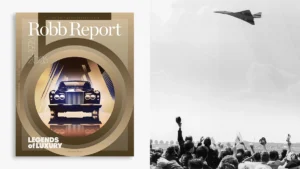
Rolls-Royce broke nearly six decades of tradition with the introduction of the Silver Shadow in 1965. By embracing monocoque construction—integrating body and chassis into a single, unified structure—the brand provided a more cosseting, sound-dampened ride than its predecessor, the Silver Cloud. Its legacy was cemented when it graced the inaugural cover of Robb Report in 1976, serving as the ultimate symbol of enduring prestige.

The Judgment of Paris (1976)
On May 24, 1976, British wine merchant Steven Spurrier assembled leading California wines against French benchmarks in a blind tasting in Paris. The result was a seismic shift in the oenological world: the Chateau Montelena 1973 Chardonnay and Stag’s Leap Wine Cellars 1973 Cabernet Sauvignon took top honors. This "tasting heard around the world" shattered the myth that fine wine was a strictly European domain, putting Napa Valley on the global map.

Studio 54 (1977)
In the disco era, access was the ultimate commodity. Opened by Steve Rubell and Ian Schrager, Studio 54 became the defining stage for a delirious mix of celebrities, sexual liberation, and theatrical excess. Its brutal door policy made "getting in" the ultimate status symbol, proving that in the late 70s, the greatest luxury wasn’t a product, but proximity to the center of the zeitgeist.

The 1980s: Ambition, Excess, and the Boutique Revolution
The 1980s were characterized by a new, unapologetic ambition. Whether it was the portable telephone or the democratization of luxury, the decade was about making a statement.

The Boutique Hotel
In the early 1980s, Bill Kimpton (Bedford Hotel) and the duo of Ian Schrager and Steve Rubell (Morgans) disrupted the hospitality industry. They proved that luxury didn’t have to be measured in square footage. By focusing on sharp design, intimate settings, and social-hub lobbies, they invented the boutique hotel model, which remains the gold standard for modern luxury hospitality.

Motorola DynaTAC 8000X (1984)
At $3,995 and weighing two pounds, "The Brick" was the ultimate flex for the 1980s executive. It was bulky, conspicuous, and expensive—all of which were features, not bugs. Carrying one signaled that your time was too valuable to be tethered to a desk. Its cinematic immortalization in Wall Street by Gordon Gekko solidified it as the definitive badge of executive clout.

Hermès Birkin Bag (1984)
Born from a serendipitous meeting on a flight between Jane Birkin and Hermès executive chairman Jean-Louis Dumas, the Birkin Bag solved a practical problem: the need for a capacious, elegant bag for a young mother. In doing so, Dumas created one of the most elusive status symbols in history, with a secondary market value that often eclipses that of luxury automobiles.

The 1990s: The Era of Bold Innovation
As the millennium approached, luxury brands began to experiment with art, extreme performance, and the reconfiguration of the "exclusive" experience.

McLaren F1 (1992)
Gordon Murray’s masterwork, the McLaren F1, remains a benchmark for the automotive world. With a three-seat cockpit, central drive position, and a naturally aspirated V-12 that pushed the car to a record 240 mph, it was the pinnacle of road-car engineering. Its recent auction prices—some exceeding $34 million—prove that true innovation never depreciates.

The Infinity Pool
While the Hotel du Cap-Eden-Roc had long been a landmark, the 1990s transformation of its pool into a gravity-defying, horizon-dissolving feature changed resort design forever. The infinity pool became the ultimate photo opportunity, a visual shorthand for five-star status that has since been replicated from the clifftops of the Maldives to the skyscrapers of Dubai.

F.P. Journe’s Independent Revolution (1999)
Françoise-Paul Journe launched his eponymous brand by reviving the 18th-century subscription model, raising funds from 20 collectors for a watch that didn’t yet exist. His subsequent Tourbillon Souverain and Chronomètre à Résonance proved that independent watchmaking could not only compete with the "Holy Trinity" of Swiss watchmaking but could offer a level of technical and artistic freedom that the larger houses could not match.

The 2000s and 2010s: The New Normal of Luxury
In the 21st century, luxury moved toward the experiential, the collaborative, and the hyper-niche.

Noma and the Culinary Vanguard (2003)
René Redzepi’s Noma redefined the global culinary conversation. By shifting the focus to foraging, locavorism, and fermentation, Noma made "New Nordic" the most influential culinary movement of the decade. While its legacy is now complicated by internal controversies, its impact on how the world eats—and how chefs are perceived—is an undeniable chapter in modern history.

The Hybrid Supercar Era (2013)
The holy trinity of the McLaren P1, Ferrari LaFerrari, and Porsche 918 Spyder signaled a new epoch. By integrating F1-derived hybrid technology, these cars proved that electrification could be used to amplify performance, not just efficiency. They were the bridge between the analog past and the high-tech future of the supercar.

Supreme x Louis Vuitton (2017)
Perhaps the most significant disruption in modern fashion, the collaboration between the house of Louis Vuitton and the streetwear giant Supreme forced a reckoning in the luxury sector. It proved that the "luxury halo" could be cast over brands that were previously considered "street level," permanently changing the consumer base and vocabulary of the high-fashion world.

Supporting Data: The Value of Provenance
The value of these objects is rarely stagnant. The trajectory of the Patek Philippe Nautilus Ref. 5711 and Paul Newman’s Rolex Daytona demonstrates that provenance and rarity are the primary drivers of modern luxury value. When Newman’s Daytona sold for $17.75 million in 2017, it redefined the entire vintage watch market. Similarly, the Leonardo da Vinci Salvator Mundi sale of $450.3 million at Christie’s shifted the art world into a financial tier previously reserved for sovereign states and mega-corporations.

Implications for the Future
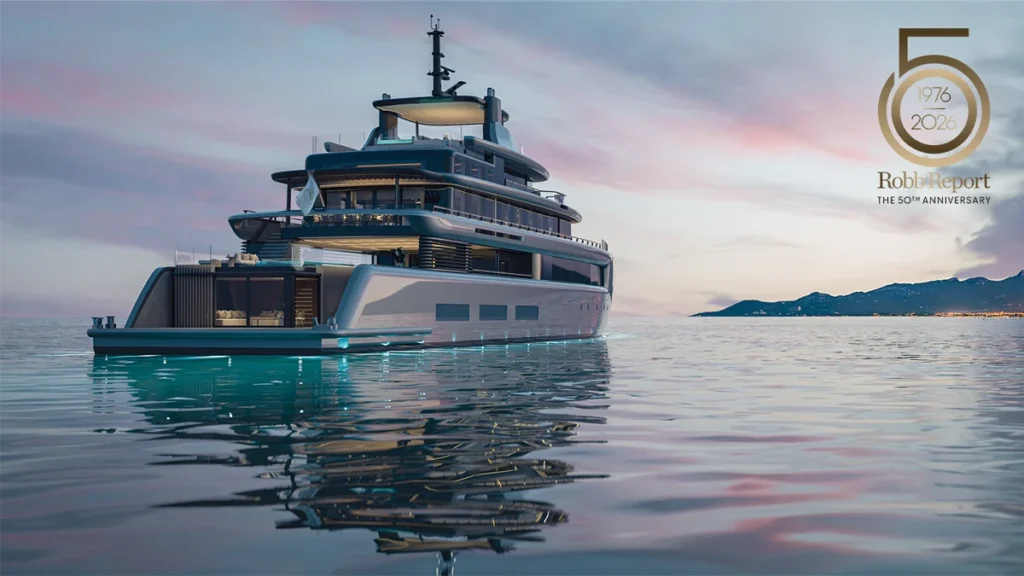
The thread connecting these 74 items is simple: they all challenged the status quo. Whether it is Benetti’s B.Loft 65M redesigning the interior architecture of a yacht or the rise of private racetrack clubs, the luxury sector is currently moving toward a model of total personalization and immersive experience.

As we look toward the next 50 years, the definition of luxury will likely shift further away from the possession of goods and toward the ownership of time and unique, scientifically grounded experiences. If the past five decades are any indication, the next era of luxury will not just define what we own—it will define who we become.