By Yoon Young-kwan
August 21, 2026
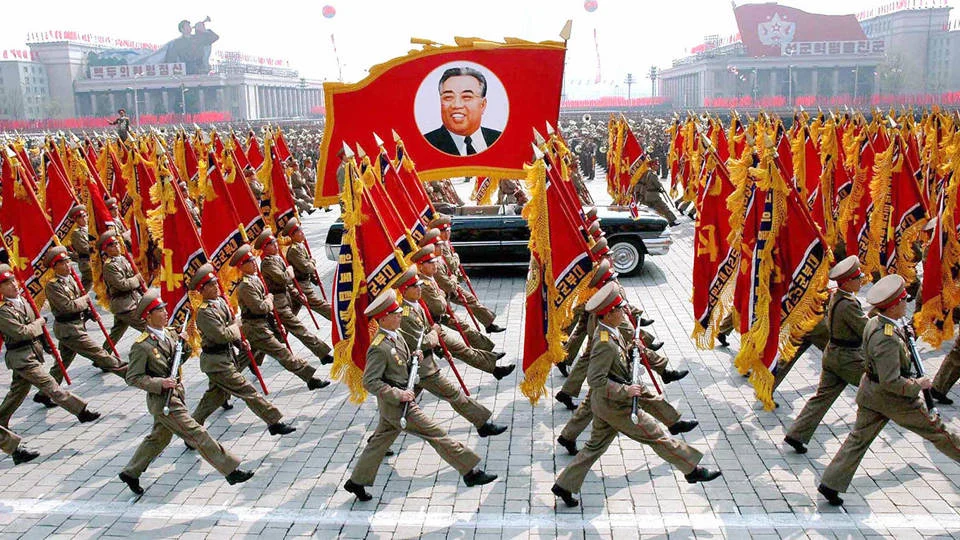
The North Korean state is often analyzed through the cold prisms of nuclear proliferation, economic isolation, and conventional military posturing. However, beneath the surface of ballistic missile trajectories and sanction-evasion schemes lies a foundational engine that has sustained the Kim dynasty for three generations: a state-sanctioned theology. As a new, seminal study reveals, the regime has effectively repurposed Christian doctrine, imagery, and structural hierarchy to deify its founders, transforming a political autocracy into a secular religion.
This ideological bedrock is now colliding with a volatile new chapter in international diplomacy. As U.S. President Donald Trump initiates a controversial re-engagement strategy with Kim Jong-un, the foundational nature of the North Korean state—a regime built on the absolute, near-divine authority of its leaders—is proving to be an immovable obstacle to traditional denuclearization diplomacy.
The Theology of the Kim Dynasty: A Secular Religion
At the heart of the Democratic People’s Republic of Korea (DPRK) lies the Juche ideology, which has evolved far beyond a political philosophy. Scholars have long noted the uncanny parallels between the state’s veneration of Kim Il-sung and the structure of religious practice.
The regime has co-opted Christian concepts—the "Great Leader" as a messianic figure, the "immortality" of the leader’s soul, and the demand for absolute, unquestioning faith—to solidify control. By weaving these motifs into the fabric of daily life, the Kim dynasty has insulated itself from the volatility that typically causes totalitarian regimes to collapse. This "religious" architecture ensures that any challenge to the Kim family is not merely seen as dissent, but as heresy.
Chronology: From Engagement to Re-Engagement (2018–2026)
To understand the current geopolitical friction, one must trace the winding path of U.S.-North Korean relations over the last decade:
- 2018–2019: The "Singapore-Hanoi" Era: Initial high-stakes summits raised global hopes for a "grand bargain," yet these talks ultimately stalled as the U.S. demanded complete, verifiable denuclearization, while Pyongyang insisted on immediate sanctions relief.
- 2020–2023: The Era of Strategic Silence: As the global pandemic took hold, North Korea retreated into near-total isolation, further hardening its domestic ideological posture.
- 2024–2025: Escalation: Pyongyang resumed long-range missile testing at an unprecedented rate, signaling a move away from diplomatic patience and toward a "new Cold War" alignment with Moscow and Beijing.
- August 2026: The "Trump Pivot": President Trump, in a surprise move, signaled a willingness to bypass traditional diplomatic channels to engage directly with Kim Jong-un once more. Crucially, as part of this outreach, the U.S. moved to significantly curtail joint military exercises with South Korea, a move designed to lower the "provocation threshold" for Pyongyang.
Supporting Data: The Cost of Unpredictability
The decision to scale back joint military drills—the bedrock of the U.S.-ROK security alliance—has sent shockwaves through the regional security apparatus. Defense analysts point to several key data points that highlight the risks of this policy:
- Readiness Degradation: Joint exercises are not merely symbolic; they are essential for interoperability between U.S. and South Korean forces. A 30% reduction in simulation and field-training exercises, as observed in recent months, significantly hampers the ability of the combined command to respond to a "flashpoint" scenario.
- Economic Volatility: The KOSPI (Korea Composite Stock Price Index) has seen a marked increase in volatility since the announcement, reflecting investor anxiety over the potential for a weakening U.S. security guarantee.
- Nuclear Posture: North Korean media outlets have increased their rhetoric regarding "tactical nuclear readiness," suggesting that the regime views the current diplomatic thaw not as a path to disarmament, but as a window of opportunity to finalize its second-strike capabilities.
Official Responses: A Divided Region
The response from regional stakeholders has been marked by skepticism and, in some quarters, alarm.
The South Korean Perspective:
In Seoul, the government of South Korea is walking a diplomatic tightrope. Publicly, officials maintain that the alliance remains "ironclad." Privately, however, there is profound frustration. By failing to consult Seoul on the curtailment of military exercises, the U.S. has fed the domestic narrative in South Korea that the U.S. might eventually trade South Korean security for a superficial deal that leaves the North’s nuclear arsenal intact.
The Chinese Position:
Beijing’s reaction is arguably the most complex. While China has historically feared a collapse of the North Korean regime, it also fears a North Korea that acts independently of Chinese influence. Analysts suggest that Xi Jinping is deeply displeased by Trump’s approach. If Kim Jong-un secures a direct line to Washington, he gains leverage that could allow him to play the U.S. against China, thereby diminishing Beijing’s status as Pyongyang’s primary security guarantor.
The U.S. Administration:
The White House maintains that the "Trump Pivot" is a necessary departure from the failed policies of the past. Officials argue that by lowering the "noise" of military exercises, the U.S. can entice Kim Jong-un into a long-term conversation about economic integration, theoretically moving North Korea away from its reliance on nuclear weapons.
Implications: The Failure of Liberal Diplomacy
The crux of the current crisis is a fundamental misunderstanding of the North Korean state. Western policymakers often approach the DPRK as a "rational actor" motivated by regime survival and economic prosperity. However, when the regime is viewed through the lens of its own "theological" personality cult, a different picture emerges.
For Kim Jong-un, the nuclear arsenal is not merely a defensive tool; it is a religious totem of the state’s "divinity" and its independence from foreign powers. As long as the regime relies on the deification of the Kim bloodline to maintain control, the prospect of genuine denuclearization remains near-zero.
1. The Erosion of the Alliance
The most immediate implication of the current policy is the potential fraying of the U.S.-ROK alliance. If South Korea perceives that the U.S. is prioritizing a transactional deal with Pyongyang over the security of its primary ally, it may feel compelled to pursue its own nuclear deterrence capabilities—a move that would trigger a catastrophic arms race in East Asia.
2. The China Factor
By empowering Kim Jong-un, the U.S. may unintentionally destabilize the regional order that China has worked for decades to manage. A more confident, independent North Korea is not necessarily a more peaceful one. It is a regime that, empowered by the U.S. "pivot," may feel emboldened to push further into the South or to engage in more aggressive posturing against regional neighbors.
3. The Ideological Trap
Finally, the "theological" nature of the North Korean regime suggests that diplomacy cannot succeed if it treats the DPRK as a conventional nation-state. Policies that fail to account for the regime’s need to maintain its internal mythos are doomed to repeat the failures of the past decade.
Conclusion: A Dangerous Path Forward
As we look toward the remainder of 2026, the situation on the Korean Peninsula appears more precarious than it has in years. The combination of an unpredictable American foreign policy and a North Korean regime that is increasingly insulated by its own secular-religious cult of personality creates a combustible environment.
The U.S. strategy of re-engagement may well be aimed at achieving a historic breakthrough, but it risks sacrificing the stability of the entire region. By undermining the security architecture that has maintained the peace for seventy years, and by failing to recognize the theological rigidity of the Kim dynasty, the current administration may be inviting a crisis that is far more difficult to resolve than the ones it seeks to end. The path to peace requires more than just high-level summits; it requires a sophisticated understanding of a regime that views itself not as a state, but as an eternal faith.