For over a century, the floor of the North Sea has served as a silent, cold repository for the ghosts of the First World War. Among these submerged memorials lies the UC-30, a German submarine that met a violent end in April 1917. Abandoning a failed mission to Ireland due to mechanical failure, the vessel was limping home when it struck a British mine near Rømø. The resulting explosion claimed the lives of all 27 crew members and sent the heavily armed submarine—laden with 18 mines and six torpedoes—to the seabed.
For nearly 100 years, the UC-30 remained a forgotten tomb. It was not until 2016 that Danish diver Gert Normann Andersen rediscovered the wreck. However, what was once considered merely a historical site of interest has emerged as a focal point for a pressing environmental crisis. As the iron hulls of these wartime relics succumb to the relentless corrosion of the salt water, they are leaking toxic chemicals into the marine ecosystem, turning once-hallowed graves into active sources of pollution.
A Chronology of Conflict and Concealment
The strategic importance of the North Sea during World War I cannot be overstated. For both the German Empire and the British Empire, control of these waters was the linchpin of their respective war efforts. By dominating the North Sea, nations could blockade enemy supplies, starving their opponents of vital resources and raw materials.
Germany, possessing a surface fleet significantly smaller than the British Royal Navy, turned to the U-boat as its primary weapon of asymmetric warfare. These submarines were designed to slip past blockades, lurking in the shadows to devastate British merchant shipping. Simultaneously, both sides engaged in an unprecedented campaign of naval mining. Historians estimate that approximately 190,000 mines were deployed across the North Sea, transforming the region into a lethal labyrinth.
The climax of this naval attrition was the Battle of Jutland, fought off the coast of Northern Jutland. As the largest naval clash in human history, it involved massive fleets of dreadnoughts and destroyers. By the time the smoke cleared, over 25 ships lay at the bottom of the sea, and nearly 10,000 sailors had perished. These losses, combined with the attrition of the U-boat war, left the seabed scattered with thousands of wrecks—vessels that today represent a lingering chemical hazard.
The NorthSeaWrecks Project: Uncovering the Invisible Threat
The realization that these wrecks were more than just historical artifacts led to the establishment of the NorthSeaWrecks research project. Katrine Juul Andresen, a professor at the Department of Geoscience at Aarhus University, has been at the forefront of investigating how these deteriorating metal shells interact with the modern environment.
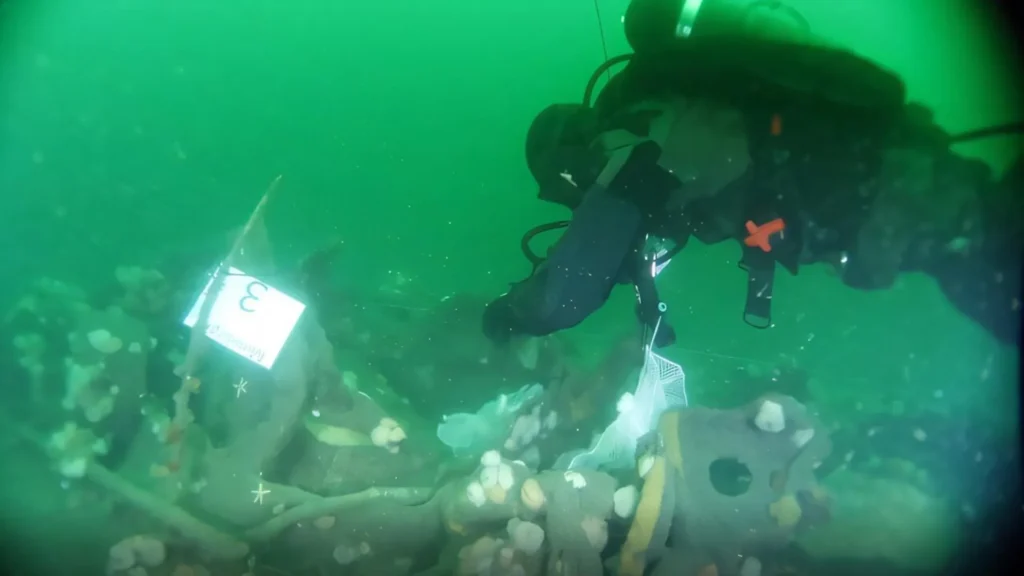
The research process is fraught with difficulty. Because civilian diving on the UC-30 and similar sites is strictly prohibited to protect the sanctity of the wrecks and the safety of the public, Andresen’s team relied on the expertise of the Danish Navy. Navy divers were tasked with conducting delicate operations, including the collection of water, sediment, and biological samples from the wreck’s immediate vicinity. They also utilized high-definition video and photography to map the structural integrity of the submarine and the exposure of its onboard munitions.
The findings were unequivocal: the UC-30 is hemorrhaging toxic substances. "We found traces of TNT in the wildlife, the seabed, and the water column," Andresen reports. The explosives, intended to sink enemy warships over a century ago, are now dissolving into the marine environment. While the current pollution is relatively localized, the degradation of the ship’s hull is an ongoing process. As the steel collapses, more explosive material is exposed to the sea, threatening to expand the contamination zone and impact local biodiversity.
Data and Scale: A Continental Problem
The UC-30 is not an isolated incident; it is a symptom of a much larger, continent-wide environmental headache. In 2024, Andresen authored a comprehensive report for the Danish Environmental Protection Agency (DEPA) that surveyed the scale of the issue within Danish waters.
The numbers are staggering. The report identified 10,127 wrecks scattered across Danish territorial waters. Of these, approximately 15 percent date to the periods of the two World Wars. This massive accumulation of steel and munitions poses a complex challenge for the Danish government as it seeks to comply with the stringent requirements of the EU Water Framework Directive, which mandates the maintenance of high-quality marine environments.
The report serves as a wake-up call for policymakers. While individual wrecks might seem manageable, the cumulative impact of over 1,500 war-era vessels leaking chemicals into the Baltic and North Seas is a looming ecological disaster. The question is no longer whether these wrecks are polluting the sea, but rather how much damage they will cause before intervention becomes mandatory.
The Conundrum of Remediation
Addressing the threat posed by these wrecks is far from simple. While Germany has taken proactive steps to recover munitions from the Baltic Sea—largely due to the vast quantities of ammunition dumped by Allied forces after WWII—the process is prohibitively expensive and technically dangerous.
"The Germans are further ahead with this than we are in Denmark," Andresen notes. "They sometimes retrieve explosives from the wrecks and neutralize them, but doing so is very costly."
The instinct to simply destroy the munitions in place is often counterproductive. Detonating explosives underwater creates massive shockwaves that can cause collateral damage to marine life and, more importantly, disperse toxic chemical residues over a wider area. As Andresen explains, the success of any cleanup operation depends entirely on the local geography. Currents, water depth, and the composition of the seabed determine whether intervention will save the ecosystem or accelerate its degradation. In many cases, disturbing a stable, corroding wreck may do more harm than leaving it buried in the silt.
Technological Solutions: Robotics and Future Strategies
In response to these challenges, the EU-funded REMARCO project is investigating innovative, "gentle" solutions for managing submerged munitions. The goal is to move away from destructive remediation techniques and toward precision monitoring and targeted removal.
One of the most promising avenues involves the deployment of advanced autonomous underwater vehicles (AUVs) and crawling robots. These machines are designed to traverse the seafloor, mapping the exact locations of hazardous materials with pinpoint accuracy. By monitoring the rate of decay in real-time, researchers can prioritize which wrecks pose the highest risk to human health and the environment.
In the future, these robots could potentially perform more complex tasks, such as the safe extraction of explosive components. However, researchers are quick to temper expectations. Total removal is neither practical nor necessary. The sediment of the North Sea acts as a natural containment vessel; wrecks that are fully or partially buried are often effectively sealed off from the water column.
"It is a matter of identifying where the environmental threat is greatest," Andresen concludes. The focus, therefore, must shift toward a risk-based management strategy. Authorities must categorize the thousands of wrecks based on their structural integrity and the toxicity of their contents, intervening only where the threat to the marine environment is immediate and significant.
Implications for the Future of Maritime Policy
The story of the UC-30 highlights a profound irony of modern history: the weapons that once defined national power have become a source of national liability. As the metallic remains of the First World War continue to disintegrate, the international community is forced to reckon with a legacy that was, for decades, literally submerged and forgotten.
The implications for maritime policy are significant. Countries bordering the North and Baltic Seas must now collaborate on a massive scale to monitor these underwater sites. This is not merely an issue of historical preservation, but a fundamental question of environmental stewardship. The NorthSeaWrecks project and the work being conducted by researchers like Katrine Juul Andresen represent the first steps in a long, expensive, and technically daunting process of environmental rehabilitation.
As we look toward the future, the integration of robotics, geochemical monitoring, and international policy will be essential. The "silent ticking time bomb" on the seafloor serves as a stark reminder that even a century after the guns have fallen silent, the scars of war remain etched into our world—and that the cost of these conflicts continues to be paid by the environment long after the last veteran has passed. Protecting our oceans from this hidden toxicity is not just a scientific challenge; it is a moral imperative to ensure that the mistakes of the past do not compromise the health of our seas for generations to come.