

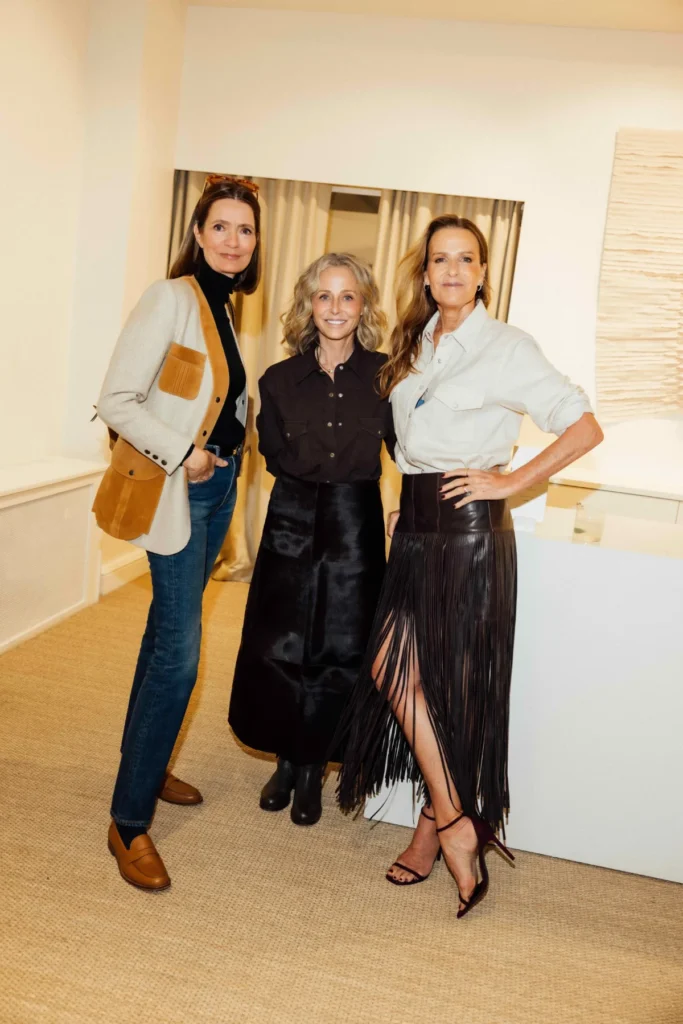
In the sophisticated heart of London’s Mayfair district, a new dialogue between American pragmatism and British elegance has taken root. TWP, the rising fashion powerhouse founded by industry visionary Trish Wescoat Pound, has officially marked its transition from a U.S.-centric brand to an international retail force. With the opening of its first store outside the United States at 28 Bruton Street, the brand is not merely expanding its footprint—it is curating a cultural bridge between two of the world’s most influential fashion capitals.
Spanning an impressive 2,200 square feet, the new flagship serves as a physical manifestation of the brand’s identity: refined, intentional, and deeply personal. By anchoring itself in the prestigious Mayfair neighborhood, TWP signals a maturation of its retail strategy, moving beyond wholesale partnerships to establish a direct, immersive relationship with the global consumer.
The Architectural Synthesis: Where the Midwest Meets Mayfair
The design of the Bruton Street boutique is a masterclass in architectural preservation and juxtaposition. Rather than imposing a sterile, modern retail aesthetic, founder Trish Wescoat Pound and her team opted to celebrate the historical bones of the building. The original paneled walls, characteristic of London’s heritage architecture, remain intact, providing a warm, textural backdrop for the brand’s contemporary collections.
This historical foundation is softened by a recurring signature: wall-to-wall sea grass flooring. This design choice, which mirrors the interior language of the brand’s flagship on Madison Avenue in New York, creates an immediate sense of continuity for loyal patrons while offering a tactile, organic contrast to the formal paneling.
To bridge the gap between London’s urban sophistication and the American roots of the brand, the store incorporates subtle, evocative elements. A lush swath of grass installed along the interior of the shopfront window serves as a poetic nod to the vast prairies of the American Midwest, where Wescoat Pound grew up. This natural element is punctuated by a carefully curated mix of furniture and fixtures. The interior features bespoke bronze racks—sleek, modern, and industrial—sitting in deliberate contrast to vintage discoveries, such as an antique Swedish farm table that anchors the floor plan.
The interior design process was elevated by a collaboration with Rose Uniacke, the English designer widely regarded as a titan of interior aesthetic. Her furniture selections bring a sense of gravity and heritage to the space, while the walls are treated with Edward Bulmer Natural paint, a choice that underscores the brand’s commitment to sustainable, high-quality finishes.
A Chronology of Growth: From Oxford Street to Bruton Street
The arrival at 28 Bruton Street represents a significant milestone in a rapid growth trajectory. To understand the gravity of this opening, one must look back at the brand’s initial steps into the U.K. market.

Two years prior to this flagship launch, Wescoat Pound and co-founder Andrew Rosen celebrated the brand’s introduction to the London market through a high-profile placement at the Selfridges flagship on Oxford Street. That strategic entry served as a testing ground, allowing the brand to gauge the appetite of the British consumer for its specific brand of tailored, high-end American sportswear. The success of the Selfridges tenure provided the confidence and capital necessary to seek out a standalone location.
The process of securing the Mayfair address was a calculated move. For a brand that balances the "everyday" with the "extraordinary," Mayfair provides the perfect pedigree. Since the partnership with Selfridges, the brand has been steadily building its international reputation, culminating in this current moment where the brand now operates 12 stores globally. This expansion is not merely about volume; it is about establishing a "home" for the brand in markets that value the intersection of design, art, and retail.
Supporting Data: The Art of Retail Curation
A cornerstone of the TWP retail experience is the integration of fine art, transforming the shopping environment into a living gallery. The Bruton Street location continues this tradition, moving away from the traditional, static retail display in favor of an environment that feels like a collector’s private residence.
The brand has forged a strategic partnership with Onna House, an organization dedicated to the elevation and support of female artists. This collaboration is immediately visible upon entering the shop. The space is populated with "Lattice Orb" and "Vessels" by stylist and sculptor Deborah Brett, pieces that blur the line between utility and fine art.
Perhaps the most striking installation is "Wall of Fragments" by Jaclyn Mednicov. Situated at the entrance, this work—comprising a mosaic of glazed, broken ceramics—serves as an immediate sensory hook for visitors. The dialogue between the fragile, broken elements and the resilient, structured clothing creates a narrative of beauty found in reconstruction. The installation extends into the fitting rooms, where Mednicov’s works, titled "Meadow" and "Garden," invite the client into a serene, meditative space.
Crucially, the brand has adopted a "buy-what-you-see" policy. Every piece of art, every sculptural element, and every vintage furnishing is available for purchase, effectively turning the retail staff into art consultants. This adds a layer of depth to the transaction, suggesting that the TWP customer is buying into a lifestyle that encompasses interior design, art appreciation, and personal style.
Official Perspectives: The "Pinch-Me" Moment
For Trish Wescoat Pound, the opening of the London flagship is more than a business development; it is the fulfillment of a long-term vision for the brand’s global relevance.

"Starting in London made complete sense to us," Wescoat Pound noted during the opening festivities. "It’s one of the most international cities in the world, so we’re able to connect with people from all over, not just one market. It’s a real ‘pinch me’ moment opening in the heart of Mayfair."
Her co-founder, Andrew Rosen, was instrumental in facilitating the transition, bringing his extensive experience in scaling fashion brands to the table. The opening was marked by a series of events that solidified the brand’s position within the London social and fashion scene. A private cocktail hour at the store was followed by an intimate dinner at Bar Finch, co-hosted by the brand’s leadership alongside prominent figures India Hicks and Alex Eagle.
The guest list served as a "who’s who" of the industry, signaling the brand’s warm reception by the British fashion establishment. Attendees included brand founders such as Chrissie Rucker, Melissa Odabash, and Wiggy Hindmarch, alongside the notable writer Plum Sykes. This gathering served to validate the brand’s cultural resonance, proving that TWP has successfully moved beyond its American origins to become a legitimate player in the European market.
Strategic Implications: What’s Next for the Brand?
The opening of the London flagship provides a blueprint for how luxury brands can navigate international expansion in an era of digital-first retail. By prioritizing a "physical-first" strategy in key global nodes, TWP is banking on the idea that, even in a digital world, the tactility of the retail experience—the feel of the sea grass underfoot, the weight of a bronze rack, the texture of a ceramic installation—remains the most effective way to build brand equity.
The implications for the brand’s future are clear:
- Diversification of Market Reach: By establishing a base in London, TWP is better positioned to cater to international tourists who may not visit their New York flagship, thereby diversifying their customer base.
- Elevated Positioning: The choice of Mayfair and the collaboration with Rose Uniacke place the brand firmly within the luxury, rather than merely "aspirational," tier of fashion.
- The Gallery-Retail Hybrid: The success of the Onna House partnership suggests that future TWP locations will likely continue to lean into the role of a local cultural hub, potentially opening doors for more collaborations with regional artists in other international cities.
As the brand now stands with a dozen locations across the globe, the question for observers is no longer whether they can survive the transition to a global player, but how they will continue to differentiate themselves in an increasingly crowded luxury landscape. If the Bruton Street opening is any indication, the answer lies in a commitment to storytelling, artistic integrity, and a willingness to embrace the heritage of the locations they inhabit.
TWP has effectively turned 28 Bruton Street into more than just a store; it is a destination. In doing so, Trish Wescoat Pound has ensured that the brand is not just selling clothing, but participating in the ongoing conversation about what it means to be a modern, global brand. The "pinch-me" moment may have passed, but the long-term work of building a legacy in London has only just begun.



