Introduction: An Ancient Epic Re-emerges
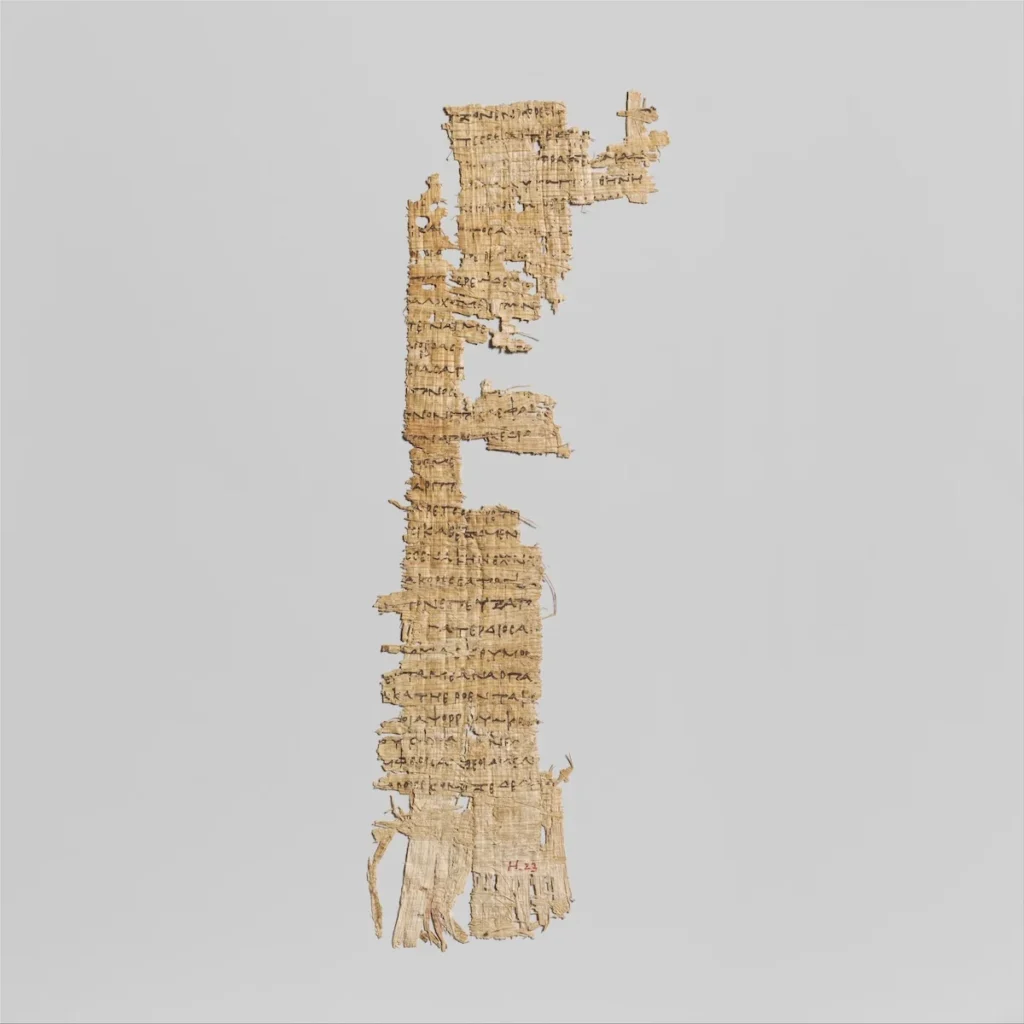
In a moment of serendipitous alignment between contemporary pop culture and classical antiquity, the Metropolitan Museum of Art has returned its most prized literary relic to public view. Following a period of extended conservation and storage, the oldest known papyrus fragment of Homer’s The Odyssey is once again on display in Gallery 162, the heart of the museum’s Greek and Roman Art department.
The re-emergence of this artifact—dating back to the early Ptolemaic period (circa 285–250 BCE)—comes at a time when Homeric themes have returned to the cultural zeitgeist, spurred in part by the widespread success of recent cinematic reinterpretations of classical myths. As visitors flock to the Met to witness this delicate, charcoal-inscribed piece of history, they are not merely looking at a fragment of papyrus; they are confronting the fluid, evolving nature of Western literature’s most foundational text.
The Chronology of a Masterpiece
To understand the significance of this fragment, one must look at the timeline of its creation and its subsequent journey into the modern museum archive.
- Circa 285–250 BCE: The fragment is inscribed in Egypt. During this period, the Hellenistic world was grappling with the codification of Homeric verse. Unlike the standardized versions of the Odyssey taught in modern classrooms, the text in the 3rd century BCE existed in a state of performance-based flux.
- The Antiquity Gap: For centuries, this papyrus remained buried in the Egyptian sands, preserved by the arid climate, while the oral tradition of the Odyssey transitioned into the manuscript culture of the Roman and Byzantine eras.
- Discovery and Acquisition: The papyrus was eventually unearthed, documented, and acquired by the Metropolitan Museum of Art. Its inclusion in the museum’s collection marked a pivotal moment for classical scholarship, providing empirical evidence of how Homer’s epic existed before the Alexandrian scholars attempted to "fix" the text into a canonical standard.
- Contemporary Conservation: After a long hiatus from public display, the Met’s curatorial team—led by Sean Hemingway—undertook a rigorous review of the artifact. Its return to Gallery 162 in late summer 2026 marks the first time in recent years that it has been accessible to the general public in such a prominent setting.
Supporting Data: The Anatomy of the Fragment
The fragment is a masterclass in ancient scribal technology. Measuring only a few inches, it contains text written in a crisp, clear hand using a stylus dipped in a mixture of charcoal and water.
The "Missing" Lines
Perhaps the most tantalizing aspect of the fragment is the presence of three lines that are entirely absent from the modern "standard" edition of the Odyssey. These lines provide a rare, tangible window into the practice of the ancient bards. In the oral tradition, singers (or aoidoi) were not mere reciters; they were poets who adapted, embellished, and expanded upon the core narrative to suit their audiences.
The existence of these lines proves that there was no "official" version of the Odyssey in the 3rd century BCE. Instead, there was a living, breathing body of work that shifted based on the location and the performer. This discovery challenges the modern assumption that classical texts were static, unchanging monuments of literature.
Materiality and Provenance
The use of papyrus—the most ubiquitous writing material of the Ptolemaic era—highlights the intersection of high literature and everyday utility. The Met notes that the preservation of this specific piece is an anomaly of history, saved by the very desert conditions that often claimed the majority of ancient papyri. By placing the fragment in Gallery 162, the Met allows visitors to contrast the fragile, organic nature of the medium with the eternal, stone-carved legacy of the stories themselves.
Official Responses and Curatorial Insight
Sean Hemingway, the curator in charge of the Department of Greek and Roman Art, has been instrumental in recontextualizing this piece for a modern audience. In a recent digital outreach campaign, including a viral Instagram reel, Hemingway provided a rare "front and back" view of the papyrus, explaining its structural integrity and the specific scribal techniques used to bind the charcoal to the papyrus fibers.
"These three lines represent the ‘living’ Homer," Hemingway explained in his commentary. "They were the work of bards who were not bound by the rigidity of a printed book. They were performers who understood that the story of Odysseus was a journey that belonged to the people, not just the scholars."
The Met’s official perspective, outlined in its online collection portal, draws a poetic parallel between the artifact and the protagonist: "Like the Greek warrior, this object reminds us that the telling of The Odyssey itself has taken its own distinct journey through history." This framing acknowledges that the artifact is not just a remnant of a story, but an active participant in the story’s own evolution.
Implications: Why This Matters Today
The return of the Odyssey fragment is more than just a win for museum attendance; it has profound implications for how we view the humanities in the 21st century.
1. The Death of the "Definitive" Text
In an age of digital standardization, where we expect every copy of a text to be identical, the existence of these three "lost" lines serves as a necessary provocation. It reminds students and scholars alike that authenticity is often found in the variations, not the commonalities. It invites a re-evaluation of what we consider "canonical" and highlights the value of diversity in historical documentation.
2. The Pop Culture Conduit
The Met’s decision to re-display the fragment in the wake of the summer’s "classical-themed" blockbuster movies is a calculated and successful strategy. It bridges the gap between mass-market entertainment and high-level academic inquiry. By positioning the artifact as a "pre-sequel" or "alternative version" to what audiences saw on the big screen, the museum is effectively demonstrating that pop culture and antiquity are not mutually exclusive—they are part of the same ongoing conversation.
3. The Future of Museum Curation
The use of social media to explain the significance of the fragment demonstrates a shift in how institutions communicate with the public. By offering a "behind-the-scenes" look at the curation process, the Met has transformed a quiet, academic object into a point of viral interest. This strategy proves that ancient history, when presented with the right narrative framework, remains as relevant and exciting as the latest theatrical release.
Conclusion: A Living Legacy
As the Metropolitan Museum of Art continues to display the oldest known fragment of the Odyssey, it offers visitors an invitation to step back into a time when stories were not merely read, but lived. The three lines that do not exist in our modern books are a reminder of the thousands of voices that have shaped, shifted, and sustained the tale of Odysseus over nearly three millennia.
In the quiet of Gallery 162, the ink may be fading, but the narrative—characterized by its wanderings and its resilience—is as vibrant as ever. For those willing to look closely, the fragment is not just an ancient artifact; it is a mirror reflecting the way we, too, continue to interpret and reinterpret the epic stories of our own lives.
Whether one is a scholar of classical Greek, a film buff, or a casual museum-goer, the return of this papyrus is a reminder that some stories are too vast to be contained within a single version. They are, and always will be, a journey.