

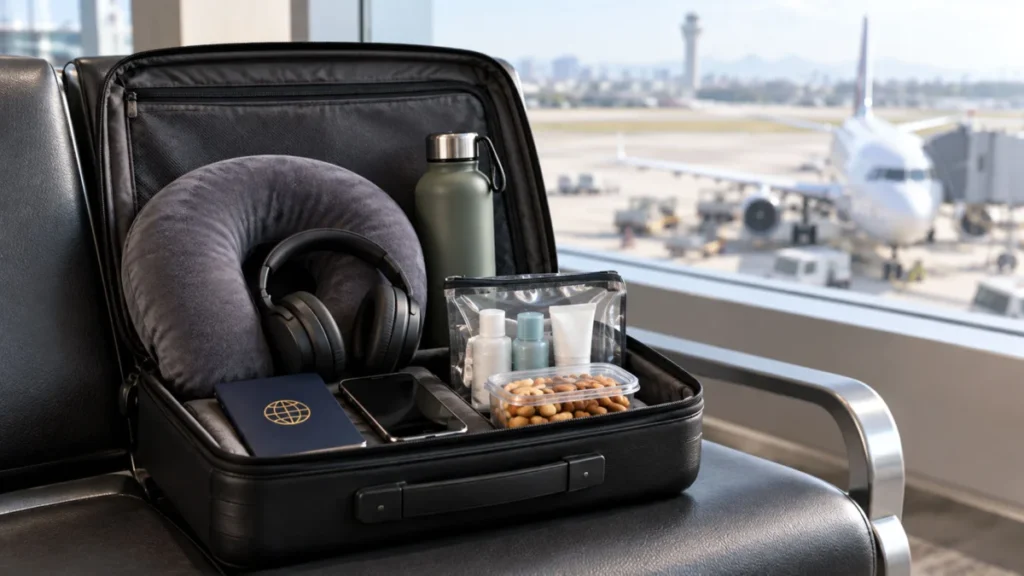
For many travelers, the anxiety begins long before arriving at the airport. It starts in the living room, surrounded by a pile of belongings, trying to navigate the complex maze of Transportation Security Administration (TSA) regulations and airline-specific baggage constraints. The uncertainty of what can be packed, what must be checked, and what will inevitably be confiscated at the security checkpoint turns what should be the beginning of a vacation into a high-stakes ordeal.
However, air travel doesn’t have to be a source of stress. With the right strategy, a well-curated carry-on can transform a grueling long-haul flight into a seamless, restorative experience. This guide explores the essential mechanics of smart packing, the science of in-flight comfort, and the critical regulatory landscape every traveler must navigate.
The Anatomy of a Perfect Carry-On: Main Facts and Strategy
The primary goal of a carry-on is to serve as a mobile survival kit. When packing, the golden rule is "essentiality." Every item that earns a place in your carry-on should justify its weight by serving a specific purpose—whether that is maintaining your health, ensuring comfort, or protecting your travel documents.
Packing efficiently isn’t just about fitting more into a bag; it is about accessibility. When you are seated in a cramped middle seat, the last thing you want is to dig through layers of clothing to find your passport or charging cable. By utilizing smart storage solutions, such as compression cubes and dedicated cable organizers, you ensure that every item has a "home." This reduces the frantic energy associated with searching for items during boarding and descent, allowing for a more composed travel experience.
Chronology of a Flight: A Strategic Approach to Packing
To understand what you need, it helps to look at the flight in three distinct phases: The Ascent, The Cruise, and The Descent.
The Ascent: Documentation and Security
The first phase is dominated by the security checkpoint. This is where most travelers experience "checkpoint friction." To minimize delays, your carry-on should be structured so that your 3-1-1 liquids bag and electronic devices are immediately accessible. Keeping these items at the top of your bag or in an exterior pocket saves precious minutes and reduces the likelihood of being pulled aside for additional screening.
The Cruise: Sustenance and Sustenance
Once the seatbelt sign turns off, the focus shifts to internal comfort. Cabin environments are notoriously harsh; the air is thin, extremely dry (typically 10–20% humidity), and often chilly. Your carry-on should contain your "environment control" kit: a reusable water bottle, moisturizing essentials, and noise-canceling technology.
The Descent: Preparation for Arrival
The final hour of the flight is when jet lag mitigation becomes critical. If you have been utilizing sleep aids or supplements, the timing of their use—coupled with the strategic application of eye masks and neck pillows—can determine whether you land feeling refreshed or depleted.
Supporting Data: The Science of In-Flight Wellbeing
The human body is not naturally designed for pressurized cabins at 35,000 feet. Understanding the biological impact of flying is key to effective packing.
The Hydration Imperative
The low humidity in aircraft cabins leads to rapid transepidermal water loss. Research suggests that a passenger can lose nearly a liter of water during a long-haul flight simply through respiration and skin evaporation. Relying on airline beverage service is rarely sufficient. By carrying a high-quality, empty reusable water bottle through security and filling it at a terminal fountain, you ensure you have a constant supply of hydration. This, combined with high-quality, non-greasy moisturizers and lip balms, acts as a barrier against the drying effects of cabin air.
Circadian Rhythm and Jet Lag
Jet lag is a physiological reality caused by the misalignment of our internal circadian clocks with the destination’s local time. Supplements containing melatonin—a hormone that signals to the brain that it is time to sleep—have become a staple for frequent travelers. When used correctly, these supplements help "nudge" the body’s clock toward the new time zone. However, it is essential to consult with a medical professional before introducing new supplements to your travel routine.
Official Responses and Security Protocols
While personal comfort is paramount, it is secondary to aviation security. The TSA and international aviation authorities maintain strict guidelines that travelers must respect to avoid travel disruptions.
The 3-1-1 Rule Explained
The most common point of failure for travelers is the liquid restriction. The 3-1-1 rule is non-negotiable:
- 3: Containers must be 3.4 ounces (100 milliliters) or less.
- 1: All containers must fit into a single, transparent, quart-sized, resealable bag.
- 1: One bag per passenger.
It is important to note that many items that appear solid—such as gels, pastes, creamy cosmetics, and even certain spreadable foods like yogurt or peanut butter—are classified as liquids by security scanners. If a container is larger than 3.4 ounces, it will be confiscated, regardless of how much liquid is actually inside.
Prohibited Items: What to Leave Behind
Beyond liquids, there is a definitive list of items that are prohibited in both carry-on and checked luggage. This includes, but is not limited to:
- Explosive materials: Including fireworks, flares, and blasting caps.
- Flammable items: Certain types of fuel, lighter fluid, and paints.
- Chemicals: Bleach, chlorine, and spray paint.
- Sharp Objects: While some small scissors are permitted, large knives or heavy-duty tools must be left at home or placed in checked luggage, subject to specific airline policies.
Implications: Why Organization Matters
The implications of poor packing extend far beyond a single flight. A disorganized traveler is more prone to stress, which triggers cortisol production, further exacerbating the physical symptoms of jet lag and dehydration. Conversely, a traveler who has mastered the art of the carry-on experiences a sense of autonomy.
The Psychological Benefit of "Home-Cooked" Comfort
Bringing your own food is more than just a dietary necessity; it is a psychological anchor. Airline food is often high in sodium, which increases bloating and dehydration. By packing your own nutrient-dense snacks—such as almonds, fresh fruit, or homemade wraps—you maintain control over your blood sugar levels, which significantly impacts your mood and energy levels upon landing.
The Role of Technology
Noise-canceling headphones are perhaps the most significant invention for modern air travel. By neutralizing the low-frequency hum of jet engines, these devices reduce auditory fatigue, which is a major contributor to the "post-flight crash." When paired with a curated playlist or a downloaded podcast, they create a private sanctuary in a crowded cabin.
Expert Tips for Space Optimization
To ensure your carry-on remains within the size and weight limits imposed by airlines, follow these expert-level packing techniques:
- Compression Packing Cubes: These are not just for aesthetic organization. By forcing the air out of your garments, you can fit significantly more clothing into your bag. For those traveling to varied climates, this is a game-changer.
- The "Wear Your Heaviest" Rule: If you are traveling to a cold climate, wear your heaviest boots and your bulkiest jacket onto the plane. This saves critical space and weight in your luggage, which can often be used for smaller, denser items.
- Cable Management: Tangled chargers are a source of unnecessary frustration. A dedicated electronics pouch with elastic loops keeps your power banks, cords, and adapters from becoming a "bird’s nest" at the bottom of your bag.
- The "Mini-Kit" Philosophy: Instead of bringing full-sized toiletries, invest in high-quality, reusable silicone travel bottles. Ensure they are clearly labeled to avoid confusion at security checkpoints.
Bottom Line: The Mindful Traveler
Ultimately, the goal of packing a carry-on is to create an environment that supports your wellbeing while you are in transit. By combining strict adherence to security protocols with a focus on personal comfort and organization, you shift the focus of your trip from the "getting there" to the "being there."
Air travel is a privilege that, when handled with foresight, allows us to traverse the globe with ease. A well-organized carry-on is not just a collection of belongings; it is a manifestation of your preparation and a commitment to your own comfort. As you prepare for your next departure, remember that the secret to a smooth journey lies in the balance between the rules of the skies and the needs of your body. Pack light, pack smart, and reclaim your travel experience.



