

The streets of Tribeca and Chelsea have been revitalized this month as the New York art world transitions from its summer hiatus into the high-stakes fall season. With the impending arrival of the Armory Show and the Independent 20th Century fair, the city’s gallery districts are currently vibrating with a palpable, if complicated, energy. While hundreds of collectors, curators, and enthusiasts are once again streaming into openings, the underlying financial narrative is one of "disciplined enthusiasm"—a stark contrast to the speculative frenzy that defined the market just three years ago.
As the industry converges on Manhattan, the central question remains: will the high attendance figures and social buzz translate into the robust sales figures required to sustain a market currently undergoing a structural correction?
Main Facts: A Market in Transition
The current landscape of the New York art market is defined by a paradox: record-breaking attendance at gallery openings coupled with a significantly more cautious approach to acquisition. Industry veterans describe a shift from the "impulse buying" of the 2021 post-pandemic boom to a "thoughtful growth" model.
Several key developments define this season:
- The Return of the Survey: Major galleries are opting for historical surveys and deep dives into the careers of established masters rather than relying solely on "ultra-contemporary" hype. Gagosian’s Brice Marden survey and David Nolan’s Valerio Adami exhibition exemplify this trend.
- Strategic Relocations: Despite reports of gallery closures earlier in the year, several firms are making aggressive physical expansions. David Nolan’s move to a 6,000-square-foot street-level space in Tribeca signals a long-term bet on the district’s dominance.
- Pricing Disparities: There is an ongoing tension between primary market pricing and secondary market reality. Advisers note that while demand for "quality" remains high, collectors are no longer willing to accept primary prices that lack a supporting auction track record.
- The "Interest" Shift: The infamous "waiting list" of the early 2020s has evolved. Galleries are now "taking interest," a softer, more selective approach to vetting collectors in a climate where the "flipping" of artworks has largely evaporated.
Chronology: From Summer Lull to Autumn Peak
The lead-up to the current fall season began with an unexpectedly active summer. Historically, the New York art market enters a dormant state in July and August; however, 2024 saw a departure from this norm.
July – August 2024: The 12-Month Market
According to Nick Olney of Olney Gleason and adviser Aileen Agopian, the traditional "down time" was non-existent. Collectors remained engaged throughout the summer, signaling a shift toward a year-round market. This period allowed galleries to prep their major fall openings with a pre-existing momentum, rather than starting from zero in September.

Early September 2024: The Opening Salvos
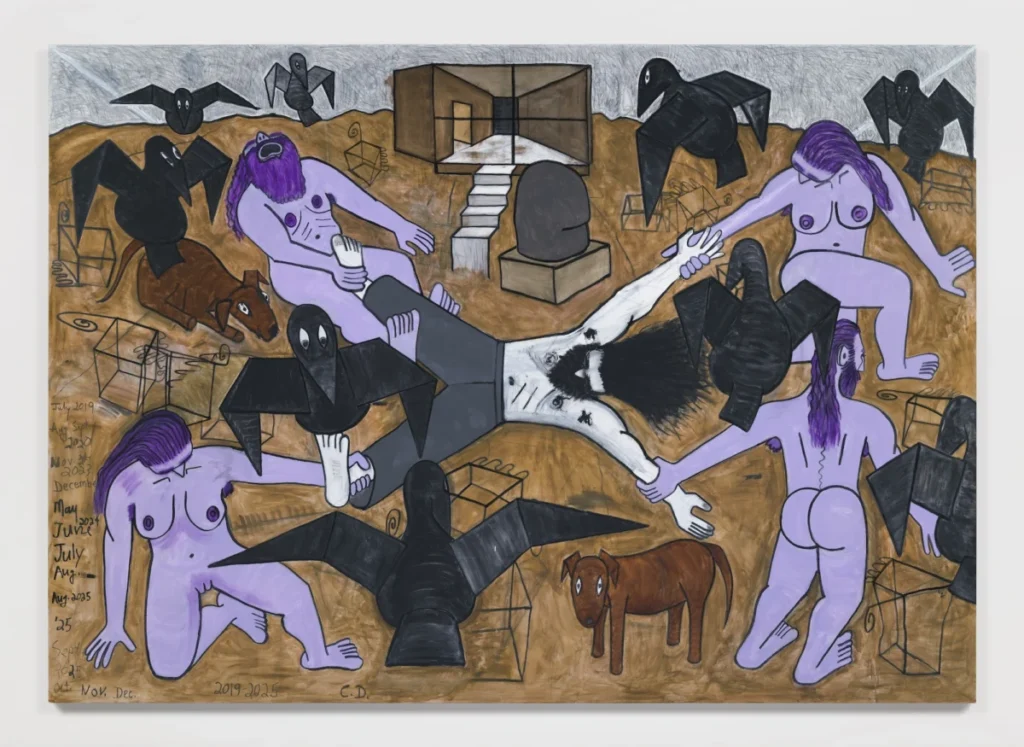
Last week, the fall season officially launched with a wave of openings across Chelsea and Tribeca. Matthew Brown Gallery made waves with a solo presentation of Carroll Dunham, the veteran artist who famously moved to the younger dealer’s roster from Gladstone last year. Simultaneously, mega-galleries like Hauser & Wirth and Gagosian opened high-profile shows aimed at capturing the attention of international collectors arriving for the fair cycle.
Late September 2024: The Fair Convergence
The market is currently bracing for the opening of the Armory Show and Independent 20th Century. These fairs act as the ultimate litmus test for the season’s health, providing a concentrated venue for the "disciplined" buying patterns observed in the galleries to be quantified on a global scale.
Supporting Data: Pricing and Performance
To understand the current market, one must look at the delta between gallery asking prices and historical auction performance.
The Brice Marden Benchmark
Gagosian’s survey of the late Brice Marden (1938–2023) is perhaps the most significant market test this season. With works priced between $8 million and $15 million, the gallery is testing the ceiling of the artist’s estate market.
- Auction High: $30.9 million (Christie’s, 2020).
- Market Context: In 2022, Christie’s withdrew Marden’s Event (2004–07), which carried a $30 million to $50 million estimate, after a guarantee meant the work stayed on the house’s balance sheet. The current Gagosian pricing suggests a more conservative, yet still premium, entry point for collectors.
The Carroll Dunham Shift
At Matthew Brown, new paintings by Carroll Dunham are tagged between $250,000 and $500,000.
- Auction High: $762,000 (Sotheby’s, 2023) for Bathers Seventeen (Black Hole).
- Analysis: The primary market pricing is strategically positioned just below the auction record, offering a value proposition that resonates with the "disciplined" collector base identified by advisers.
The Entry-Level and Mid-Market
Galleries like Olney Gleason are finding success in the sub-$100,000 range. Their openings for Sara Antsis and Pablo Bronstein were reported as "doing well" immediately upon launch, suggesting that while the multi-million dollar "trophy" market is cautious, the mid-market remains fluid.

Official Responses: Voices from the Front Lines
The sentiment among industry leaders is a mix of bullishness regarding engagement and bearishness regarding the "froth" of previous years.
Aileen Agopian, New York Adviser:
"Collectors are energized, but they’re disciplined. The galleries are full, the openings are packed. But no one is buying like it’s 2021 anymore."
Nick Olney, Co-Founder of Olney Gleason:
Olney remains optimistic despite the "doom and gloom" of recent gallery closures. "We felt positive, and even amid a lot of uncertainty out there in various industries, ours has held together. More people are coming to the market and more people are collecting than ever."
Candace Worth, Worth Art Advisory:
Worth offers a more sobering perspective, highlighting a "confidence problem." She notes, "In many instances, the primary market has still not figured out its correct price structure. Some buyers are still burned from the downturn… the primary market has not been able to do what it needs to do in order to give collectors confidence again—which is to lower prices."
David Nolan, Veteran Dealer:
Nolan, who recently moved to a massive Tribeca space, represents the "work harder" ethos of the current era. "Every year I seem to be working harder… you have to stay in the game and work very hard and pay attention, but I’m optimistic. I think this year will be just fine."
Implications: The New "Normal" for Art Commerce
The 2024 fall season marks the end of the "speculative era" and the beginning of what many hope is a more sustainable "collector era." The implications of this shift are profound for both galleries and artists.

1. The Death of the "Flipper"
The exit of speculative buyers—those who purchased works by emerging artists only to "flip" them at auction months later—has been welcomed by most dealers. While this has led to a decrease in the "intensity" of sales, it has resulted in a more stable, long-term collector base. The "waiting lists" of 2021 have been replaced by a slower, more deliberate vetting process.
2. The Primary Market Price Correction
As Candace Worth suggested, the primary market faces a reckoning. If galleries continue to price emerging or mid-career artists at levels that exceed their secondary market performance, they risk alienating the very "disciplined" collectors they seek to attract. The "wipe the slate clean" mentality proposed by some advisers suggests that a downward adjustment in primary prices may be necessary to restore trust.
3. Geographical Consolidation
The move of veteran dealers like David Nolan to Tribeca, following the path of galleries like P.P.O.W. and James Cohan (now Norr Cohan), confirms Tribeca’s status as the new "center of gravity." This consolidation makes the "gallery crawl" more efficient for collectors but also increases the overhead for dealers, necessitating consistent sales in a cautious market.
4. Quality Over Hype
The success of shows featuring artists like Yvonne Jacquette (Karma) and Valerio Adami (David Nolan) suggests that the market is retreating toward "quality" and "historical importance." In an uncertain economy, collectors are looking for "safe harbors"—artists with established careers, museum presence, and a documented history of production.
Conclusion
As New York prepares for the Armory Show, the art world is learning to navigate a landscape where high energy does not always equal high-speed transactions. The "lemonade from lemons" metaphor used by adviser Liz Parks aptly describes the current mood: the climate is challenging, but for those willing to work harder, be more disciplined, and focus on quality, the fall season offers a path toward a more mature and resilient market.



