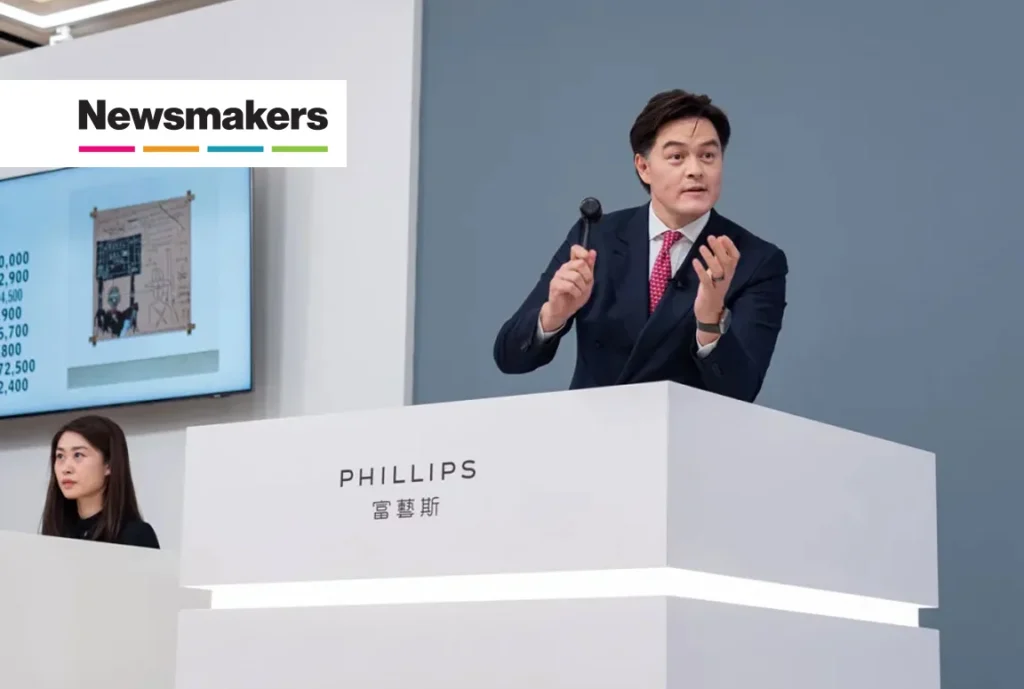
The international art market is currently witnessing a significant realignment within one of its most agile players. Phillips, the auction house traditionally known for its focus on 20th-century and contemporary art, is grappling with a major executive shake-up following a series of high-profile departures this summer. At the center of this transition is Jonathan Crockett, the outgoing Chairman of Phillips Asia, whose tenure has been synonymous with the firm’s aggressive and successful expansion into the Far East.
Crockett is scheduled to officially step down on September 2, marking the end of a decade-long chapter during which he transformed Phillips from a Western-centric boutique house into a formidable regional power. His departure, alongside other senior leaders such as Miety Heiden, signals a pivotal juncture for the company as it navigates a cooling global art market and internal leadership fluctuations.
The Architect of Expansion: A Chronology of Leadership
Jonathan Crockett’s trajectory within the art world is a testament to the globalization of the trade. Of English, Irish, and Chinese heritage, Crockett brought a unique cultural fluency to his roles. Before joining Phillips, he honed his expertise at Sotheby’s, working across the crucial hubs of London and Hong Kong. Following a period running his own boutique art advisory firm, he was tapped by Phillips to spearhead its regional ambitions.
The true turning point came in 2016, when Crockett helped launch Phillips’ regional headquarters in Hong Kong. At the time, the move was seen as a bold gamble; Phillips was the "underdog" in a territory dominated by the duopoly of Christie’s and Sotheby’s. However, under Crockett’s stewardship, the firm didn’t just survive—it scaled.
Over the next eight years, Crockett oversaw the expansion of Phillips’ footprint into eight major Asian metropolises, including Tokyo, Taipei, and Jakarta. This was not merely a physical expansion but a strategic one, aimed at tapping into the burgeoning wealth of a new generation of Asian collectors who were increasingly looking toward contemporary art and luxury assets as both passion projects and investment vehicles.
Supporting Data: Financial Milestones and Market Impact
The success of the "Crockett Era" is best measured by the record-breaking figures achieved during his tenure. He was instrumental in bridge-building between Asian capital and global salerooms, a feat most visibly demonstrated in 2022.
The $85 Million Basquiat
In a landmark moment for the auction house, Crockett helped orchestrate the sale of Jean-Michel Basquiat’s Untitled (1982) from the collection of Japanese billionaire Yusaku Maezawa. The work sold for $85 million to an Asian buyer, solidifying Phillips’ ability to handle "trophy" lots that were previously the exclusive domain of its larger competitors. To date, this remains the most valuable lot ever sold by Phillips globally.
Recent Performance Metrics
Despite broader economic headwinds in mainland China, Phillips’ Hong Kong division showed remarkable resilience in early 2024:
- March 2024 Sales: The house achieved over $76 million in total sales, representing a staggering 50 percent year-on-year increase from the $51.6 million recorded in the same period the previous year.
- Japanese Market Surge: Buying activity from Japanese collectors saw a 95 percent increase by value year-on-year, vindicating Crockett’s focus on the Tokyo market.
- Diversification: The house successfully pivoted toward luxury categories, with watches and traditional Chinese art (ceramics and paintings) showing robust demand even as the "ultra-contemporary" art market cooled.
Official Responses: Insights from the Outgoing Chairman
In a candid reflection on his departure, Crockett cited a combination of personal milestones and professional fulfillment. "I’ve spent most of my professional life away from home," Crockett noted in a recent interview with ARTnews. "The primary reasons for returning home now are family… but personally, I’m someone who likes challenges. We’d ticked all the boxes, and things started to feel routine."
Crockett’s departure is also framed against a backdrop of institutional change. He was originally recruited by former CEO Ed Dolman, a figure Crockett credits with building the culture he thrived in. However, the company has seen three leadership changes in the three years since Dolman’s exit. While Crockett characterizes the current exodus as "natural attrition," he acknowledges that in a smaller, leaner organization like Phillips, the departure of senior dealmakers is felt more acutely.

The West Kowloon Strategy
One of Crockett’s most debated legacies will be the 2023 move of Phillips’ headquarters to the West Kowloon Cultural District. While competitors stayed in the traditional business hub of Central, Crockett pushed for a permanent, year-round exhibition space in the burgeoning arts district.
Reflecting on the move, Crockett admitted to a measure of hindsight bias. While he praised the galleries for their "ceiling height, natural light, and space," he expressed frustration with the slow pace of government development in the area. "It’s a shame that West Kowloon hasn’t been a top priority for the Hong Kong government," he stated, noting that if he had known the district would remain a "building site" for so long, he might not have pushed as hard for the relocation.
Market Implications: The Challenge for the Successor
As Crockett prepares to return to the UK to focus on his family and potentially a private advisory capacity, the vacuum left at the top of Phillips Asia presents significant challenges for his successor.
1. Sourcing in a Cooling Market
The primary hurdle will be securing top-tier consignments. Crockett noted that the "ultra-contemporary" boom—fueled by what he called "retail therapy" during the pandemic—has subsided. The market is now prioritizing stability, mid-career artists, and established blue-chip names. Convincing collectors to part with high-value works in an uncertain economic climate requires the kind of deep, trusted relationships that Crockett spent a decade cultivating.
2. Navigating Chinese Policy Shifts
The broader Asian market is currently adjusting to new offshore tax and monetary rules implemented by Beijing. These regulations make it increasingly difficult for mainland Chinese collectors to move capital out of the country. While Crockett remains optimistic that these changes won’t have a "knock-on effect" on the Hong Kong market specifically, the new leadership will need to find innovative ways to engage mainland buyers who are facing tighter liquidity.
3. Institutional Continuity
With several high-profile leaders exiting, Phillips must work to maintain its reputation as a stable partner for major estates and collectors. The challenge lies in replacing the "institutional memory" and the personal networks of individuals like Crockett and Miety Heiden. The remaining team is described as strong, but the loss of key dealmakers often leads to a period of "wait-and-see" from the market’s most influential consignors.
4. The "Microclimate" of Hong Kong
Hong Kong remains a unique art market hub, but its "microclimate"—affected by social, political, and economic shifts—is more volatile than it was a decade ago. The next Chairman of Phillips Asia will need to be as much a diplomat and economist as an art specialist, navigating a landscape where the collector base is shifting from Western expatriates to a more localized, yet globally-minded, Asian cohort.
Conclusion: A Legacy of Professionalism
Jonathan Crockett leaves Phillips Asia at a high point in terms of regional infrastructure and brand recognition. He successfully transitioned the house from a secondary player to a primary destination for some of the world’s most expensive artworks.
As the art world gathers for the autumn auction season, all eyes will be on how Phillips fills this leadership void. The house has proven its ability to be an "underdog" that punches above its weight, but in a market that is increasingly prioritizing "stability over hype," the next phase of Phillips Asia will require a steady hand to navigate the complexities of a post-pandemic, post-boom landscape. For Crockett, the move marks a return to his roots; for Phillips, it is a test of whether the house can sustain the momentum built by the man who put them on the map in Asia.