Byline: Analysis by Editorial Staff
Date: August 14, 2026
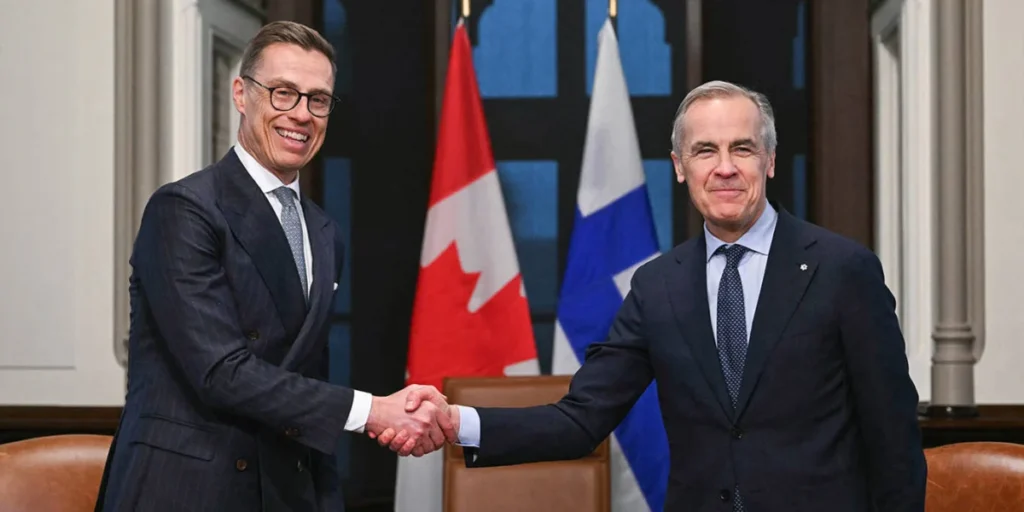
In an era defined by the erosion of traditional post-Cold War certainties, the international order is undergoing a profound structural metamorphosis. As global geopolitical friction intensifies, the reliance on monolithic, slow-moving multilateral institutions is being challenged by a new, agile paradigm: the rise of the ad hoc coalition. Canadian Prime Minister Mark Carney and Finnish President Alexander Stubb have emerged as the primary architects of this strategic pivot, arguing that middle powers must cease their passive wait for a reformed global order and instead seize the initiative through flexible, interest-based cooperation.
Main Facts: A Blueprint for Middle-Power Agency
The core thesis presented by Prime Minister Carney and President Stubb, articulated in their recent joint roadmap, is a call for "radical pragmatism." As great-power competition between the United States and China paralyzes traditional forums like the UN Security Council, middle powers—nations with significant economic and diplomatic weight but limited military hegemony—find themselves caught in the crossfire.
The proposal suggests that middle powers should abandon the hope for global consensus on every issue. Instead, they should form "minilateral" or ad hoc coalitions—temporary, task-specific alliances designed to address discrete global challenges, such as climate transition finance, AI governance, or regional security. The central challenge, however, remains integration. Carney and Stubb emphasize that these coalitions must not be seen as a replacement for the existing multilateral architecture, but as a vital, functional supplement that operates within the spirit of the UN Charter and international law.
Chronology: The Evolution of a Strategic Shift
The conceptual move toward ad hoc coalitions did not emerge in a vacuum; it is the culmination of years of institutional frustration.
- 2023–2024: The G20 and G7 summits began showing signs of extreme strain as the war in Ukraine and the escalating conflict in the Middle East created irreparable rifts between the Global North and the BRICS+ bloc.
- Early 2025: Canadian and Finnish diplomatic envoys began a series of "track 1.5" dialogues, quietly canvassing leaders in Canberra, Seoul, Oslo, and Singapore regarding a new framework for middle-power coordination.
- July 8, 2026: Prime Minister Carney and President Stubb published their definitive manifesto in The Economist. The piece, titled Prepare for a World of Ad Hoc Coalitions, served as the official public launch of their diplomatic doctrine.
- August 2026: The international community—from Brussels to Beijing—began formalizing responses to the Carney-Stubb roadmap, sparking a debate on whether this strategy empowers smaller nations or merely fragments the global order further.
Supporting Data: The Case for Agility
The urgency behind this roadmap is supported by stark data regarding the efficacy of traditional institutions. According to recent geopolitical assessments, the frequency of deadlocks in the UN Security Council has reached its highest point since 1990. Simultaneously, global economic fragmentation—often referred to as "geoeconomic splintering"—has seen trade barriers between the world’s two largest economies grow by an estimated 25% since 2022.
Middle powers, which collectively represent over 40% of global GDP, are increasingly vulnerable to this volatility. The Carney-Stubb doctrine relies on the "Coalition of the Willing" model, which has historically shown success in niche sectors. For instance, the Climate Club model, which gained traction in late 2025, demonstrated that groups of ten to fifteen countries can implement carbon border adjustments far faster than the 190+ nations required to reach a global WTO consensus. By focusing on "coalitions of the willing," countries can bypass the "lowest common denominator" problem that plagues universal treaty-making.
Official Responses: A Divided Reception
The reception of the Carney-Stubb proposal has been as varied as the geopolitical landscape itself.
Western Perspectives
Within the G7 and NATO, the response has been largely supportive, albeit cautious. Diplomatic circles in Berlin and London have signaled that they view the roadmap as a necessary evolution of "flexible multilateralism." German officials noted that while they remain committed to the European Union and the UN, they recognize that "variable geometry" is necessary to maintain momentum in critical areas like cybersecurity and semiconductor supply chains.
The Global South and BRICS+
Conversely, many nations in the Global South have expressed skepticism. Critics argue that the ad hoc approach risks creating a "two-tier" world. By prioritizing the interests of wealthy, democratic middle powers, these coalitions could inadvertently sideline the developmental needs of the Global South, which relies on the egalitarian, rule-based nature of the UN General Assembly to amplify its voice. Diplomats from the Global South have voiced concerns that the "ad hoc" label is simply a euphemism for "exclusive," potentially undermining the hard-won legitimacy of global south-led institutions like the African Union.
The Academic Critique
Geopolitical theorists are divided. Dr. Elena Vance, a senior fellow at a prominent international relations think tank, suggests that the Carney-Stubb proposal is a "defensive reaction to a multipolar mess." She notes, "It is a pragmatic move to avoid total gridlock, but it carries the risk of creating a chaotic, overlapping patchwork of agreements that smaller nations without the capacity for intense diplomatic negotiation will struggle to navigate."
Implications: The Future of Global Governance
The long-term implications of the Carney-Stubb doctrine are profound. If adopted, it signals the end of the post-WWII era of "universalist" diplomacy. We are entering an era of "networked diplomacy."
The Risk of Fragmentation
The most immediate danger is the erosion of the "universal" rules-based order. If every crisis—from the next pandemic to the next financial collapse—is met with a different, tailor-made coalition, the stability provided by predictable, consistent international law may wither. Nations may find themselves choosing sides in a multitude of overlapping agreements, leading to a "noodle bowl" of treaties that creates as much friction as it solves.
The Potential for Renewal
However, proponents argue that the alternative—total paralysis—is far worse. By creating successful, functional coalitions, middle powers can prove that international cooperation is still possible. If a coalition of middle powers can successfully regulate AI, or create a stable framework for green hydrogen trade, they provide a template that could eventually be scaled back into the universal multilateral system.
The "Stubb-Carney" Legacy
For Prime Minister Carney and President Stubb, the goal is not to abandon the UN or the WTO, but to prevent them from becoming relics. They argue that by "taking on the world as it is," middle powers can preserve the principles of the international order—sovereignty, rule of law, and human rights—even if the mechanisms for upholding those principles must change.
Conclusion: A Turning Point
As of mid-August 2026, the diplomatic world is still processing the full weight of the Carney-Stubb initiative. Whether this roadmap leads to a revitalized, agile global governance or a fractured world of competing blocs remains to be seen. What is clear, however, is that the era of waiting for global consensus is over. The "middle powers" have signaled that they are no longer satisfied with the role of spectators. They are moving to the center stage, and the international order will be defined by their ability to balance their own national interests with the fragile, essential requirement for collective security.
As we look toward the UN General Assembly in September, the central question will be whether this ad hoc movement can build bridges to the rest of the world, or if it will inadvertently widen the chasm between the self-selecting coalitions of the willing and the remainder of the international community. The roadmap is set, but the journey has only just begun.