By Jamal Ibrahim Haidar and Seyed Mohammad Karimi
August 28, 2026
In the high-stakes arena of modern international relations, economic sanctions have transitioned from a niche diplomatic tool to the primary instrument of statecraft. From the sprawling energy sectors of Russia to the intricate banking networks of Iran, Western powers—led by the United States—increasingly rely on what they term “targeted” or “smart” sanctions. The prevailing narrative, championed by policymakers in Washington and Brussels, suggests that these measures function like a surgical scalpel: precise, efficient, and capable of excising the political will of authoritarian regimes without harming the lifeblood of the civilian population.
However, as history has repeatedly demonstrated, this "scalpel" narrative is a dangerous fiction. When governments invoke phrases like the “economic D-Day” currently being leveled against Tehran, they are not merely describing a tactical shift; they are rebranding mass-scale economic warfare. While the stated goal is to pressure ruling elites to abandon controversial policies, the reality is a widening chasm between intention and outcome. Far from triggering political reform or regime capitulation, these sweeping sanctions consistently inflict profound, long-term trauma on civilian populations while inadvertently insulating the targeted regimes.
The Evolution of Economic Warfare: A Chronology of Coercion
The shift toward total economic strangulation as a tool of policy did not happen overnight. It is the result of decades of escalating financial technology and policy refinement.
The Post-Cold War Pivot (1990s)
Following the collapse of the Soviet Union, sanctions were initially framed as a humanitarian alternative to military intervention. The UN-led embargoes on Iraq in the 1990s, however, served as a grim lesson in the failure of "targeted" measures. The ensuing humanitarian crisis, marked by severe shortages of medicine and food, forced a temporary retreat from broad-based sanctions in favor of “smart” sanctions—measures theoretically intended to hit only the pockets of the leadership.
The Rise of Financial Weaponization (2010–2020)
The mid-2010s marked a technological turning point. With the integration of the SWIFT global messaging system and the dollar’s dominance as a reserve currency, the U.S. gained the ability to disconnect entire economies from global trade. The sanctions on Iran under the Joint Comprehensive Plan of Action (JCPOA) and the subsequent “maximum pressure” campaigns showcased the capacity to render a country’s currency volatile and its trade partners fearful of secondary sanctions.
The Era of "Economic D-Day" (2024–2026)
As we navigate 2026, the rhetoric has returned to the aggressive, total-war framing of the 1990s. The current administration’s characterization of sanctions on Iran as an “economic D-Day” signals an abandonment of the "precision" facade. This era is defined by the normalization of financial exclusion, where nations are not just penalized for specific actions but are subjected to systemic efforts to decouple them from the global financial architecture entirely.
Supporting Data: The Anatomy of Civilian Impact
To understand why the "scalpel" metaphor fails, one must look at the data. Economic sanctions do not exist in a vacuum; they disrupt the complex, interconnected web of supply chains, credit markets, and public infrastructure.
The Erosion of Middle-Class Wealth
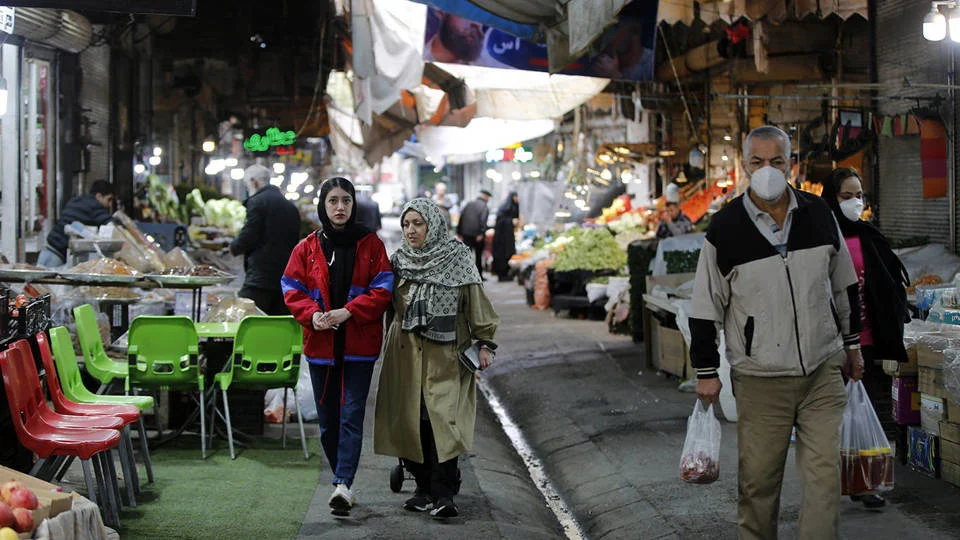
Research into sanctioned economies consistently shows that the first victims are not the political elite—who often have access to black-market workarounds—but the burgeoning middle class. In Iran, inflation rates have historically surged in correlation with the tightening of oil exports. When the currency devalues by 50% or more, the purchasing power of teachers, doctors, and small business owners vanishes. This does not lead to "popular pressure" on the government; it leads to a struggle for survival that keeps the population focused on subsistence rather than political activism.
The Healthcare Crisis
The humanitarian exemption argument, often cited by sanctioning states, is frequently undermined by the "chilling effect." Even when medicine is technically exempt from sanctions, international banks and shipping companies refuse to facilitate transactions involving sanctioned countries out of fear of secondary penalties. This results in severe shortages of specialized drugs for cancer, rare diseases, and chronic conditions. The data on mortality rates in heavily sanctioned environments shows a measurable increase in non-combatant deaths—a silent toll that never appears on the balance sheets of the policymakers imposing the sanctions.
The "Rally ‘Round the Flag" Effect
Political science data points toward the "rally ‘round the flag" phenomenon. When an external power imposes severe economic hardship, the targeted regime often successfully pivots the narrative. By framing the sanctions as an act of imperialist aggression, the ruling elite can deflect domestic discontent away from their own governance failures and onto the foreign adversary. Consequently, sanctions often strengthen the nationalist credentials of the regime they were intended to destabilize.
Official Responses and the Diplomatic Stalemate
The diplomatic discourse surrounding these sanctions is characterized by a stark disconnect between the rhetoric of the sanctioning powers and the ground realities observed by international monitors.
The View from Washington and Brussels
Proponents of the "maximum pressure" strategy maintain that there is no viable alternative. During recent briefings, State Department officials have emphasized that sanctions provide a "non-kinetic" means of forcing behavior change. They argue that the suffering of the population is an unfortunate but necessary byproduct of forcing a regime to the negotiating table. The underlying logic remains rooted in the belief that if the economic cost of an action (such as a nuclear program or regional intervention) exceeds the benefits, the regime will naturally concede.
The Perspective of the Targeted Nations
Tehran, Moscow, and other targeted capitals have adopted a strategy of "resilience economics." By fostering deeper ties with non-aligned economic powers—such as the expansion of regional trade blocs and the use of alternative payment systems—these governments are working to mitigate the impact of the dollar’s weaponization. Their official response is one of defiance: they argue that the sanctions are a violation of international law and a form of economic terrorism that targets the most vulnerable.
Implications: The Long-Term Costs of Financial Hegemony
The continued reliance on these measures carries profound implications for the future of the global order.
The Fragility of the Global Financial System
The weaponization of the dollar is, ironically, leading to the erosion of its own hegemony. As more nations witness the ease with which the U.S. can cut off a country’s access to global markets, the incentive to develop alternative, non-dollar-based financial systems increases. We are witnessing the beginning of a fragmented global economy, where the "precision scalpel" has inadvertently accelerated the formation of an alternative trade architecture that may eventually diminish the very leverage the U.S. is currently using.
The Humanitarian and Ethical Deficit
From an ethical standpoint, the moral justification for sanctions is collapsing. If a policy consistently results in civilian suffering while failing to achieve its stated political objectives, can it be considered a moral tool of statecraft? The international community is increasingly grappling with the legitimacy of measures that prioritize strategic dominance over human rights.
The Failure of Political Change
Perhaps most importantly, the historical record suggests that sanctions are a poor tool for regime change. Rarely does an economy brought to its knees by external pressure result in a democratic transition. Instead, it frequently results in the consolidation of power by security services, the rise of black-market economies, and the systematic suppression of civil society. By destroying the middle class and the institutions of civil society, sanctions remove the very actors who would be most capable of leading a peaceful, democratic transition.
Conclusion: A Call for Strategic Realism
The "economic D-Day" rhetoric is not a solution; it is a manifestation of policy exhaustion. When diplomatic creativity runs dry, governments turn to the blunt instrument of sanctions, hoping that the resulting pain will somehow catalyze the desired political outcome. But as the cases of Iran, Russia, and others show, this strategy is not a scalpel—it is a sword that cuts in all directions, often wounding the global financial system and the innocent civilians it claims to be protecting, while leaving the intended targets firmly in power.
Moving forward, policymakers must reconcile the gap between their stated intentions and the empirical outcomes. If the goal is a more stable international order, the reliance on financial coercion must be tempered by a recognition of its humanitarian costs and its structural limitations. Without a fundamental shift in how we approach economic statecraft, we risk entering a cycle of perpetual, low-intensity economic conflict that serves neither the interests of the sanctioning nations nor the aspirations of the people living under the weight of these policies.