The relentless heatwaves that have swept across France this summer have left more than just a trail of human tragedy; they have struck at the heart of the nation’s cultural heritage. As French public health authorities report a staggering spike in mortality—including over 1,200 deaths attributed to a single July heatwave—the country’s landscapes, both wild and curated, are undergoing a painful transformation. Perhaps nowhere is this more poignant than in the village of Giverny, Normandy, where the meticulously preserved gardens of Claude Monet, the father of Impressionism, are fighting for survival against an unforgiving climate.
The Siege of the Garden: A Crisis of Heat
For decades, the gardens at Giverny have served as a living museum, a three-dimensional manifestation of Monet’s vibrant, light-drenched canvases. However, the extreme temperatures of 2026 have pushed these historic beds to their physiological limit.
Rémi Lecoutre, deputy head gardener at the Claude Monet House and Gardens, describes the current situation with a mixture of professional stoicism and profound personal sorrow. “It’s incredibly sad,” Lecoutre told France 24. “This is the first time it has happened to this extent. It’s awful.”
The damage is not merely cosmetic; it is structural. Visitors walking the narrow paths of the Clos Normand—the iconic flower garden—can see the gaps where vibrant nasturtiums, typically a staple of the late-summer palette, have been entirely scorched away. The flora, overwhelmed by the thermal stress, has effectively entered a survival mode, closing their stomata to prevent moisture loss, which in turn halts the blooming cycle and leads to widespread wilting.
A Chronology of the 2026 Heat Crisis
The severity of the current situation can be traced through the succession of meteorological events that have defined this summer:
- Late June: The first of a series of "heat domes" settles over Northern France. While Giverny is accustomed to temperate summers, the rapid onset of temperatures exceeding 35°C (95°F) catches the gardens off guard.
- Early July: Soil moisture levels drop to critical lows. Gardeners begin the transition to emergency irrigation protocols, moving away from standard hose usage to targeted nocturnal watering.
- Mid-July: A second, more intense heatwave strikes. Public health officials record the "excess death" figures that dominate national headlines, while the gardening team at Giverny reports the first mass-wilt of the nasturtiums and coreopsis.
- August: As the heat persists, the garden staff implements "grouping" strategies—clustering potted and bedding plants to create micro-climates that trap humidity and shade the soil.
- Late August/September: Planning shifts toward the long-term. With the realization that these heatwaves are a recurring symptom of a changing climate, the museum board begins internal discussions regarding the future of the plant selection process.
Supporting Data: The Science of Stressed Flora
The challenges facing the horticultural team at Giverny are rooted in botanical biology. Plants, like all living organisms, have an optimal thermal threshold. When ambient temperatures remain high throughout both the day and night, the "respiration" rate of a plant increases.
"With mini-sprinklers and underground irrigation, we were able to fight against water stress," Lecoutre explained to France 3. However, he noted that the physiological response of the plants is beyond the reach of a watering can. When a plant closes its stomata—the microscopic pores on leaves used for gas exchange—it stops taking in carbon dioxide, effectively halting the process of photosynthesis. This creates a "stunting" effect. The plants do not die immediately, but they cease to perform the aesthetic function for which they were cultivated: the production of the vivid, multicolored blooms that define the Impressionist style.
The Giverny team’s data-driven approach involves:
- Soil Moisture Monitoring: Real-time analysis of water retention in the clay-heavy Norman soil.
- Transpiration Analysis: Tracking which species succumb first to water loss, identifying potential candidates for replacement.
- Nocturnal Irrigation: Shifting water usage to the pre-dawn hours to minimize evaporation, a strategy that has kept the more resilient species alive.
Official Responses and the Gardener’s Dilemma
The responsibility of managing Giverny is a delicate balancing act. On one hand, there is the mandate to maintain a historical site that represents a specific artistic epoch. On the other, there is the reality of a 21st-century climate crisis.
"Since it’s a historic garden, it’s best that these plants answer to the aesthetic criteria, and that they are as close as possible to the plants that Monet knew," Lecoutre noted. Yet, he is quick to clarify that the museum cannot remain stagnant. "Ultimately, we are not a museum garden, but truly a space that evolves with its time."
This philosophy honors the spirit of Monet himself. The artist was not a purist in the modern, conservationist sense; he was an innovator who constantly changed his plantings to capture the shifting light and moods of the seasons. He favored "successive waves" of flowers—plants with short, explosive bloom cycles—to ensure the garden was always in a state of transformation. The current team is leaning into this ethos, considering the introduction of more heat-resilient, drought-tolerant species that mimic the colors and textures of Monet’s original favorites, even if they are not the exact botanical varieties.
Implications: The Future of Cultural Heritage
The struggle at Giverny serves as a microcosm for the broader challenges facing cultural institutions worldwide. As climate change accelerates, the preservation of "living heritage"—gardens, historic landscapes, and biodiversity-rich sites—becomes increasingly difficult.
The Water Lily Exception
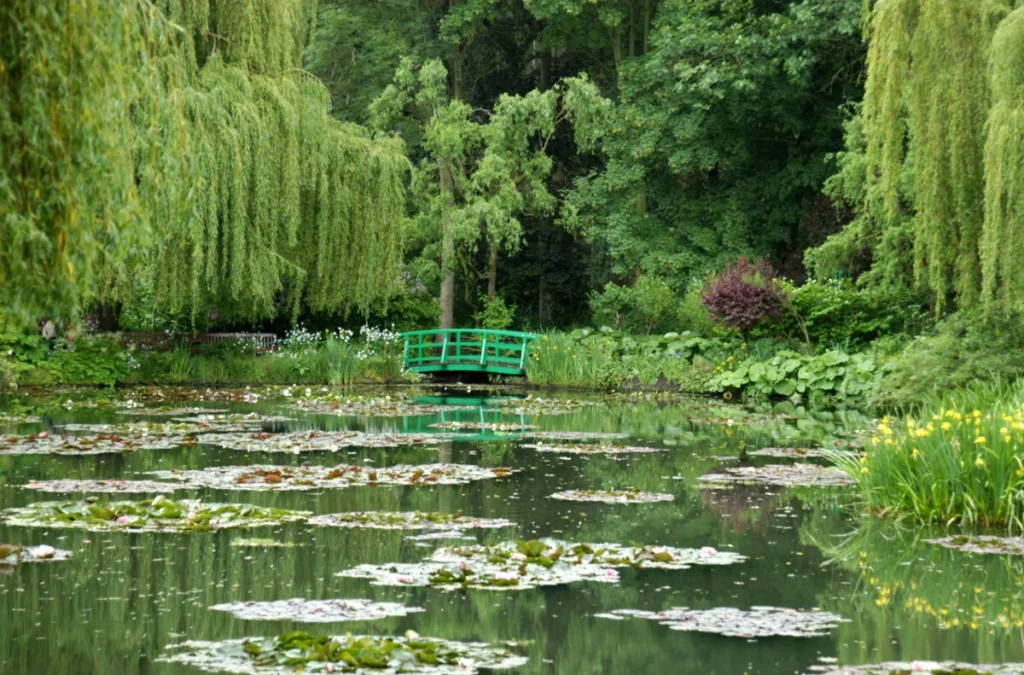
Interestingly, while the floral beds suffer, the crown jewel of the garden remains defiant. The famous water lilies, immortalized in Monet’s late-career masterpieces, are thriving. Thriving in the heat, these aquatic plants serve as a reminder that the garden is not a static object, but a living, breathing participant in the environment.
The Centenary Commemoration
This climate-induced transformation occurs during a somber yet celebratory year: the 100th anniversary of Claude Monet’s death. Despite the scorched beds, the art world is moving forward with a series of high-profile exhibitions designed to re-contextualize the artist’s work in the face of modern existential threats.
- "Monet: Painting Time" (Musée de l’Orangerie, Paris): Opening September 30, this exhibition explores how Monet’s obsession with capturing the fleeting nature of time remains relevant in an era defined by climate instability.
- "Stories of Landscapes: From Monet to Hockney" (Musée Marmottan Monet, Paris): Opening September 24, this show creates a dialogue between the Impressionist master and contemporary artists, framing the landscape not just as a subject, but as a precarious resource.
Conclusion: Adapting the Impressionist Legacy
As the summer of 2026 fades, the gardeners of Giverny are already preparing for the future. The conversation is no longer about whether to change the garden, but how to change it while maintaining its "soul."
The shift toward heat-resilient plants, the adjustment of blooming schedules, and the adoption of advanced irrigation technology are not betrayals of Monet’s vision; they are, in many ways, the ultimate tribute to it. Monet was an artist of light, atmosphere, and the relentless passage of time. By adapting his garden to the harsh realities of the present day, his successors are ensuring that Giverny remains, as the artist intended, a living space that breathes with the world around it. The garden may look different in the years to come, but in its struggle, it remains a testament to the enduring, albeit fragile, beauty of the natural world.