In a move that has sent ripples through both the British political establishment and the international heritage community, UK Prime Minister Andy Burnham—who assumed office this past July—has signaled a significant pivot in his long-standing position regarding the Parthenon Marbles. For over two decades, the Prime Minister had been a vocal proponent for the restitution of these 5th-century BCE sculptures to their place of origin in Athens. Now, however, the administration appears to be adopting a policy of hands-off diplomacy, deferring the contentious decision to the British Museum’s board of trustees.
The Prime Minister’s Evolving Position
For years, Andy Burnham’s stance on the Parthenon Marbles was unambiguous. As early as 2002, and as recently as 2023, Burnham championed the return of the artifacts, famously suggesting that the transfer should occur with "no strings attached." This consistency made him a favored figure among Greek officials and cultural restitution advocates who viewed him as a potential ally in the decades-long battle to reunite the fragmented frieze.
However, in a recent interview with the Financial Times, the Prime Minister’s rhetoric shifted toward a stance of administrative neutrality. When pressed on whether he would use his new executive power to facilitate a return, Burnham remarked, "Ultimately it’s an issue for the British Museum, isn’t it? Legally that’s where that issue rests, but I’m all in favour of using British cultural diplomacy. That’s something that I’m hugely in favour of."
This shift marks a departure from the "restitution-first" approach he previously held, signaling that while he supports the concept of cultural dialogue, he is unwilling to challenge the legal framework that currently anchors the collection to London.
A Chronology of Conflict: From Athens to London
To understand the weight of this development, one must look at the historical timeline that transformed these sculptures from architectural elements into the epicenter of a global debate.
The 19th Century: The Elgin Controversy
The story begins in the early 1800s. Lord Elgin, serving as the British ambassador to the Ottoman Empire, secured a permit—the legitimacy of which remains a point of intense historical debate—to remove roughly half of the remaining sculptural decorations from the Parthenon in Athens. At the time, Greece was under the control of the Ottoman Empire. The removal, which occurred between 1801 and 1812, saw the statues, metopes, and frieze segments crated and shipped to Britain.
The 1816 Parliamentary Select Committee
Following the acquisition of the marbles by the British Museum, a Parliamentary Select Committee was convened in 1816 to investigate the legality of the transaction. The committee concluded that Elgin’s actions were entirely legal under the permits granted by Ottoman authorities. This finding remains the British Museum’s primary legal defense today.
The Modern Era and the Acropolis Museum
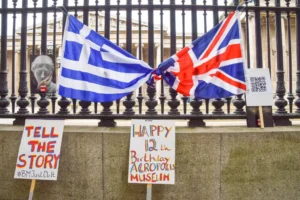
The Greek government formally requested the return of the marbles in 1983, marking the beginning of the modern diplomatic era of the dispute. The tension reached a new inflection point in 2009 with the opening of the state-of-the-art Acropolis Museum in Athens, specifically designed to house the entire Parthenon frieze in a unified, light-filled environment, overlooking the temple from which the stones were originally torn.
Supporting Data: The Scope of the Collection
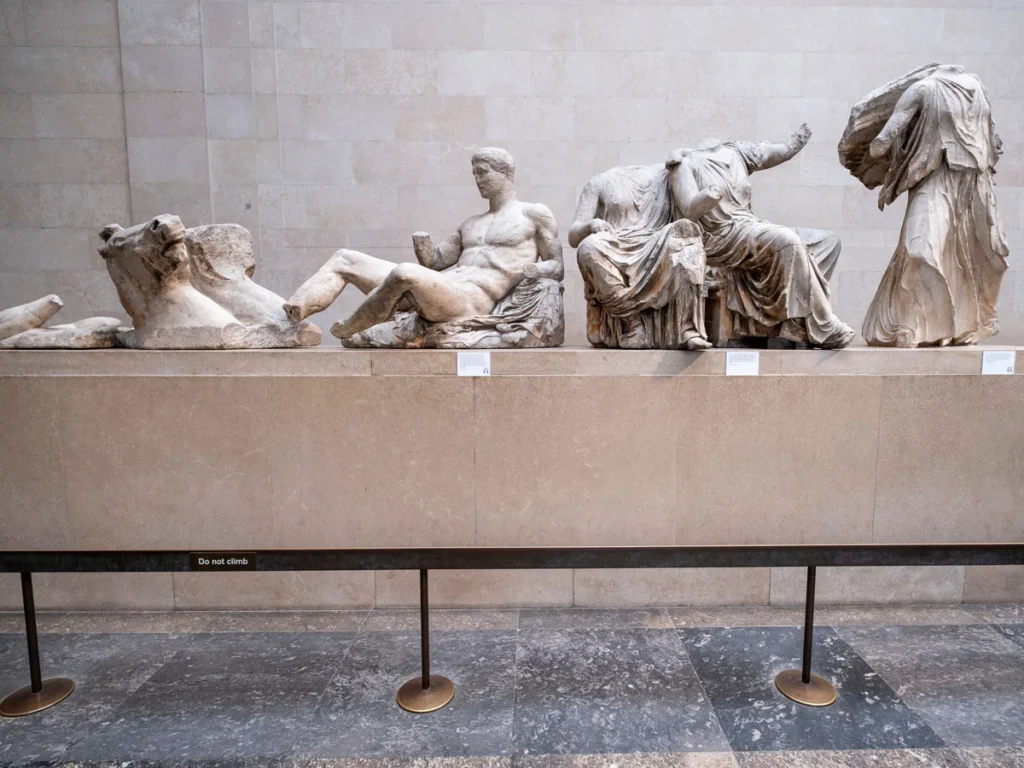
The "Parthenon Marbles" are not merely a single set of statues; they constitute a vast, complex architectural program. The collection held in the British Museum includes:
- 15 Metopes: Rectangular panels depicting the mythical battle between the Lapiths and the Centaurs.
- 17 Pedimental Figures: The large-scale statues that once adorned the triangular gables of the temple.
- 247 Feet of Frieze: A continuous, low-relief band that wrapped around the cella of the temple, depicting the Panathenaic Procession.
Because of the historical involvement of Lord Elgin, the collection is colloquially known as the "Elgin Marbles." While this title is used by the British Museum, it is largely rejected by Greece, which views the nomenclature as an attempt to sanitize the act of removal.
Official Responses and Institutional Stances
The British Museum has remained steadfast in its opposition to repatriation. In its official literature, the museum argues: "The Trustees firmly believe that there’s a positive advantage and public benefit in having the sculptures divided between two great museums, each telling a complementary but different story."
This "dual-location" theory posits that the marbles function as an "ambassador" for Greek culture, introducing millions of international visitors to the achievements of ancient Athens in a global context. The Museum emphasizes its role as a "universal museum," arguing that its mandate is to provide a comparative, cross-cultural perspective that a single-site museum in Athens cannot provide.
Conversely, the Greek government, supported by a growing chorus of international academics and cultural heritage experts, argues that the Parthenon is a singular, unified monument. They contend that the marbles are not merely "art" to be displayed in isolation, but integral, structural components of an architectural whole. To see the Parthenon in its entirety, they argue, one must see the marbles reunited with the temple itself.
The Implications of Burnham’s Pivot
Prime Minister Burnham’s pivot toward "cultural diplomacy" rather than "direct restitution" carries profound implications for the future of the marbles.
1. The Legal vs. Political Wall
By deferring to the British Museum, Burnham is effectively shielding the government from the legal complexities of the 1963 British Museum Act, which prevents the museum from deaccessioning items in its collection. By framing the issue as an internal institutional matter, the Prime Minister avoids a direct legislative battle in Parliament, which would be fraught with political peril.
2. The Rise of "Soft Diplomacy"
Burnham’s emphasis on "cultural diplomacy" suggests an alternative path: long-term loans. Rather than a formal transfer of ownership, the government may be encouraging a model where the marbles are lent to Athens in exchange for other significant Greek artifacts traveling to London. This would allow both sides to claim a moral victory without requiring the UK to relinquish its legal claim to the property.
3. Impact on Global Restitution Trends
The British Museum is currently under significant pressure regarding other collections, including the Benin Bronzes and various items of colonial-era provenance. If the Prime Minister of the UK adopts a policy of institutional deference, it sets a precedent for how the British government will handle future restitution claims. It signals that the government will not intervene in the autonomous governance of its national museums, potentially delaying or complicating the resolution of dozens of other ongoing international disputes.
Conclusion
The discourse surrounding the Parthenon Marbles is no longer just about art; it is a fundamental debate about the nature of national identity, the legacy of empire, and the ethical responsibilities of modern cultural institutions. Prime Minister Andy Burnham’s shift from an advocate for unconditional return to an observer of institutional process reflects the immense difficulty of balancing historical justice with the entrenched legal and political realities of the present.
As the Acropolis Museum continues to wait for the return of its centerpiece, the world watches to see if "cultural diplomacy" will serve as a bridge to reunification or simply a way to maintain the status quo. For now, the marbles remain in London—a silent, stony testimony to the lingering complexities of a shared, yet contested, history.