In a remarkable shift for the retail landscape, the namesake Gap brand—once considered a stagnant relic of late-20th-century fashion—has emerged as the undisputed “star of the show” at Gap Inc. As of the second quarter of 2026, the parent company is navigating a complex period of transition, where the historical powerhouses have traded places. While the reliable sales juggernaut Old Navy struggles with merchandising missteps, the core Gap brand is experiencing a renaissance that has stunned industry analysts and signaled a potential long-term pivot for the conglomerate.
Main Facts: A Tale of Two Brands
The second-quarter earnings report, published on August 27, 2026, painted a picture of a company in flux. While overall net sales for Gap Inc. dipped 2% to $3.7 billion, with comparable sales sliding 1%, the internal performance metrics revealed a dramatic divergence.
The Gap brand, which for years languished in the retail doldrums, posted a stellar 9% increase in net sales to $844 million, with comparable sales surging by an impressive 10%. Simultaneously, Banana Republic provided a steadying hand, with net sales rising 1% to $478 million and comps up 3%.
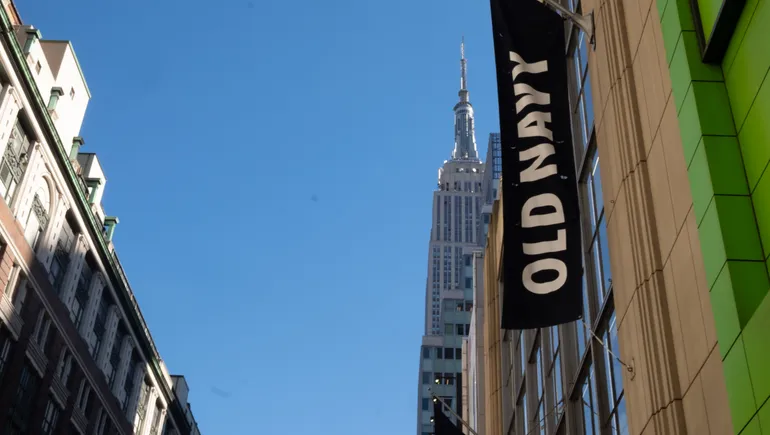
However, these gains were partially offset by significant headwinds elsewhere. Athleta saw its net sales and comps plummet by 12%, and Old Navy—the crown jewel of the company’s portfolio—suffered from ongoing merchandising challenges. This performance shift marks a critical turning point for CEO Richard Dickson, who is now tasked with managing a portfolio where the “reliable” brands are stumbling, and the “turnaround” project has become the growth engine.
A Chronology of the Turnaround
To understand the significance of this moment, one must look back at the years of decline that defined the Gap brand prior to its current resurgence.
- 2020–2023: The Doldrums: For several years, the Gap brand struggled to find its identity in an era dominated by fast fashion and direct-to-consumer digital natives. Marketing efforts felt disjointed, and the product assortment failed to resonate with a younger, style-conscious demographic.
- Late 2023–2024: The Strategic Pivot: Under the leadership of Richard Dickson, the company began to prioritize "cultural relevance." This involved a series of high-profile collaborations and a renewed focus on core product categories like fleece and denim.
- Q1 2026: The Early Warning Signs: Old Navy began showing signs of wear. Fashion misses and inventory imbalances led to a sluggish start to the year, raising concerns among investors about the company’s heavy reliance on its largest banner.
- Q2 2026: The Role Reversal: The latest financial results confirm that the Gap brand has successfully transitioned from a laggard to a leader, while Old Navy enters a period of intense restructuring following the departure of its CEO.
Supporting Data: The Anatomy of Success and Failure
The divergence in performance between the Gap brand and Old Navy is not merely anecdotal; it is rooted in specific shifts in product strategy and market execution.
The Gap Brand’s Success
The resurgence of the Gap is being attributed to a "two-pronged" success model:
- Cultural Activations: By leveraging collaborations that place the Gap logo back into the cultural zeitgeist, the brand has successfully repaired its image.
- Product Fundamentals: As noted by GlobalData Managing Director Neil Saunders, the growth is not merely a marketing mirage. "Healthy uplifts are being produced across the core assortment in categories like fleece and denim," Saunders explained. "Improved products and more relevant styling are creating interest."
The Old Navy Challenge
Conversely, Old Navy’s struggle is being viewed as a deeper systemic issue. With a 12% decline at Athleta and a softening at Old Navy, the company’s broader performance was dragged down. The "modest miss" at Old Navy is now being scrutinized as a potential failure to understand the core family demographic. Analysts argue that the brand’s offerings simply failed to provide consumers with enough reasons to purchase, a problem that is now being met with a leadership shakeup.

Official Responses and Leadership Changes
CEO Richard Dickson has maintained a posture of measured optimism, despite the quarterly dip. Regarding Old Navy, Dickson characterized the results as a "modest miss," attributing the weakness to merchandising issues that the company is actively correcting. He noted that the transition of leadership at Old Navy was planned, though the timing has inevitably led to speculation regarding the severity of the brand’s current trajectory.
"Fall styles and marketing have led to improved traffic and more strength in women’s denim," Dickson stated during the earnings call, suggesting that the corrective measures are already taking hold in the third quarter. However, the company is under immense pressure to prove that these are not merely cyclical issues, but rather, manageable operational hurdles.
Implications for the Future of Gap Inc.
The implications of this quarter are profound. For years, Gap Inc. was essentially "Old Navy and some other brands." The current data suggests a fundamental shift in the company’s internal hierarchy.
1. The End of "Old Navy Dependency"
If the Gap brand can sustain its 10% comp growth, the company will have a more balanced revenue stream. This diversification is essential for long-term stability, particularly as the retail environment remains volatile.

2. A Serious Challenge at the Helm
Neil Saunders and other analysts have cautioned that the company cannot afford to dismiss Old Navy’s struggles as simple "range missteps." The installation of a new CEO at Old Navy is a high-stakes move. If the new leadership fails to revitalize the brand, Gap Inc. will face a difficult reckoning regarding its largest revenue driver.
3. Cultural Relevance as a KPI
The success of the Gap brand serves as a case study for legacy retailers. It proves that a brand that has lost its way can return to profitability by doubling down on core categories while simultaneously engaging in cultural conversations that make the brand feel "current" rather than "nostalgic."
4. The Athleta Question
While the focus remains on the Gap-Old Navy dynamic, the double-digit decline at Athleta presents a secondary challenge. The activewear market is hyper-competitive, and Gap Inc. must determine whether the brand’s current struggles are a result of market saturation or a lack of brand differentiation.
Conclusion
As the retail industry enters the final stretch of 2026, all eyes are on the transition within Gap Inc. The "star of the show" is, for the first time in over a decade, the brand that started it all. By proving that the Gap brand can lead the company’s growth, management has earned a grace period from investors. However, the clock is ticking on the turnaround at Old Navy. The company has successfully demonstrated that it knows how to fix a brand; now, it must prove it can do so on a massive, enterprise-wide scale. The success of the next two quarters will determine whether this reversal is a fleeting moment of brilliance or the beginning of a sustainable new chapter for one of America’s most storied apparel conglomerates.