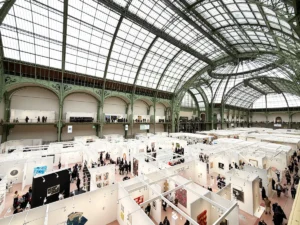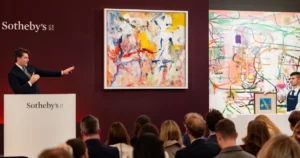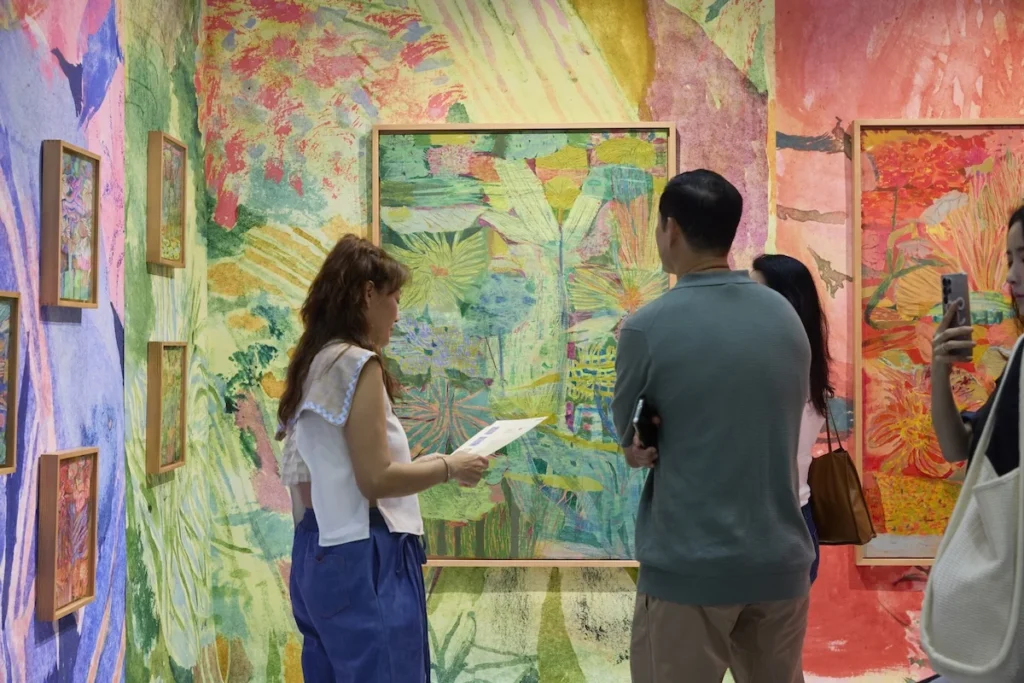
SEOUL — As the heat of summer begins to recede, the international art world has pivoted its gaze toward the Korean peninsula. The fifth iteration of Frieze Seoul, held in tandem with the long-running homegrown fair Kiaf Seoul, opened its doors this week at the COEX convention center in the heart of the Gangnam district. While the global art market continues to navigate a period of significant correction, the atmosphere in Seoul remains one of calculated optimism.
The convergence of Frieze, Kiaf, and the prestigious biennials in Gwangju and Busan has transformed South Korea into a high-density cultural nexus, attracting a sophisticated cohort of collectors, curators, and museum directors from across the globe. Although the frenetic "gold rush" energy of the fair’s inaugural years has transitioned into a more measured pace of trade, the underlying sentiment among industry veterans is clear: Seoul is no longer a speculative outpost, but a cornerstone of the global cultural infrastructure.
I. Main Facts: A Convergence of Culture and Commerce
The 2026 edition of Frieze Seoul marks a milestone for the franchise, representing its fifth year in partnership with the Galleries Association of Korea. This year, the fair hosts 125 galleries from 30 countries, while Kiaf Seoul celebrates its 25th anniversary with 175 exhibitors. The sheer scale of the week is bolstered by the simultaneous openings of the Gwangju and Busan Biennials, creating a "mega-week" that has become a mandatory stop on the international art calendar.
The opening VIP day at COEX saw bustling aisles and high-level attendance from North American museum groups and major Asian collectors from Japan, mainland China, Taiwan, and Singapore. However, the transactional landscape told a story of selectivity. Unlike the rapid-fire acquisitions seen in 2022, sales on the first day were described by many as "measured" and "cautious." High-value works in the seven-figure range did find homes, but the bulk of the activity resided in the mid-market range, between $50,000 and $300,000.
The demographic shift was also palpable. Dealers noted the absence of "speculative flippers" who characterized the market’s peak, replaced instead by a younger, more studious generation of Korean collectors. This "next-gen" audience is characterized by a deep engagement with art history and a preference for long-term cultural value over immediate financial return.
II. Chronology: From Market Frenzy to Strategic Stability
To understand the current state of Frieze Seoul, one must look at the trajectory of the Korean market over the past four years.
- 2022: The Arrival. Frieze Seoul launched to unprecedented fanfare, coinciding with a post-pandemic liquidity surge. The fair was defined by "sell-out" booths within hours and a celebrity-heavy social scene.
- 2023–2024: The Correction. As global interest rates rose and the tech-led wealth boom cooled, the art market entered a cooling period. Sales volumes in South Korea dipped from their 2022 peak of 615 billion won ($433 million) by nearly 25%.
- 2025: Consolidation. Galleries began to refine their offerings, moving away from purely "trophy" works toward more curated, academic presentations.
- 2026: The Current State. The fifth edition represents a "new normal." The market has shed its excess volatility. The focus has shifted from the "party" to the "program." International galleries like Thaddaeus Ropac and White Cube have now spent half a decade on the ground, building local teams and fostering relationships with private museums like the Sehwa Museum of Art.
This chronology suggests that the "K-art" boom was not a fleeting trend but a catalyst for a permanent shift in the Asian art market’s center of gravity, moving it closer to Seoul’s robust ecosystem of private museums and corporate collections.
III. Supporting Data: Sales Reports and Market Indicators
Despite the cautious climate, the first-day sales report provided evidence of a healthy, multi-tiered market. The demand spanned from Korean modernist masters to rising stars of the African diaspora and American contemporary art.
Blue-Chip Highlights
- Thaddaeus Ropac: The gallery secured the day’s headline sale with Adrian Ghenie’s Figure with Funerary Stele (2026), which sold for €1.1 million ($1.28 million). They also placed an Antony Gormley cast-iron sculpture for £750,000 ($1 million).
- Gallery Hyundai: A cornerstone of the Korean scene, Hyundai reported strong interest in the late Kim Tschang-yeul, famous for his "water drop" paintings. One major work sold for $1.1 million, while pieces by Seung-taek Lee fetched between $170,000 and $700,000.
- Kukje Gallery: The gallery saw consistent movement in the Dansaekhwa sector, selling a Ha Chong-Hyun mixed-media work for approximately $300,000 and a Park Seo-bo painting for $300,000.
International Institutional Placements
- David Zwirner: Sold a new work by Lucas Arruda to an undisclosed Asian museum.
- Gagosian: Placed works by Damien Hirst with multiple collections, including an Asian institutional acquisition.
- Sprüth Magers: Sold a 2025 hand embroidery by Cyprien Gaillard to an Asian institution for $200,000.
- Hauser & Wirth: Reported sales of works by Louise Bourgeois, Jenny Holzer, and Jeffrey Gibson, ranging from $185,000 to $600,000.
Emerging and Mid-Market Strength
- David Kordansky: In one of the fair’s most talked-about booths, the gallery sold out its solo presentation of American artist Chase Hall. The nine paintings, priced between $25,000 and $125,000, were acquired largely by Korean collectors.
- Johyun Gallery: Sold seven bronze sculptures by Lee Bae for $40,000–$140,000 each.
- Lamb (London): In the "Focus" sector, ceramic works by Brazilian artist Ayla Tavares sold for $6,500–$15,000 to American collectors, proving that the fair’s reach extends beyond local buyers.
IV. Official Responses: The View from the Directors and Dealers
The sentiment on the floor was one of "holistic commitment." Dealers are no longer looking for a quick win; they are looking for a permanent seat at the table.
Thaddaeus Ropac, who has operated a gallery in Seoul for five years, emphasized the sophistication of the local audience. "The more established you are, the more you build up an audience," Ropac stated. "Korean audiences are among the most sophisticated in Asia. There is no place like Seoul where you can have so many private museums. People here demand culture."
Patrick Lee, Director of Frieze Seoul, noted the evolving nature of the fair’s identity. While some critics questioned the high percentage of regional galleries—now 70% of the exhibitor list—Lee argued that this creates a distinct identity. "I’ve been pushing local audiences to be more inquisitive and initiate dialogue with galleries. It’s a process," Lee said, expressing satisfaction with the diverse international curator groups present.
Sunghoon Lee, President of the Galleries Association of Korea, offered a pragmatic view of the market’s contraction. "The sales volume may be smaller than the 2022 peak, but the loyalty among collectors is stronger," he said. He described the new generation of collectors as "genuine art enthusiasts" who are more interested in the intrinsic value of smaller, affordable pieces than in speculative investments.
Anthony Allen, Partner at Paula Cooper Gallery, highlighted a growing trend: the move away from the traditional fair booth. This year, the gallery opted for a three-week pop-up exhibition, "Woods Lands Meadows," at Frieze House Seoul. "Fairs are very short. It’s hard to develop connections during a fair," Allen explained. "We wanted to find other ways of connecting with the public and developing museum exhibition opportunities in Busan and beyond."
V. Implications: The "Validation Economy" and the Future of Seoul
The 2026 edition of Frieze Seoul suggests several long-term shifts in the art market’s structure:
1. The Rise of the "Regional-International" Hybrid
With 70% of exhibitors now having permanent spaces in the Asia-Pacific region, Frieze Seoul is moving away from being a "Western export" and toward becoming a regional hub that facilitates intra-Asian trade. The high turnover of galleries (40% new exhibitors) indicates that the fair is still fine-tuning its mix to meet the specific tastes of the Korean and broader Asian market.
2. The Maturation of the Korean Collector Base
The emergence of "next-generation art connoisseurs" is perhaps the most significant takeaway. As noted by art adviser Gladys Lin, the "validation structure" of the market is shifting. While value was previously conferred top-down by Western institutions, the high level of engagement from younger, local audiences is creating a new, grassroots validation system. This demographic is more interested in the "Material Practice" of artists and the bridge between the Korean diaspora and the mainland.
3. Strategy Beyond the Booth
The success of pop-ups and off-site museum shows (like the Georg Baselitz retrospective at Sehwa Museum) indicates that the most successful galleries in Seoul are those that integrate themselves into the city’s year-round cultural fabric. The "fair-only" model is being supplemented by long-term institutional strategies.
4. Resilience Amidst Correction
While the global art market faces headwinds, Seoul’s "ecosystem"—comprising world-class private museums, corporate support, and a culturally hungry public—provides a safety net. The market may be "measured," but it is not stagnant. The shift from "speculation" to "sophistication" marks the beginning of Seoul’s second chapter as a global art capital.
As Frieze Seoul and Kiaf Seoul continue through the weekend, the message from Gangnam is clear: the frenzy has faded, but the foundation is stronger than ever. The art world is no longer just visiting Seoul; it is moving in.