The ongoing confrontation regarding the architectural and historical identity of the John F. Kennedy Center for the Performing Arts has escalated into a high-stakes federal legal conflict. On Thursday, an emergency appeal was filed in federal court seeking an immediate injunction to prevent the board of the Kennedy Center—an institution chartered as a living memorial to the 35th President of the United States—from engraving the name of President Donald J. Trump onto its marble facade.
This latest maneuver follows a contentious vote by the Kennedy Center board, which is currently dominated by presidential appointees and political allies, to install permanent signage crediting the current administration with the venue’s restoration and renovation. The move has reignited a fierce debate over the preservation of national monuments, the scope of executive authority in managing federal institutions, and the boundaries of legislative oversight.
The Core of the Dispute: A Question of Legacy
The crux of the controversy lies in a proposed inscription that would read: "The John F. Kennedy Center for the Performing Arts Restored and Renovated By President Donald J. Trump." Furthermore, the board has outlined a secondary provision: should the newly established "Trump Kennedy Center Fund" successfully raise $100 million, the building would receive an additional inscription stating, "Endowed by the Trump Kennedy Center Fund."
For critics, the proposal represents an attempt to graft a modern political identity onto a site specifically dedicated by Congress in 1964 as a memorial to John F. Kennedy following his 1963 assassination. Legal observers, preservationists, and members of the board opposed to the administration have argued that such an alteration fundamentally changes the nature of the institution without the requisite congressional authorization.
Chronology of the Conflict
The standoff is the culmination of nearly a year of escalating tension between the Trump administration and those tasked with maintaining the integrity of the Kennedy Center.
- December 2023: The Kennedy Center board, under the direction of the current administration, votes to move forward with plans to add President Trump’s name to the institution’s physical structure.
- May 2024: U.S. District Judge Christopher Cooper delivers a significant blow to the board’s efforts. In a formal ruling, Cooper declares that the board lacks the unilateral authority to rename or significantly rebrand the institution. He explicitly notes that because the Center serves as a congressional memorial, any alterations to its identity require explicit legislative approval. Additionally, Judge Cooper finds that the board acted unlawfully in its previous decision to mandate a two-year closure for renovations.
- August 2024: Following the board’s renewed attempt to proceed with the engraving, Rep. Joyce Beatty, an Ohio Democrat and an ex officio member of the board, files an emergency appeal. Her legal team argues that the board’s latest vote constitutes a "clear violation" of Judge Cooper’s May injunction.
- Late August 2024: In response to the filing, the Kennedy Center signals a temporary tactical retreat, confirming that no physical work on the inscriptions will commence before September 8, providing the court with a brief window to deliberate on the merits of the emergency appeal.
Supporting Data and Rationale
The administration’s supporters on the board have defended the move through a resolution arguing that the institution’s long-term viability was at risk. The resolution claims that the Center "would be in financial ruin without President Trump’s unique stature as both an unparalleled fundraiser and world-class developer."
However, this justification is met with skepticism by fiscal watchdogs and historical preservationists. They point to the 1964 congressional act that established the Center, which envisioned it as a non-partisan institution supported by federal appropriations and private philanthropy, not as a commercial branding opportunity for the sitting executive.
The legal experts involved in the case warn that the administration’s actions may be setting a dangerous precedent. If a sitting president is permitted to append their name to existing federal monuments under the guise of "fundraising" or "restoration," it potentially opens the door to the wholesale rebranding of federal property for personal or political legacy building, regardless of the original congressional mandate.
Official Responses and Legal Arguments
Rep. Joyce Beatty has emerged as the primary institutional check on the board’s actions. In her capacity as a board member, she has maintained that the board is operating outside the law. Her legal representatives have characterized the board’s recent actions as a direct defiance of the judiciary. "The board is not above the law, nor are they exempt from the clear, specific directives issued by Judge Cooper," her counsel stated in a brief to the court.
Conversely, the Kennedy Center, through its official spokespeople, has framed its cooperation with the court as an act of transparency. By agreeing to a stay on the construction until September 8, the board maintains that it is respecting the judicial process while continuing to assert its belief that it has the management authority to recognize donors and contributors—even when that donor is the President of the United States.
Broader Implications: The Washington Context
The fight over the Kennedy Center does not exist in a vacuum; it is part of a wider pattern of tension between the White House and the legislative and judicial branches regarding the use of public space in Washington, D.C.
A parallel struggle is currently unfolding just blocks away regarding the White House East Wing. The administration’s plan to demolish portions of the historic structure to facilitate a $400 million ballroom project has faced similar legal hurdles. While a federal appeals court initially suspended the construction due to a lack of congressional approval, the Supreme Court ruled on Friday that the project may proceed.
Reports from D.C. media indicate that construction crews have begun working 20 hours a day, seven days a week, to fast-track the ballroom’s completion. This aggressive timeline has served as a signal to many observers that the administration is eager to establish physical changes to the federal landscape before the conclusion of its current term.
The Constitutional Tension
The legal wrangling reflects a deeper constitutional tension regarding the "unitary executive" theory—the idea that the President has total control over the executive branch and its properties. While the President holds the power to oversee federal agencies, the Kennedy Center’s status as a congressional memorial places it in a unique legal gray area.
Legal scholars argue that if the board prevails, the precedent could be used to justify the modification of other memorials, such as the Lincoln or Jefferson Memorials, provided a president can cite "renovation" or "endowment" as the impetus. Opponents of the board argue that Congress, not the executive, is the steward of these national symbols.
Conclusion: The Path Forward
As September 8 approaches, the eyes of the preservationist community and the D.C. legal establishment remain fixed on Judge Cooper’s courtroom. The decision is expected to have far-reaching implications for how federal institutions manage their heritage.
If the court upholds the previous injunction, the Kennedy Center will be forced to halt the inscription project, effectively curbing the administration’s ability to leave a permanent mark on the building’s facade. If, however, the court allows the board’s resolution to stand, it may signal a fundamental shift in how the federal government manages its most iconic structures—prioritizing the influence of the executive branch over the static, historic intent of the legislative acts that originally brought these institutions into being.
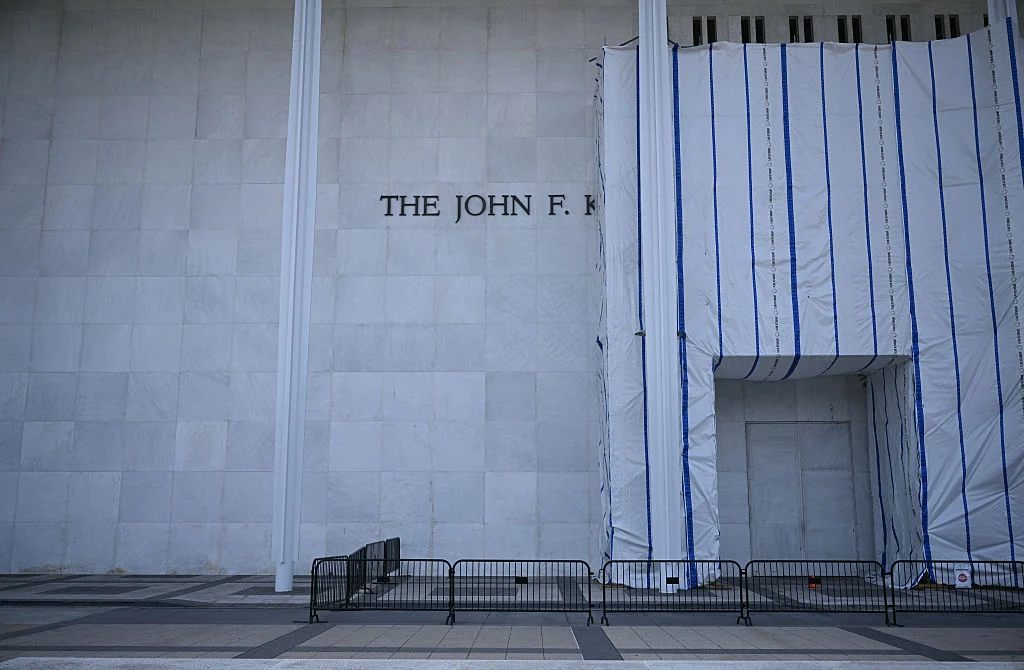
For now, the marble facade of the Kennedy Center remains blank, a quiet canvas at the center of a loud and complex debate over who truly owns the legacy of America’s most prominent public spaces. The resolution of this case will undoubtedly serve as a landmark ruling in the history of administrative law and the protection of America’s living memorials.