In an era where the methods of financial malfeasance evolve at the speed of an algorithm, the global community of legal practitioners is arming itself with new intelligence. ICC FraudNet, a specialized division of the International Chamber of Commerce (ICC) Commercial Crime Services, has officially launched its 2025 Global Annual Report on Fraud and Asset Recovery. Marking its fifth consecutive edition, this publication serves as a cornerstone for international legal professionals, investigators, and regulators tasked with the increasingly complex challenge of tracking and recovering misappropriated assets across borders.
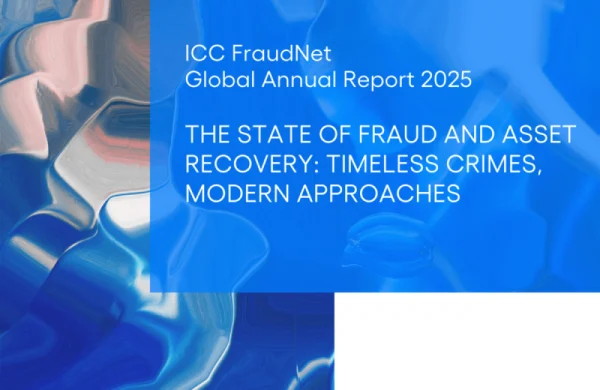
Titled “The State of Fraud and Asset Recovery: Timeless Crimes, Modern Approaches,” the 2025 report represents a significant expansion of the organization’s commitment to thought leadership. It provides a comprehensive analysis of the shifting landscape of financial crime, merging traditional legal expertise with the cutting-edge technological advancements required to counter contemporary threats.
The Evolution of a Global Sentinel: Understanding ICC FraudNet
Since its inception in 2004, ICC FraudNet has functioned as an elite, worldwide network of preeminent lawyers specializing in high-stakes fraud, complex asset tracing, and multi-jurisdictional recovery. Operating under the auspices of the ICC Commercial Crime Services, the network has matured into a formidable force of 125 members and 8 strategic partners, spanning 81 countries.
This footprint is not merely numerical; it is a strategic web designed to overcome the "jurisdictional arbitrage" often exploited by sophisticated fraudsters. By connecting local experts with global resources, ICC FraudNet ensures that the pursuit of justice is not stymied by the complexities of international law, varying regulatory frameworks, or the rapid movement of illicit capital through offshore havens.
Chronology: From Foundation to the Fifth Edition
The trajectory of the Global Annual Report mirrors the growing sophistication of the fraud ecosystem:
- 2004: Establishment of ICC FraudNet as a specialized response mechanism for international commercial crime.
- 2020-2023: The formative years of the Global Annual Report series. These early editions established the network’s voice, focusing on standardizing investigative practices and fostering cross-border cooperation in the wake of digitized globalization.
- 2024: A year of transition where the focus began shifting heavily toward the intersection of emerging technologies and traditional financial crime, setting the stage for the current edition.
- 2025: The launch of the Fifth Edition. This milestone report marks a pivot toward a more integrated, technology-forward methodology, positioning the document as an essential "state of the union" for the anti-fraud community.
Structuring the Defense: Six Pillars of Insight
Nicola Stenhouse, Executive Secretary of ICC FraudNet, describes the 2025 report as a structured roadmap for navigating the "complex landscape" of global fraud. The report is organized into six thematic pillars, each designed to provide actionable intelligence for practitioners:
- Perspectives on AI: Assessing how artificial intelligence is transforming both the commission of crime and the efficacy of investigations.
- Enforcement and Regulation: An analysis of shifting global standards and the role of regulatory bodies in curbing financial misconduct.
- Asset Recovery Investigations: A deep dive into the criminal, civil, and technological methodologies required to trace assets.
- Cybercrime: Addressing the rise of digital-native fraud and the vulnerabilities of modern financial infrastructures.
- Tackling Fraud, Corruption, and Money Laundering: A focus on the nexus between these three pillars and how they sustain transnational illicit networks.
- Practical Perspectives: A collection of case-driven strategies intended for day-to-day use by legal and forensic professionals.
Supporting Data and Geographic Breadth
The 2025 report is not merely a collection of theories; it is a synthesis of international expertise. The compendium features 23 original papers authored by 37 leading experts from diverse legal systems. The geographic representation is intentionally global, drawing insights from the United Kingdom, the United States, Spain, Hungary, Ghana, Poland, Panama, the Cayman Islands, New Zealand, Guernsey, Japan, the British Virgin Islands, China, Singapore, and South Africa.
This diversity of origin is critical to the report’s success. By incorporating perspectives from both major financial hubs and developing jurisdictions, the report provides a nuanced understanding of how fraud travels across the globe, from the digital corridors of Singapore to the regulatory environments of the Cayman Islands.
Official Responses: The Dual Face of Technology
Dr. Dominic Thomas-James, Editor of the 2025 Global Annual Report, emphasized that the central narrative of this year’s edition is the duality of technology. "Tales of caution about AI’s ability as a manipulator, as well as encouragement as to its helpful role in investigations, as well as its competence, or otherwise are all considered in the Global Annual Report," Dr. Thomas-James stated.
The report explores the integration of Large Language Models (LLMs) into the investigative process. While LLMs offer unprecedented capabilities in analyzing vast datasets and identifying patterns of fraud that would be invisible to human eyes, they simultaneously provide bad actors with new, low-cost methods for phishing, social engineering, and the fabrication of evidence.
The report warns that the reliance on AI-driven decision-making in litigation—while efficient—carries inherent risks. If the underlying data is biased or if the algorithms are not sufficiently transparent, the legal system risks delegitimizing its own investigative outcomes. Therefore, the report advocates for a "human-in-the-loop" approach, where technology serves as a force multiplier for the expert investigator rather than a replacement.
Implications: A Call for Proactive Defense
The publication of the 2025 Global Annual Report arrives at a critical juncture. As global economic volatility creates new avenues for financial desperation and illicit gain, the traditional methods of recovery are being tested.
Bridging the Knowledge Gap
The primary implication of this report is the necessity of continuous education. The "timeless crimes" mentioned in the report’s title refer to the fundamental human motivations behind fraud—greed, deceit, and the abuse of power. However, the "modern approaches" are the tools required to combat these. Practitioners who fail to integrate technological fluency into their legal strategy will find themselves increasingly ineffective.
Strengthening Jurisdictional Cooperation
The report underscores that international asset recovery is not a task that can be completed in isolation. The 2025 edition highlights the importance of fostering informal and formal networks between investigators and regulators. By sharing best practices—such as those detailed in the 23 papers—the global community can shrink the "safe havens" where criminals currently hide their assets.
Practicality over Theory
Dr. Thomas-James highlighted that the ultimate goal of this year’s report is "real-world solutions." In a field often bogged down by procedural delays and bureaucratic inertia, the report offers a practical guide to tackling acquisitive misconduct. It provides strategies for navigating different legal systems, ensuring that practitioners have the tools to respond swiftly when assets are at risk of being dissipated.
Conclusion: A New Standard for the Industry
The 2025 Global Annual Report on Fraud and Asset Recovery is more than a summary of trends; it is a manifesto for the future of the profession. As the lines between the physical and digital economies continue to blur, the insights contained within this document will become increasingly vital.
For legal professionals, forensic accountants, and policy-makers, the report serves as a reminder that while the threat of fraud is constant, the ability to adapt is the only effective defense. As ICC FraudNet continues its work across 81 countries, this report stands as a beacon of collective intelligence, aimed at ensuring that the rule of law keeps pace with the rapid evolution of global financial crime.
To access the full analysis, strategies, and case studies, the 2025 Global Annual Report is available for download at iccfraudnet.org. Through this dissemination of knowledge, ICC FraudNet continues to strengthen the global shield against those who seek to profit from the erosion of integrity in the financial system.