

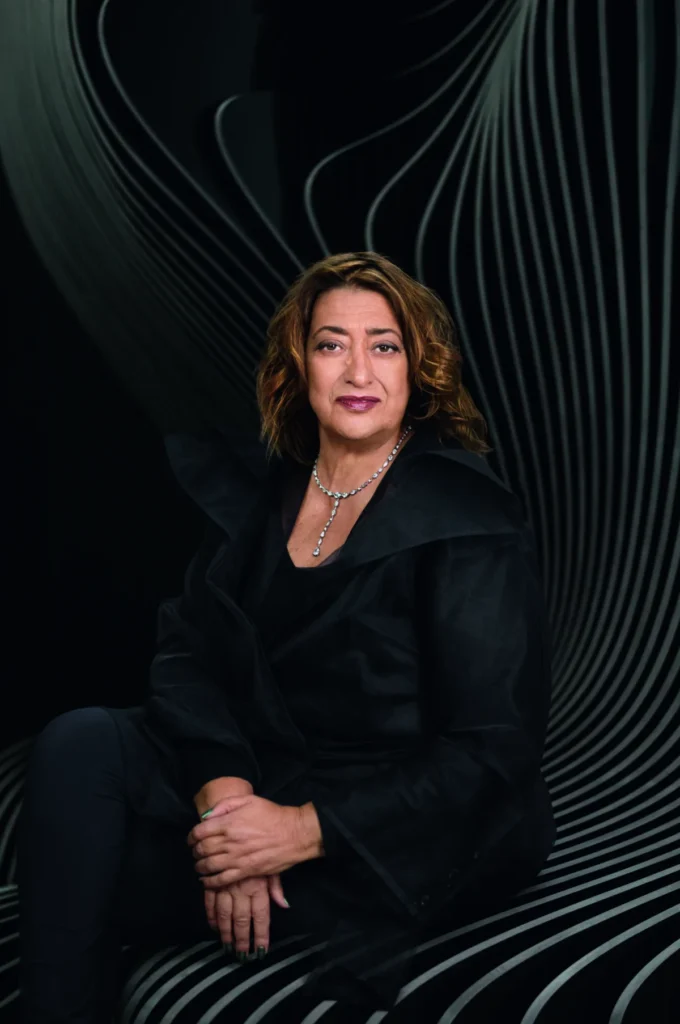
Ten years after the passing of Dame Zaha Hadid—the visionary Iraqi-British architect whose fluid forms and gravity-defying structures redefined the skyline of the 21st century—the Zaha Hadid Foundation (ZHF) is set to breathe new life into one of her most personal sites. On October 29, the foundation will officially reopen the doors of 10 Bowling Green Lane in Clerkenwell, London. Once the bustling nerve center where Hadid and her team conceptualized some of the world’s most iconic buildings, the former Victorian schoolhouse is being transformed into a permanent public cultural space dedicated to architecture, design, and the intersection of the arts.
The reopening marks a significant milestone in the preservation of architectural history, transitioning from a private workspace to a public institution designed to foster the next generation of creative thinkers.
The Main Facts: A New Chapter for 10 Bowling Green Lane
The renovation of the Grade II-listed Victorian schoolhouse, originally constructed in the early 1870s, serves as both a restoration of historic architecture and a tribute to contemporary innovation. Spearheaded by Katherine Nolan and Alex Butterworth of the London-based practice Studio KA, the project balances the building’s heritage with the forward-looking aesthetic synonymous with Hadid’s name.
The revamped facility will function as a multi-disciplinary hub, housing:
- Galleries: Dedicated exhibition spaces for rotating displays.
- The Archive: A climate-controlled, professional repository for Hadid’s sketches, models, and personal documents.
- Learning Spaces: A dedicated educational wing for workshops and seminars.
- Lecture Hall: A venue for discourse on contemporary architectural practice and theory.
- Creative Residencies: A platform for emerging architects and artists to engage with the archive.
The public will be able to access the space starting November 3, following a private press and preview event on October 29. The inaugural exhibition, Zaha Hadid: Architecture of Performance, curated by Catherine Howe and Libby Sellers, will offer a deep dive into an often-overlooked aspect of her career: her extensive work in stage and set design for opera, classical music, and contemporary dance.
A Chronology of a Visionary Life
To understand the weight of this reopening, one must look back at the trajectory of Zaha Hadid’s career—a journey that often started within the walls of the Clerkenwell schoolhouse.
- 1950: Zaha Hadid is born in Baghdad, Iraq.
- 1972–1977: Hadid moves to London to study at the Architectural Association (AA), where she becomes a protégée of Rem Koolhaas and Elia Zenghelis.
- 1979: She establishes her own practice, Zaha Hadid Architects (ZHA), in London.
- 1990s: Following years of skepticism regarding the buildability of her deconstructivist designs, Hadid gains international acclaim with the Vitra Fire Station (1993) and the MAXXI Museum in Rome.
- 2004: She becomes the first woman to be awarded the Pritzker Architecture Prize.
- 2016: Zaha Hadid passes away suddenly in Miami at the age of 65.
- 2024: The Zaha Hadid Foundation commemorates the 10th anniversary of her passing by opening the doors of her former headquarters to the public, fulfilling her long-held wish to contribute to architectural education.
Supporting Data: Architectural Nuance and Design Integrity
The restoration of the 10 Bowling Green Lane site was not merely a cosmetic renovation; it was an exercise in archival preservation. Studio KA took a nuanced approach, honoring the "Zaha touch" while maintaining the structural integrity of the Victorian schoolhouse.
Restorative Details
The design team worked to preserve the original architectural features of the 1870s building, which serve as a stark, textured contrast to the sleek, parametric interventions Hadid was famous for. However, visitors will notice specific "Hadid-isms" woven into the fabric of the building:
- The Z-Shaped Pulls: Door handles and hardware mimic the sharp, angular geometry found in her early paintings.
- Shard-like Flooring: The flooring insets utilize geometric fragmentation, reflecting the way Hadid once approached urban planning—viewing space not as a box, but as a dynamic field of movement.
- Palette and Finish: The interior finishings draw directly from the color palettes used in Hadid’s personal paintings, bridging the gap between her two-dimensional art and her three-dimensional built work.
Official Responses: The Philosophy of the Foundation
The mission of the Zaha Hadid Foundation is deeply rooted in the architect’s personal desire to ensure her work served as a catalyst for education. Rana Hadid, chair of the trustees, expressed the weight of this moment in a recent statement.
"It was Zaha’s wish for the foundation to preserve her legacy while carrying her ideas forward: advancing education, supporting future generations, and contributing to the wider field of architecture," Rana Hadid noted. She emphasized that the archive is not a stagnant collection but a "profound record of her work, imagination, and intellectual life."
Aric Chen, the current director of the Zaha Hadid Foundation, echoed these sentiments, framing the project as a "next evolution." According to Chen, the site is designed to ensure that the foundation is not merely a museum of what has been, but a proactive participant in what is to come. "It will be where Zaha’s legacy will live on both through our programs and exhibitions drawn from her archive, and through her forward-looking ethos as we actively engage with architectural culture today," Chen stated.
Implications: Why This Matters for Architecture
The opening of 10 Bowling Green Lane has broader implications for the architectural community, particularly in the context of how we treat the "archives of the masters."
1. Access to the Creative Process
For decades, many of Hadid’s sketches and process models were sequestered in private collections or internal firm archives. By opening these to public scholarship, the foundation is democratizing access to the methodology of one of history’s most influential architects. Students and researchers will now have the ability to trace the evolution of a project from a loose, abstract sketch to a complex parametric model.
2. The Role of the Architect as Curator
By hosting residencies and workshops, the Foundation is positioning itself as a "living" entity. It challenges the traditional model of a foundation, which often acts as a static repository. Instead, it invites a dialogue between Hadid’s historical designs and the contemporary problems of the 21st century—such as climate change, urban density, and the integration of digital technology in physical construction.
3. Preserving the "Iraqi-British" Perspective
Hadid’s work was always a synthesis of different cultures and perspectives. Her upbringing in Baghdad and her professional life in London created a unique architectural language. The Foundation, by being based in the heart of London, reinforces the importance of the city as a global hub for architectural thought, while simultaneously acknowledging the diverse influences that shaped Hadid’s worldview.
4. A Template for Future Legacies
The success of this project could serve as a template for other major architectural firms. As the generation of "starchitects" who rose to prominence in the late 20th century begins to pass away, the question of how to handle their vast physical and digital archives becomes critical. The Zaha Hadid Foundation offers a model that balances commercial history with public benefit, ensuring that the work does not disappear into private, inaccessible collections.
Conclusion: Looking Toward the Future
As the doors open to Zaha Hadid: Architecture of Performance, visitors will be invited to view the architect not just as a builder of structures, but as a choreographer of space. Her interest in the performing arts—demonstrated by her set designs for the Royal Opera House and collaborations with artists—reveals a side of her practice that prioritized human experience and temporal flow over simple utility.
The transformation of 10 Bowling Green Lane is, at its heart, an act of continuity. By transforming her private office into a public schoolhouse for ideas, the Zaha Hadid Foundation is ensuring that the "Queen of the Curve" remains a teacher, a mentor, and a source of inspiration for decades to come. As the foundation embarks on this new chapter, the architectural world watches with anticipation, eager to see how the spirit of Zaha Hadid continues to shape the future of our built environment.



