In the rarefied air of high-end horology, where price tags often rival the cost of luxury real estate, a quiet revolution is taking place. It is a trend characterized not by the pursuit of grand complications or rare materials, but by a return to accessibility, playfulness, and the democratization of design. The latest entrant into this burgeoning ecosystem is the Donut Watch Company (DWC)—a brand that serves as a secondary, experimental platform for the creative minds behind the critically acclaimed Ming watch brand.
Much like the relationship between MB&F and its lower-priced "MAD Editions" spin-off, the Donut Watch Company is positioned as a playful, accessible sibling to Ming’s primary, more serious horological offerings. By stripping away the formality of high-luxury watchmaking, the brand aims to capture a younger, more design-conscious demographic without diluting the prestige of the flagship Ming name.
Main Facts: A "Baby Ming" with a Confectionary Twist
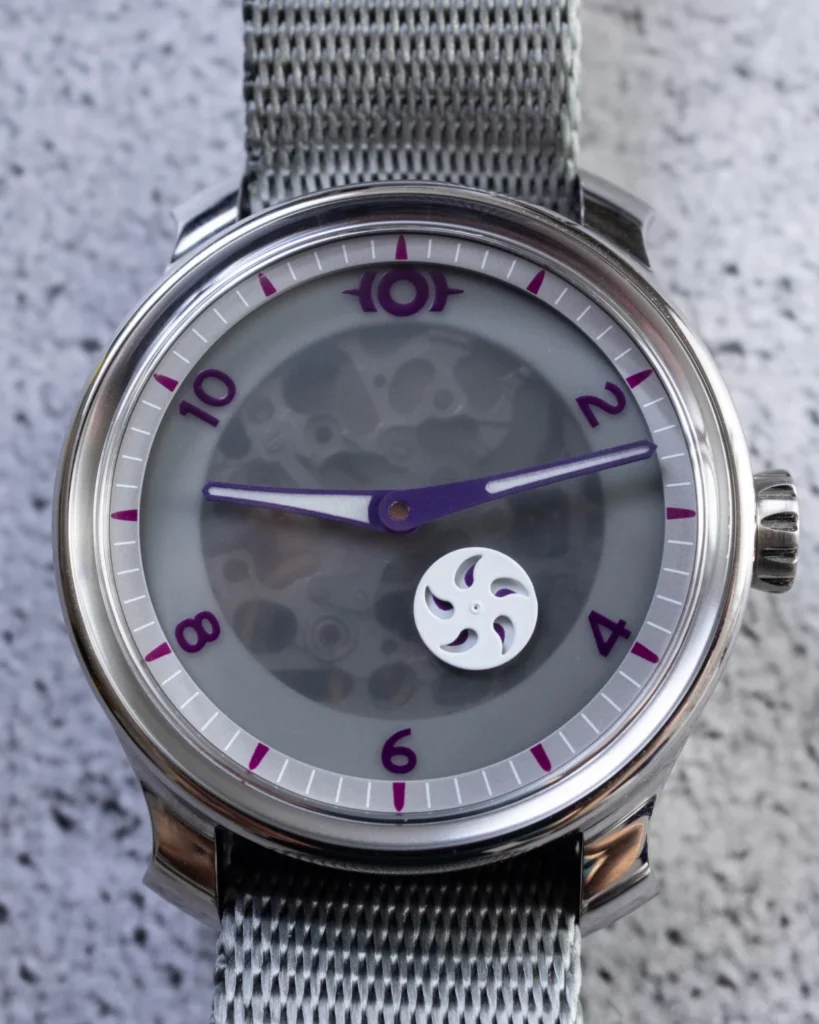
The debut of the Donut Watch Company is marked by the introduction of the "Glazed" model. At its core, the Glazed is a 35mm timepiece that reflects the design DNA of its parent brand while embracing a distinctly whimsical aesthetic. Featuring a polished steel case and the iconic flared lugs that have become a hallmark of the Ming aesthetic, the watch is intentionally compact—a "baby Ming" that bridges the gap between serious watch collecting and fun-first horology.

Despite its 35mm width, the watch carries a surprising presence on the wrist. Measuring nearly 12mm in thickness, the case is robust, further emphasized by the pass-through woven nylon strap. The integration of fixed lug bars ensures that the strap sits underneath the case, lifting the watch head slightly off the wrist and adding to its overall height.
The dial itself is a marvel of semi-transparency. Beneath a box-style sapphire crystal lies a "glazed" opaque dial that offers a filtered view into the skeletonized architecture of the underlying movement. The visual language is distinctly "dessert-themed," utilizing purple hour markers and an artistic white disc-on-disc subsidiary seconds indicator featuring five teardrop shapes that transition from white to purple.
Chronology: From Concept to Cultural Teaser
The path to the Donut Watch Company has been one of deliberate, calculated mystery.

- 2025 – The Prototype Phase: The internal development of the DWC concept began in 2025, as evidenced by the "2025" engraving on the casebacks of the initial test pieces. During this period, Ming explored how to expand their reach without saturating their core market.
- Late 2026 – The Soft Launch: The "Glazed" model was distributed to select industry insiders and journalists to gauge public sentiment. This phase was not intended for commercial release but served as a "temperature check" for the brand’s identity.
- The Future Horizon: While the Glazed is currently a non-commercial prototype, it sets the stage for the first official, publicly available DWC watch. Industry observers anticipate a formal launch window in the coming months, with a price point targeted around $700 USD.
Supporting Data: The Mechanics of Fun
At the heart of the Glazed beats the Japanese Miyota 8N40 automatic movement. This choice is significant; it signals a shift away from the Swiss-made, bespoke calibers often found in Ming’s high-end portfolio toward a proven, reliable, and cost-effective workhorse.
The Miyota 8N40, a staple of the Japanese watchmaking industry, is a skeletonized automatic movement operating at 3Hz (21,600 vibrations per hour) with a 42-hour power reserve. By utilizing this movement, DWC ensures that the watch remains serviceable and affordable while still providing a complex, visual experience for the wearer. The water resistance of the Glazed is rated at 50 meters, making it a functional daily companion rather than a delicate showpiece.
The packaging is perhaps the most unconventional aspect of the brand’s identity. Each Glazed watch is housed in a plush, gray, donut-shaped zippered case. Included in the center of the "hole" is a small, hand-painted figurine of a Shima Enaga—a Japanese long-tailed tit known for its all-white, snow-like appearance. This inclusion of "Snowball" (as the bird has been named) highlights the brand’s commitment to viewing the watch not just as a tool for timekeeping, but as a lifestyle object—a "toy for adults."

Official Responses and Strategic Philosophy
The creators behind the Donut Watch Company are adamant: the brand should not be viewed through the lens of traditional horological seriousness. The marketing language surrounding the launch—terms like "freshly glazed" and "zero nutritional value"—is intentionally tongue-in-cheek.
The team at Ming acknowledges the potential for confusion between the two brands. However, they emphasize that the DWC is a sandbox. By separating the brands, they allow themselves the creative freedom to explore "kid-like" designs that might otherwise be considered "off-brand" for a traditional luxury manufacturer.
"We want people to stop jumping to conclusions about the future of DWC," a representative noted during the initial unveiling. The implication is that the Glazed is merely the first course. Just as MB&F’s MAD Editions iterate through various cosmetic versions before moving to entirely new architectures, DWC is expected to release a series of donut-themed variations before evolving into more radical designs.

Implications: A New Era for Enthusiast Watches
The emergence of the Donut Watch Company is a bellwether for a broader shift in the luxury watch industry. For years, the secondary market has been dominated by the scarcity model—where brands like Rolex, Patek Philippe, and even Ming itself have restricted supply to maintain value and prestige.
However, the "enthusiast watch" trend, spearheaded by the likes of SevenFriday and later refined by the MAD Editions, suggests that there is a significant, untapped appetite for high-design, lower-cost timepieces. The industry is beginning to recognize that "luxury" does not always have to mean "exclusive."
Why the Shift?
- Market Saturation & Accessibility: High-end brands are realizing that a large portion of their fan base is effectively priced out of their main collections. By offering a lower-priced tier, they keep these enthusiasts engaged and loyal to the brand’s design language.
- Psychology of Play: As the watch market matures, collectors are becoming less obsessed with "investment pieces" and more interested in items that spark joy. The "toy-ification" of luxury—where packaging, brand story, and aesthetic novelty carry as much weight as the movement—is a direct response to this shift in consumer psychology.
- The "Gateway" Effect: By providing an entry-level product, DWC creates a funnel. A consumer who buys a $700 DWC watch today is arguably more likely to aspire to and purchase a $5,000 Ming watch in the future.
The Question of Future Expansion
The success of this model invites a question that looms over the entire industry: Will other high-concept brands follow suit? If a brand like URWERK, known for its ultra-complex satellite complications, were to launch a "fun" entry-level line, it would represent the ultimate validation of this trend.

For now, the Donut Watch Company remains an enticing mystery. With its $700 price point, unique, bird-accompanied packaging, and the backing of one of the most respected design teams in the industry, it is poised to disrupt the "entry-level" luxury space. Whether the DWC succeeds as a long-term brand or serves as a fleeting experiment, one thing is certain: the industry is becoming a lot less stiff, and for the average collector, that is a very welcome development.
As we await the first commercial batch, the message is clear: watch collecting is about to get a whole lot sweeter.