

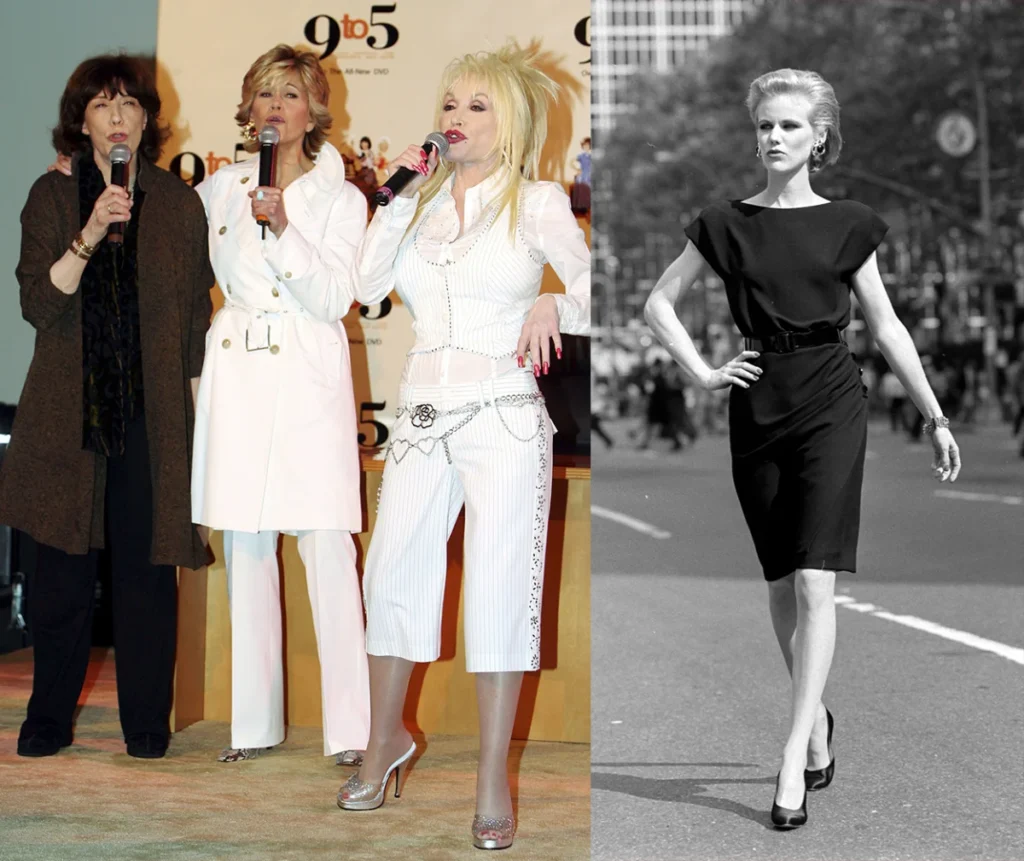
Every September 25, a specific pocket of the cultural zeitgeist pauses to honor a woman who has become more than just a country music icon: Dolly Parton. Celebrated in various states and pockets of Manhattan, "Dolly Parton Day" is a testament to her enduring legacy—a blend of fierce philanthropy, a commitment to global literacy, and a refreshing, sharp-witted irreverence. Yet, beyond the humanitarian accolades, this day serves as a historical marker for a pivotal moment in American cinema and commerce: the 1980 debut of the blockbuster comedy 9 to 5.
While the film is now cemented as a cult classic, its initial reception was far from universally glowing. Critics, including those at WWD, were initially skeptical of the film’s campy, comedic approach to the serious subject of office politics. However, audiences disagreed emphatically. 9 to 5 became the second-highest-grossing film of 1980, pulling in a staggering $103.3 million at the domestic box office. More importantly, it acted as a cultural accelerant for the "career clothes" industry, forever altering how women occupied space in the professional world.
The Cultural Catalyst: 9 to 5 and the Workforce Shift
When Dolly Parton, Lily Tomlin, and Jane Fonda first appeared on screen as the beleaguered trio taking on their "sexist, egotistical, lying, hypocritical bigot" of a boss, they tapped into a burgeoning reality. The late 1970s and early 1980s saw a mass migration of women into the corporate workforce. This was not merely a demographic shift; it was a socio-economic earthquake.
For the first time in American history, women were not just "helping out" in offices; they were entering professional tracks in record numbers. This influx created a massive, untapped market for apparel. Retailers and designers realized that the standard domestic wardrobe—house dresses, casual skirts, and unstructured silhouettes—was inadequate for the boardroom. The "career clothes" category was born out of this necessity, turning the office into a runway where authority was negotiated through tailoring.
Chronology of the Professional Uniform
To understand the evolution of office attire, one must look back at the trajectory of American fashion. The shift didn’t happen overnight, but rather through a series of tactical design innovations that defined the "dress for success" era.
The 1950s: The Blueprint of "On-the-Move"
Long before the shoulder pads of the 80s, WWD had begun identifying the precursors to the professional wardrobe. In the 1950s, the publication highlighted the "College Shop" concept. This was the first iteration of the interchangeable wardrobe: a curated collection of blouses, skirts, blazers, and dresses designed for the woman "on-the-move." It established the essential architecture of the work outfit: clean, crisp, and functional.

The 1980s: The Era of Power and Excess
By 1980, the "College Shop" aesthetic had evolved into the powerhouse ensemble. As women climbed the corporate ladder, the clothing became more structured, more severe, and intentionally more authoritative. The "power suit" became the armor of the decade. This was an era defined by matching jackets and skirts, sheath dresses, and the non-negotiable accessories: pantyhose and pumps.
It was a time of "crispy clean" tailoring. Designers like Liz Claiborne, Bill Blass, Ralph Lauren, Oscar de la Renta, and Calvin Klein became the architects of this new female identity. Anne Klein, in particular, was a titan of this movement, offering women the ability to project competence through the language of high-end tailoring.
The 1990s to Present: The Great Casualization
The trajectory from the rigid suits of 1980 to the "Casual Fridays" that emerged in the late 90s marked a softening of corporate culture. Today, the pendulum has swung even further. The "uniform" is now a fluid concept, influenced by the rise of remote work, tech-bro minimalism, and a broader societal shift toward comfort. The heels have been replaced by sneakers, and the structured blazer has often given way to luxury loungewear—a far cry from the Reebok-and-power-suit aesthetic that once defined the working woman’s transition into the corporate world.
Supporting Data: The Economic Impact of "Career Clothes"
The success of 9 to 5 wasn’t just box office gold; it was a market signal. The retail industry responded with billions of dollars in inventory. In the early 1980s, the "career clothes" segment was one of the fastest-growing sectors in the apparel industry.
- 1980 Box Office: $103.3 million (the second-highest grossing film of the year).
- Retail Expansion: Throughout the 80s, department stores expanded their "career departments" by nearly 40%.
- Market Influence: Brands that embraced the "dress for success" mantra saw their revenue triple as they transitioned from lifestyle wear to professional uniform suppliers.
This economic shift was documented extensively in the Fairchild Archive, which tracks the transition from the mid-century "College Shop" to the high-fashion runway shows of the mid-80s, such as Donna Karan’s iconic 1986 debut. Karan’s work, in particular, bridged the gap between the rigid, masculine-coded power suits of the early 80s and a more sensual, body-conscious approach to professional dressing.
Professional Perspectives and Industry Reflections
The evolution of the workplace uniform has always been a subject of intense debate among industry leaders. In the 1980s, the prevailing wisdom was that women needed to mimic the silhouettes of their male counterparts to be taken seriously. This led to the ubiquity of broad-shouldered jackets and muted, neutral color palettes.

However, designers like Liz Claiborne challenged this, proving that "professional" did not have to mean "stifling." She introduced color and softness into the workplace without sacrificing the authority of the silhouette.
In recent years, industry critics have noted that we are in a "post-uniform" era. The question of how women dress for work is no longer about adhering to a strict corporate dress code but about personal branding. Yet, the underlying tension remains: who defines the uniform? Is it the institution, or is it the individual? As we look at the legacy of Dolly Parton, who defied traditional country music fashion to create her own iconic, rhinestone-drenched persona, we see a parallel in the modern workplace. Parton proved that you can be authentic to yourself while still commanding the room.
Implications for the Future of Work Fashion
The transition from the "power suit" era to the current era of "work-leisure" is not just a change in fabric or silhouette; it represents a fundamental change in the relationship between the worker and the workplace.
- The Death of the Mandatory Uniform: As hybrid work models become the standard, the pressure to conform to a singular "professional" aesthetic has dissipated.
- Individualism as Authority: Modern professional attire is increasingly about individual expression. The "uniform" is no longer a tool of camouflage; it is a tool of identity.
- Sustainability and Interchangeability: Echoing the 1950s "College Shop" model, the industry is seeing a return to the "capsule wardrobe"—fewer, higher-quality items that can be mixed and matched.
As we celebrate Dolly Parton Day, we are not just honoring a singer or an actress; we are honoring a figure who represented the transition of women into the center of the professional stage. The clothes may have shifted from the shoulder-padded blazers of 1980 to the versatile, casual silhouettes of today, but the core objective remains the same: ensuring that women feel empowered in their environments.
The archives of WWD serve as a reminder that fashion is never just about clothes. It is a visual record of how we see ourselves and how we want the world to see us. Whether it is the sequins of a Dolly Parton performance or the crisp lines of an Anne Klein suit, what we wear to work is the first chapter in the story we tell about our professional lives. And as long as women continue to define their own roles in the workforce, they will continue to redefine the uniform that carries them there.



