

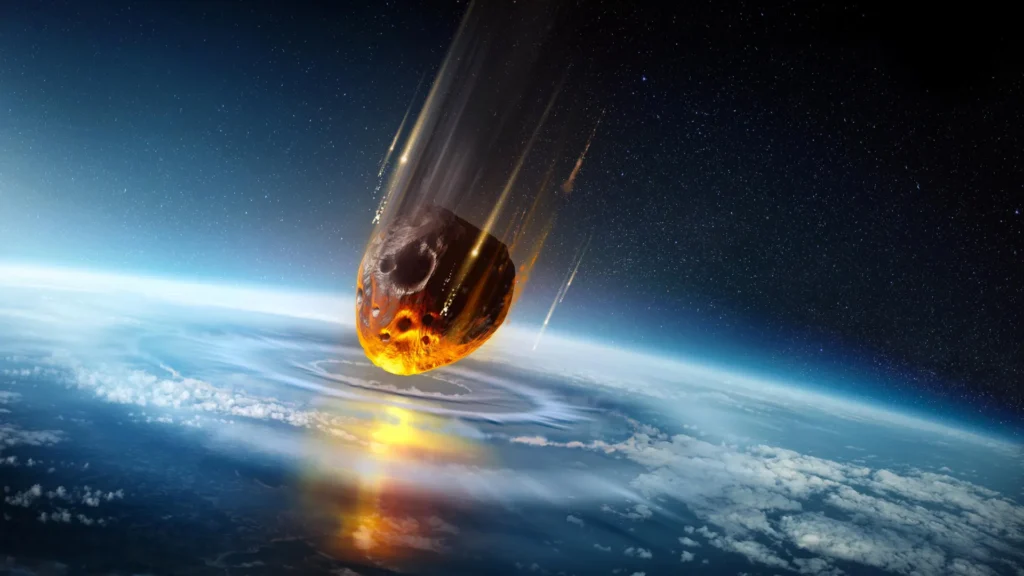
Beneath the unassuming landscape of Ames, Oklahoma, lies a hidden testament to Earth’s violent history. For decades, geologists have scrutinized the Ames impact structure—a sprawling, subterranean scar stretching for miles beneath the state’s sedimentary veneer. While this site has long been a crown jewel for the regional petroleum industry, its scientific significance has recently undergone a seismic shift.
New research from The University of Texas at Austin has fundamentally rewritten the timeline of this impact, decoupling it from one of the most famous eras in planetary history and reassigning it to a period of global biological collapse. This discovery, published in Meteoritics & Planetary Science, not only clarifies the history of the Oklahoma crater but also forces a broader re-evaluation of how scientists interpret the catastrophic events that have shaped the evolution of life on Earth.
The Ordovician Myth: A Case of Mistaken Identity
For years, the consensus regarding the Ames crater was rooted in its perceived connection to the Ordovician Meteor Event (OME). Approximately 467.5 million years ago, Earth is thought to have been subjected to an intense bombardment of asteroid debris. This period is so significant that some theorists have proposed Earth may have briefly possessed a Saturn-like ring of debris, a celestial feature that would have dominated the ancient sky.
Because the Ames structure was geographically and geologically situated near other craters believed to be from this timeframe, it was categorized as a key piece of the OME puzzle. However, this dating was based almost exclusively on biological evidence—specifically, the presence of conodonts. Conodonts are the tooth-like microfossils of ancient, eel-like chordates. Because these organisms thrived during the Ordovician, their presence within the impact-disturbed rock suggested the collision occurred during the same era.
The UT Austin research team, however, suspected that these biological indicators were deceptive. By utilizing advanced geochronology on zircon crystals extracted from the crater’s granite, the team proved that the Ames impact occurred approximately 370 million years ago. This places the event squarely in the Late Devonian—nearly 100 million years younger than the previous estimates.
"No matter what technique we used, it was coming back to this younger signal," said lead author Elizabeth Catlos, an associate professor at UT’s Department of Earth and Planetary Sciences. The "older" fossils, she noted, were likely simply prehistoric debris churned up and redeposited by the massive energy of the asteroid strike, creating a "time-traveling" effect that had misled geologists for a generation.
Chronology of a Cosmic Collision
The reclassification of the Ames crater is not merely a correction of a date on a map; it is a fundamental shift in the timeline of North American geological evolution.
- The Ordovician Era (c. 467.5 Million Years Ago): The era previously assigned to the Ames crater. During this time, Earth experienced a surge in meteor impacts. The Ames site was incorrectly labeled as a representative of this bombardment.
- The Late Devonian (c. 370 Million Years Ago): The newly confirmed age of the impact. This period was a tumultuous time for Earth’s biosphere, characterized by the Frasnian-Famennian extinction—a mass extinction event that wiped out a significant percentage of marine life.
- Modern Discovery: The realization that the Ames structure did not form during the OME allows researchers to shift their focus toward the potential correlation between the Ames impact and the Late Devonian extinction crisis.
This corrected timeline suggests that the Ames crater is not a byproduct of an early, debris-filled solar system environment, but rather a solitary, high-impact event that occurred during a period of profound biological instability.
Supporting Data: The Zircon "Time Capsules"
The precision of this new study rests upon the physical properties of zircon crystals. Zircon is a mineral that acts as an ideal geochronometer; its durability and chemical structure allow it to lock in uranium isotopes, which decay into lead at a known, constant rate.
Danny Stockli, dean of the Jackson School of Geosciences and a co-author of the study, emphasized the technological rigor involved in the process. "Zircon U-Pb dating offers one of the most accurate ways to determine when events occurred deep in Earth’s past," Stockli explained.
To ensure the zircons were recording the impact event and not just the age of the original granite, the team collaborated with NASA to employ high-resolution imaging techniques, including cathodoluminescence and electron backscatter diffraction. When zircon is subjected to the extreme pressure of a meteor strike, it undergoes a unique recrystallization process. The imaging confirmed that the crystals had indeed been "shocked" by the collision, providing an indelible, microscopic signature of the exact moment the asteroid impacted the Oklahoma plains.
This methodological approach transforms the way scientists look at impact sites. Rather than relying on the "noisy" data of biological fossils, which can be moved and mixed by geological processes, researchers now have a template for verifying the age of impact sites globally.
Official Responses and Collaborative Challenges
The scope of this research was ambitious, requiring the procurement of core samples from the Oklahoma Geological Survey and a multidisciplinary effort spanning geophysics, mineralogy, and paleontology.
The project stands as a tribute to the late Andrew Parisi, a former Jackson School graduate student who initiated the study in 2018. Parisi’s dedication to collecting and processing the core samples formed the backbone of the research. His contributions, alongside those of co-author Michael Brookfield—who also passed away before the study’s publication—remind the scientific community that such monumental shifts in our understanding of Earth’s history are built upon the tireless work of individuals over many years.
"These small crystals allow us to go back in time and learn about the major changes to Earth’s ancient landscapes," Stockli said, reflecting on the team’s achievement. He expressed a desire to see this rigorous zircon-dating method applied to other impact sites across the North American continent, noting that a more accurate map of these craters could revolutionize our understanding of how frequently and how violently our planet has been struck by extraterrestrial bodies.
Implications: A New Piece of a Mass Extinction Puzzle
The most profound implication of this study is its contribution to the ongoing debate regarding the causes of mass extinctions. For decades, paleontologists have debated whether mass extinctions are triggered by "Earth-bound" processes—such as massive, sustained volcanic eruptions—or by "cosmic" triggers, such as asteroids or comets.
By removing the Ames impact from the Ordovician and aligning it with the Frasnian-Famennian extinction event, the researchers have presented a new variable for consideration. While the Ames impact itself may not have been the sole cause of the Late Devonian extinction, it is now clearly associated with a period of planetary distress.
"With this research, we’re basically taking a major pawn out of the Ordovician Meteor Event and dumping it into the Frasnian-Famennian event, and saying, ‘This is where this impact belongs,’" Catlos explained.
This reclassification invites a fresh investigation into the Frasnian-Famennian crisis. If a massive asteroid struck during this window of ecological vulnerability, its contribution to the biological collapse must be modeled and accounted for. It forces scientists to ask: Did the impact exacerbate an already dying world, or was it a primary driver of the extinction?
Furthermore, the study serves as a cautionary tale for geologists and paleontologists alike. It highlights the dangers of relying on single-proxy dating methods. By proving that the Ames crater was "hiding" in the wrong era due to the presence of ancient, re-deposited fossils, the study underscores the necessity of combining biological and mineralogical data to establish a truly accurate geologic record.
As the scientific community continues to piece together the history of Earth, the Ames crater now stands not just as an oil-producing geological feature, but as a crucial, corrected timestamp in our planet’s ancient, violent, and fascinating history. The lessons learned in the plains of Oklahoma will likely resonate far beyond the state’s borders, influencing how we date impacts and interpret the triggers of life’s most significant turning points for years to come.



