

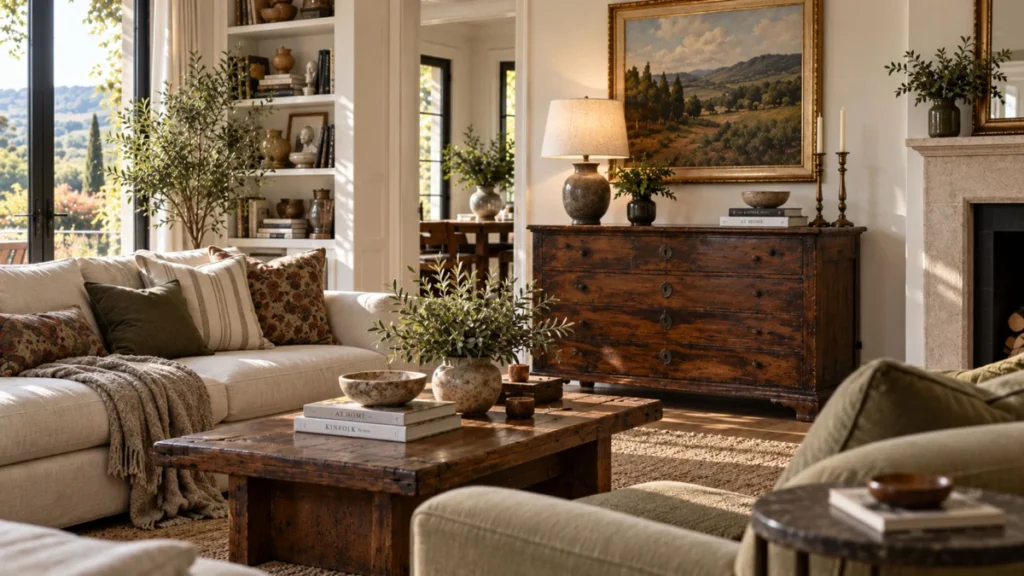
The sofa is new. The rug fits perfectly within the bounds of the floorplan. The curtains are measured to the millimeter, brushing the floor with elegant precision. Yet, despite the flawless execution of these major design choices, the room feels strangely hollow—a pristine stage waiting for actors who never arrive. This phenomenon is a familiar, often frustrating milestone in the renovation process: the heavy lifting is complete, but the home lacks a soul. It remains a space that reflects a catalog rather than a life.
For many, the transition from a "finished" renovation to a truly "lived-in" home is the most difficult phase of interior design. It requires moving beyond the convenience of online showrooms and EClife home decor ideas to embrace the subtle, often imperfect details that give a room its narrative.
The Anatomy of a "Collected" Interior: Main Facts
The fundamental issue with many modern renovations is an over-reliance on cohesion. When every element—from the texture of the throw pillows to the finish on the side tables—is selected to match a singular aesthetic, the room loses its tension. A "collected" home, by contrast, thrives on the friction between the old and the new, the mass-produced and the bespoke.
Key principles for achieving this balance include:
- Intentional Imperfection: Allowing for pieces that do not "match" in the traditional sense, provided they serve a function.
- The Power of Negative Space: Recognizing that an empty surface is not a failure of design, but a necessary canvas for future acquisitions.
- Layering for Function: Prioritizing the way a room performs during evening hours, rather than how it photographs under natural light.
- Personal Provenance: Integrating handmade or inherited items that defy the polished, anonymous nature of modern retail.
A Chronological Approach to the Final Layer
The journey toward a completed home should be viewed as an evolution rather than a sprint. To avoid the "showroom trap," homeowners should follow a logical sequence of refinement:
Phase 1: The Audit of Possessions
Before purchasing additional accessories, the first step is to strip the room back. If a surface is cluttered with vases, candles, and trinkets, clear it entirely. Reintroduce only the item you derive the most joy from, followed by the item you actually use. By pausing for 24 hours between each addition, you can determine if a third object is a genuine enhancement or merely clutter.
Phase 2: The Assessment of Lighting
Once the furniture is placed, the room must be tested in the evening. Daylight masks many design flaws, but artificial light reveals them. If the main ceiling light is the only source of illumination, the room will inevitably feel flat. By moving existing lamps to new locations and observing how they interact with your furniture, you can identify "dead zones" that need dedicated lighting.
Phase 3: The Integration of History
Identify one piece in the room—perhaps an old timber chest or a vintage side table—that doesn’t quite fit the contemporary color palette. Instead of discarding it, treat it as the anchor. Adjust the surrounding decor to support it: place art above it that matches its scale, or add a lamp with a base sturdy enough to hold its own against the wood’s natural texture.
Supporting Data: Why "Too Much" is the Enemy of Design
Industry experts and interior stylists consistently point to "accessory fatigue" as the primary reason for a room feeling incomplete. Market data suggests that the ease of one-click ordering has led to an abundance of low-risk, low-impact purchases. When every ledge is occupied, the eye has nowhere to rest, and the room loses its ability to showcase the pieces that actually matter.
Furthermore, scale remains the most common error in home decoration. A bowl that appears substantial in a high-resolution online photograph often disappears when placed on a broad, modern console. Conversely, a lamp shade that looks proportional on a screen may, in reality, crowd the seating area, rendering the furniture uncomfortable to use.
Pro-tip for the modern decorator: Always document the exact dimensions of your space before browsing. A physical tape measure remains more accurate than the most sophisticated digital rendering.
Official Perspectives: The Role of the "Unfinished" Space
Designers often argue that the most successful homes are those that remain slightly unfinished. This is not a lack of commitment, but a strategic choice.
"A home should be a living archive," says design consultant Marcus Thorne. "When you fill every square inch with decor, you leave no room for the next chapter. A shelf left partly empty is an invitation for a souvenir from a future trip, a gift from a friend, or a new discovery. If you make a room ‘perfect’ on move-in day, you have effectively paralyzed its ability to grow with you."
This perspective highlights the importance of "permission"—giving yourself the grace to keep a table that is stylistically outdated simply because it functions well, or because it holds a specific memory.
Implications: The Psychology of Handmade and DIY
The "anonymous" feel of a room is often tied to the lack of human touch. DIY home decor does not need to be a total lifestyle change; rather, it should be an exercise in personalization.
Consider the implications of a single handmade item:
- Framing: A piece of fabric from a meaningful garment or a sketch from a child can serve as a focal point that mass-produced art cannot replicate.
- Refinishing: Taking a tired side table and applying a new finish provides a tactile connection to the furniture that creates a sense of ownership.
- Utility: By re-covering a cushion in a textile you enjoy touching, you transform a decorative object into a functional comfort.
These projects serve as a psychological "claim" on the space. When you place a handmade object in a room, you change the environment from a static display to a personal environment. You are no longer just living in a room; you are participating in its creation.
Conclusion: Living with What You Have
The goal of interior design should not be to reach a final, static point of completion. Instead, it should be to create a framework that supports your routine and evolves with your tastes.
When you look at your living room tonight, ask yourself: Does this room work for me, or am I working for the room? If the lighting is poor, the surfaces are crowded, or the pieces feel like they belong in a catalog, take a step back. Clear the surfaces. Move the lamp. Welcome the old timber chest back into the arrangement.
The most sophisticated rooms are not those that follow the strictest rules of symmetry or trend-chasing; they are the rooms that feel, above all else, like the people who live in them. By leaving room for the unexpected and the handmade, you ensure that your home remains a reflection of your life—always in progress, and always uniquely yours.



