

At the entrance to the Alte Nationalgalerie’s sweeping exhibition, Cassirer: Breakthrough of Impressionism, three figures greet the viewer: Edgar Degas’s Miss La La (1879), Pierre-Auguste Renoir’s Lise with a Parasol (1867), and Max Slevogt’s 1901 portrait of Suzanne Aimée Cassirer. Though geographically and stylistically diverse, these works are unified by a singular thread: the influence of Paul Cassirer. A Berlin-based art dealer with an uncanny eye for the avant-garde, Cassirer was the primary engine behind the migration of French Impressionism into the heart of Germany.
The current exhibition does more than showcase masterpieces; it serves as a critical autopsy of the art market itself. By stripping away the veneer of institutional neutrality, Breakthrough of Impressionism forces a long-overdue conversation about how private capital, bold entrepreneurship, and shifting cultural politics created the "canonical" art history we recognize today.
The Architect of the Avant-Garde: A Biographical Chronology
To understand the transformation of the German art scene at the turn of the 20th century, one must understand the man who facilitated it. Paul Cassirer’s trajectory is a study in calculated risk and relentless advocacy.
- 1898: Paul and his cousin, Bruno Cassirer, open the Kunstsalon in Berlin. At a time when the "Salon-style" hang—where paintings were crammed floor-to-ceiling—was the norm, the cousins opted for a radical, airy approach, displaying works in single, deliberate rows.
- 1901: The cousins part ways. Paul assumes full control of the gallery, relocating to the upscale Tiergarten district. He commissions the celebrated Art Nouveau architect Henry van de Velde to design a space that mirrors the sophistication of the art he promotes.
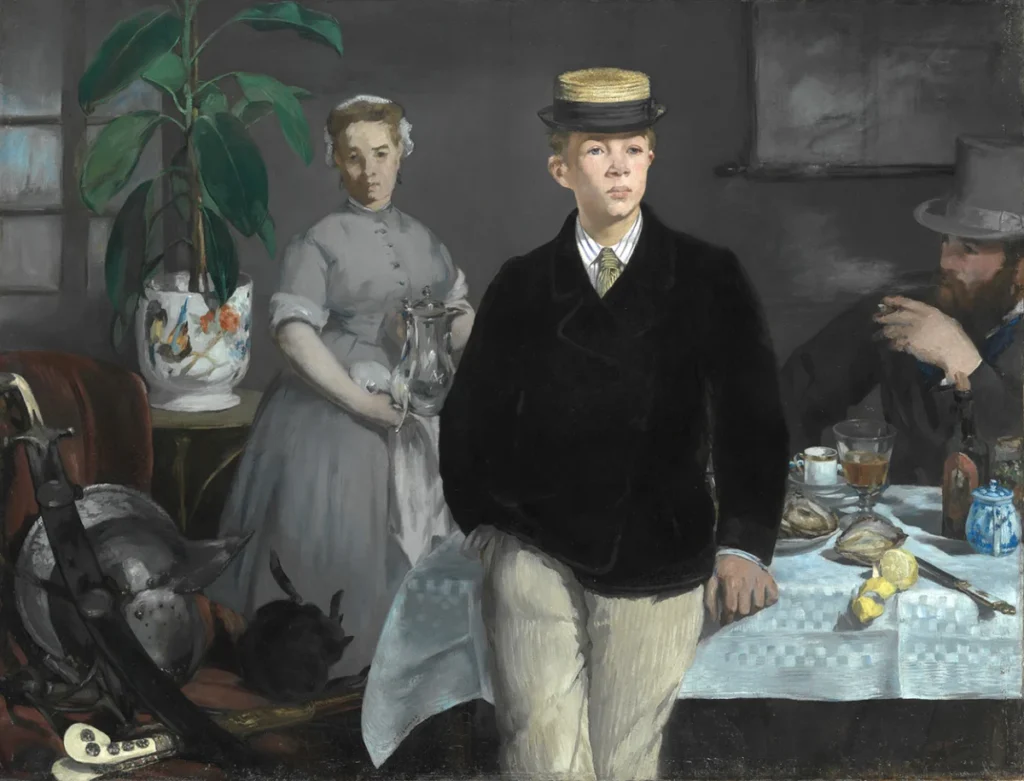
- 1901–1910: This decade marks the height of Cassirer’s influence. He acts as the sole pipeline for French Impressionism across the Rhine. His inventory includes Monet, Manet, Cézanne, and Van Gogh, alongside non-French icons like Edvard Munch.
- 1914: In a masterclass of endurance and public acclimation, Cassirer organizes a monumental exhibition of Vincent van Gogh, featuring 151 works. He understood that repetition breeds familiarity; by repeatedly exhibiting "unsold" works, he slowly transformed public perception from hostility to reverence.
- 1926: The tragic end of Cassirer’s life, marked by suicide amidst complex personal and legal turmoil, closes a chapter of a man whose professional legacy is now firmly cemented in the bedrock of modern art history.
The Mechanics of the Market: From "Monet and Manet to Money"
The exhibition at the Alte Nationalgalerie posits a provocative thesis: the museum and the market are not separate entities, but rather dance partners. Critics of the time were keenly aware of this symbiosis. One infamous contemporary caricature of the gallerist famously quipped, "From Monet and Manet to money."

Cassirer was an art historian by training, yet he possessed the instincts of a modern venture capitalist. His strategy for selling the radical was to provide context. For instance, by showing early Monet still-lifes like the 1866 Jar of Peaches alongside more challenging works, he allowed collectors to trace a logical, digestible lineage from traditional realism to the ethereal light of Impressionism. He did not merely sell paintings; he curated a pedigree.
Even when sales failed, Cassirer succeeded. His display of Manet’s Le Déjeuner sur l’herbe (1863)—the painting that had once ignited a national scandal—served as a lightning rod for publicity. Even if the work didn’t sell immediately, the gallery became a site of intellectual debate, cementing his position as the ultimate arbiter of taste.
The Clash of Nationalism and Internationalism
The presence of French art in Germany was not universally welcomed. By the early 1900s, the German state was heavily invested in cultivating a "national style" that prioritized German heritage over foreign influence. This culminated in 1911, when the landscape painter Carl Vinnen penned his "Protest by German Artists," a manifesto signed by 140 artists decrying the "foreign" influx.
Cassirer did not suffer the protest in silence. He collaborated with internationalist champions like Wassily Kandinsky and Franz Marc to draft a blistering reply, effectively drawing a battle line between nationalist conservatism and the cosmopolitan future of art.

The political stakes were high. Hugo von Tschudi, the then-director of the Nationalgalerie, was unceremoniously ousted by Kaiser Wilhelm II for his persistent acquisition of French art via Cassirer. The Kaiser’s desire to force museums to serve patriotic ends is a theme that echoes uncomfortably in contemporary discourse, particularly in the United States, where state-level political pressures are once again encroaching on the autonomy of museum collections and programming.
Supporting Data: The Institutional Divide
The current exhibition at the Alte Nationalgalerie highlights a fascinating discrepancy between what Cassirer championed and what the state eventually accepted. While Cassirer pushed 151 Van Goghs in 1914, the current exhibition holds only two. This gap illustrates the institutional friction of the era:
| Feature | Cassirer’s Gallery (1900-1914) | State Collections (Pre-WWI) |
|---|---|---|
| Focus | International Avant-Garde | Conservative/Nationalist Style |
| Strategy | Repetition & Public Education | Limited/Selective Acquisition |
| Aesthetic | Minimalist/Single-row hanging | Dense/Salon-style display |
| Motivation | Profit & Cultural Evolution | State Policy & National Identity |
The proximity of works like Van Gogh’s Boulevard de Clichy (1887) and German Impressionist Curt Hermann’s Snow-Covered Roofs (1908/09) in the current show serves as a visual argument for the inevitable synthesis of these two worlds. French technique permeated German style, creating a hybrid movement that the state eventually had no choice but to acknowledge.
Implications: A Lesson in Transparency
Why does this history matter today? Breakthrough of Impressionism succeeds because it refuses to treat the provenance of these paintings as a dry academic detail. Instead, it invites the public to look at the "how" and the "why" behind the collection.

The exhibition asks: Who decided that these specific works were masterpieces? Was it purely aesthetic merit, or was it the tireless, often cutthroat work of dealers like Cassirer?
In an era of increasing skepticism toward institutional authority, this exhibition offers a model for future curatorial practice. By being transparent about the mechanisms of the art market—the influence of money, the role of the dealer, and the political pressures of the day—the Alte Nationalgalerie honors the complexity of the art it displays.
The legacy of Paul Cassirer is no longer confined to the private ledgers of his gallery. It lives on in the very walls of our public institutions. He was a man who turned the "scandalous" into the "canonical," and in doing so, he taught us that the history of art is, in no small part, the history of those who had the courage to sell the future.
As visitors wander through the galleries, they are encouraged to look past the gilded frames and consider the invisible hands that shaped their perspective. The "breakthrough" was not just stylistic; it was a revolution in the way we assign value to human creativity, proving that the art market, for better or worse, remains the most powerful curator of our collective cultural memory.



