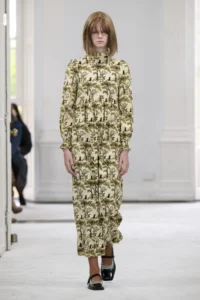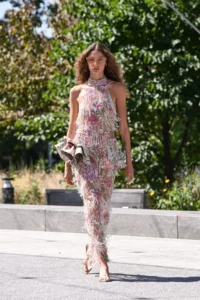

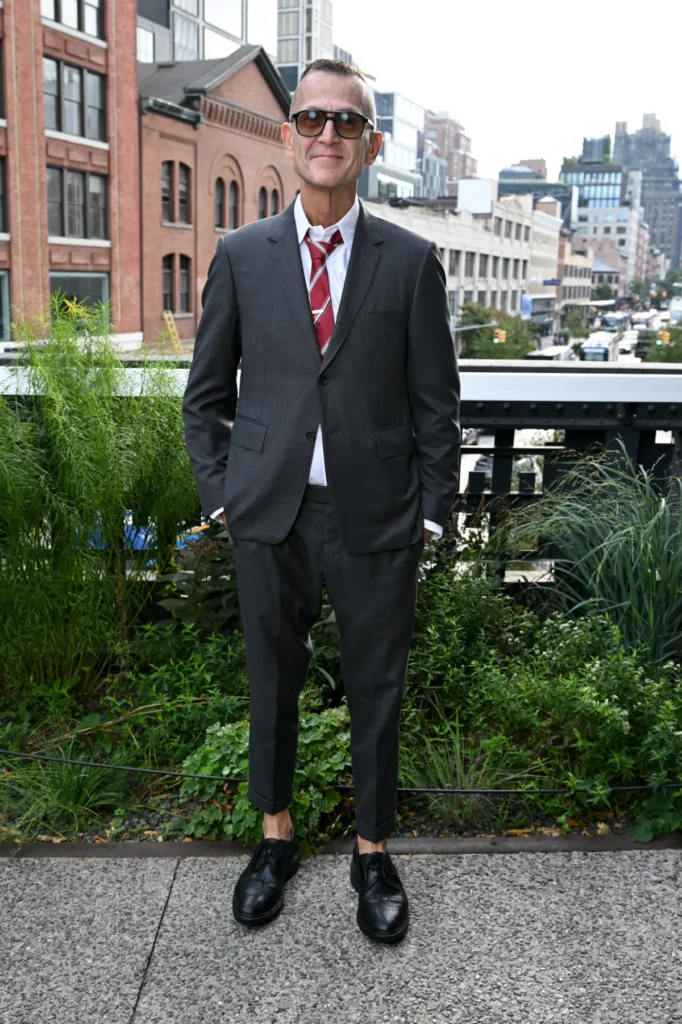
The high-gloss atmosphere of the Cos spring runway show at 175 Water Street—a star-studded affair attended by A-list luminaries including Sharon Stone, John Boyega, Michelle Williams, and Lupita Nyong’o—was abruptly shattered on Sunday afternoon. What began as a celebration of minimalist design transformed into a theater of confrontation as activists from People for the Ethical Treatment of Animals (PETA) stormed the catwalk, turning the focus from sustainable fashion to the volatile ethics of the global wool industry.
The incident was marked not only by the activists’ disruptive tactics but by the unexpected physical intervention of Steven Kolb, the president and chief executive officer of the Council of Fashion Designers of America (CFDA). In a series of moments that have since ricocheted across social media and industry trade journals, Kolb was observed attempting to manually restrain protesters, raising significant questions about the boundaries of professional conduct, security protocols, and the escalating tensions between animal rights advocacy and the fashion establishment.
Chronology of the Disruption
The event, held at the WSA building in lower Manhattan, was nearing its peak when the scheduled programming was interrupted. According to eyewitness accounts, multiple activists managed to bypass security barriers and infiltrate the runway. The protesters, brandishing signs reading, “Sheep Beaten and Bloodied for Wool. Don’t Buy It,” began shouting slogans decrying Cos’s reliance on wool-based textiles.
The scene descended into chaos as Kolb, who was seated among the front-row guests, took it upon himself to intervene. Witnesses report that Kolb moved toward a female protester, physically restraining her by pulling her to the floor. In a move that drew sharp criticism, he was seen covering her mouth to stifle her chants of “Get sheep off the runway.” Despite his efforts to keep her pinned, the protester managed to break free and continued her demonstration as she was eventually moved toward the exit.
Kolb’s intervention did not stop there. He was subsequently observed engaging with a second protester, physically pushing the individual, covering his mouth, and forcefully stripping a banner from his hands. This second individual continued to voice opposition to the use of wool until security personnel finally intervened to escort him from the premises. The remaining protesters were systematically cleared from the venue, allowing the show to eventually resume, though the shadow of the interruption lingered over the remainder of the afternoon.
The Context: PETA’s Aggressive Stance on Wool
The protest was not an isolated event but rather the latest escalation in a targeted campaign by PETA against the H&M Group, the parent company of the Cos brand. The organization has been applying mounting pressure on global retailers to adopt vegan alternatives to wool, citing systemic cruelty within the supply chain.
Last month, the advocacy group released the findings of a PETA Asia investigation that focused on South African wool farms. The report alleged that workers were captured on video kicking, beating, and dragging sheep, often leaving the animals bleeding and in severe distress. PETA maintains that the farm in question is linked to the same certified South African wool pipeline that supplies the H&M Group, including its upscale Cos label.
By storming the runway, PETA aimed to bring the visceral reality of their investigation directly to the feet of the fashion elite. For PETA, the runway—the industry’s primary stage for showcasing its values—is the most effective place to disrupt the narrative of "luxury" and replace it with the harsh realities of agricultural sourcing.
Official Responses and Apologies
The fallout from the incident was immediate. Steven Kolb, a long-standing figurehead of the American fashion industry, issued a formal statement shortly after the event, acknowledging that his actions were an overstep of his professional role.
“I reacted inappropriately to an incident at a show earlier today,” Kolb stated. “It wasn’t my place to do so. I should have let the security team handle the situation.”
While the apology was swift, it leaves lingering questions regarding the security protocols at major fashion events. The ability of multiple protesters to navigate the venue and reach the runway suggests a lapse in the event’s perimeter security. Neither representatives for Cos nor PETA returned immediate requests for comment following the incident, suggesting that both parties are currently evaluating the legal and public relations ramifications of the confrontation.
Implications for the Fashion Industry
The incident at the Cos show highlights a widening chasm in the fashion world regarding the "sustainability" conversation. While brands like Cos have long marketed themselves on the aesthetics of quality and longevity, the definition of sustainability is being forced to encompass more than just low-impact dyes and recycled packaging. It is increasingly being held to include animal welfare standards and the ethics of material sourcing.
The Security Dilemma
For event organizers, the incident presents a logistical challenge. How does a brand maintain the exclusive, intimate atmosphere of a runway show while ensuring it is protected against highly motivated, non-violent, yet disruptive activists? The presence of high-profile celebrities, who expect a level of security and professional decorum, adds a layer of complexity. If event organizers—or industry leaders like Kolb—feel compelled to take physical action, the risk of injury and the resulting public relations nightmare increases exponentially.
The Reputational Risk of Supply Chains
The direct link drawn by PETA between a specific farm in South Africa and a global retail giant like H&M underscores the difficulty of oversight. As luxury and mass-market brands alike lean into globalized, complex supply chains, they remain vulnerable to the investigative work of NGOs. When a brand is caught in a cycle of "guilt by association," the impact on their brand equity can be significant, especially among a younger demographic that prioritizes ethical consumption.
The Role of Industry Leadership
Steven Kolb’s involvement as the head of the CFDA represents a unique intersection of authority and emotion. As a leader, he is expected to be a guardian of the industry’s image. By physically engaging with protesters, he inadvertently shifted the focus of the news cycle away from the brand’s clothing and toward the industry’s intolerance for dissent. The optics of a powerful executive silencing a protester—even one whose methods are considered disruptive—can be damaging, as it feeds into the narrative that the fashion industry is an elitist fortress that refuses to listen to ethical criticisms.
Looking Ahead: A Changing Landscape
The protest at 175 Water Street serves as a barometer for the current state of fashion activism. As the industry grapples with the transition toward more ethical practices, the threshold for public patience is wearing thin on both sides. Advocates are moving from digital petitions and quiet protests to direct, high-visibility actions, while brands are struggling to balance their commitments to traditional materials with the rising demand for animal-free alternatives.
Whether this incident will lead to a change in how H&M and Cos handle their wool sourcing remains to be seen. However, it is clear that the fashion industry’s "front row" is no longer a safe space from the realities of the global supply chain. If the industry does not proactively address the allegations of animal cruelty and implement more rigorous, transparent auditing processes, it can expect further disruptions.
For now, the industry must reflect on the events of Sunday afternoon. It is a cautionary tale about the limits of physical intervention, the importance of professional security, and, most importantly, the growing power of activists to force the conversation on their own terms. The runway, once a place of escapism, has become a mirror for the industry’s most difficult, unresolved questions. Whether the fashion establishment chooses to look away or engage in meaningful, transparent dialogue will define its reputation in the coming years.