In an era defined by the rapid consumption of imagery and the intense contestation of cultural narratives, the role of the visual arts journalist has never been more critical. Recognizing the necessity of deep research, independent thought, and the long-view perspective, the Dorothea & Leo Rabkin Foundation, based in Portland, Maine, has officially announced the eight recipients of the 2026 Rabkin Prize.
The annual award, which carries an unrestricted purse of $50,000 for each winner, is widely considered one of the most prestigious and substantial grants for arts journalism in the United States. Beyond the financial support, the prize serves as a vital platform for intellectual recognition, spotlighting individuals who are "deeply interested in the forces that shape what we see—and what we don’t."
The 2026 Cohort: A Spectrum of Critical Inquiry
This year’s group of laureates represents a diverse range of practices—from investigative data journalism and academic research to podcasting and curatorial storytelling. The foundation has selected a cohort that interrogates how art operates in the world, tracing its intricate relationship to history, land, race, institutions, war, memory, and public life.
The Honorees
- Damien Davis: An educator, artist, and writer whose multidisciplinary work interrogates the mechanics of cultural narratives, specifically how shared visual cues can reinforce or dismantle societal archetypes.
- Melaine Ferdinand-King: The inaugural curator of the African American Museum of Rhode Island, Ferdinand-King is a writer whose work centers on the indispensable role of art as a catalyst for community building and historical preservation.
- Tyler Green: A veteran critic and the host of The Modern Art Notes Podcast, Green has spent years providing a consistent, rigorous voice in contemporary art criticism, fostering a long-running platform for dialogue.
- Alicia Inez Guzmán: A critic and investigative journalist, Guzmán’s recent work has focused on the intersections of colonialism, land sovereignty, and identity, with a harrowing, necessary focus on the legacy of nuclear testing on Indigenous communities.
- Julia Halperin: As a co-founder of the Burns Halperin Report, Halperin has utilized investigative data journalism to provide a necessary, quantitative mirror to the art world, tracking equity and representation within institutions.
- Sarah Lewis: A professor of African and African American Studies at Harvard University and founder of the civic initiative Vision & Justice, Lewis explores the use of culture in representational democracy. She is also the author of the acclaimed book The Unseen Truth: When Race Changed Sight in America.
- Jan Tumlir: A founding editor of the Los Angeles-based contemporary art journal X-TRA, Tumlir has long served as a bridge between academic rigor and the contemporary art scene, acting as a crucial educator and author.
- Kaelen Wilson-Goldie: A critic and journalist recognized for her profound ability to uncover the often-hidden, complex relationships between artistic production and global political landscapes.
A Chronology of Commitment: The Rabkin Foundation’s Legacy
Since its inception in 2017, the Rabkin Prize has functioned as a bulwark against the precariousness of the arts writing profession. In a media landscape where arts desks are frequently downsized and critical inquiry is often sidelined for "click-worthy" headlines, the foundation has remained steadfast in its commitment to the "long view."
To date, the foundation has distributed $4.1 million in awards. The prize was established with the understanding that arts writers are not merely observers of the creative process but active participants in the cultural ecosystem. By providing unrestricted funding, the foundation allows journalists the financial freedom to pursue long-form investigative projects, travel for research, and dedicate time to the deep thinking that characterizes the best in the field.

The selection process for the 2026 prize was overseen by an esteemed panel of judges: Irene Borger, a writer, educator, and founding director of the Herb Alpert Award in the Arts; Jaime DeSimone, chief curator at the Farnsworth Art Museum in Rockland, Maine; and Legacy Russell, a curator, writer, and executive director and chief curator of The Kitchen in New York City.
Supporting Data: Why Arts Journalism Matters
The foundation’s selection of these eight individuals is rooted in a specific philosophy: that at a time when historical narratives are being intensely rewritten and debated, the public requires writers who insist on "complexity" and "independent thought."
Data-driven projects, such as the Burns Halperin Report co-founded by honoree Julia Halperin, highlight the necessity of quantitative transparency in the art market and museum sector. By analyzing who is collected, who is exhibited, and whose history is prioritized, these journalists provide the empirical evidence required to hold institutions accountable.
Conversely, scholars like Sarah Lewis demonstrate the necessity of a historical framework. Her work on how race has shaped the American visual experience underscores that our current cultural climate did not emerge in a vacuum. By linking art history to the mechanics of democracy, the recipients of the 2026 prize are essentially mapping the terrain of the American consciousness.
Official Responses and the "Rabkin Interviews"
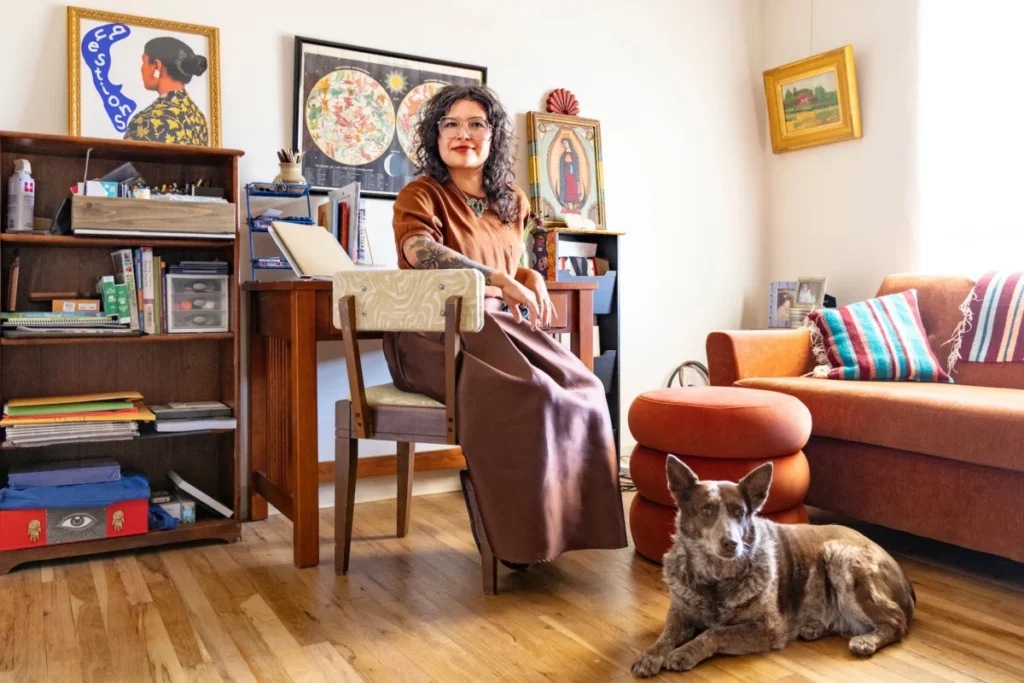
The foundation has taken a unique approach to celebrating this year’s winners, moving beyond a simple press release. They have commissioned a series of intimate portraits by photographer Kevin J. Miyazaki, capturing the recipients in the specific, often personal, spaces where they conduct their work. Whether in a Brooklyn apartment or a Newark studio, the images offer a rare, grounded look at the life of the critic.

Furthermore, the foundation is launching a forthcoming podcast series, The Rabkin Interviews. This series aims to document the internal processes of the writers, offering listeners a window into how they synthesize their research, manage their perspectives, and stay committed to the truth.
In a preview of the discussions, honoree Melaine Ferdinand-King provided a poignant reflection on the weight of the profession: "History is the ground that we walk on. It sets the conditions that art responds to. And art is where history and even identity and lived experience become legible, known to wider audiences."
Implications: The Future of Cultural Criticism
The significance of the 2026 Rabkin Prize extends far beyond the individual winners. It sends a signal to the broader media landscape that the "writerly gaze" remains an essential component of democracy.
In a world increasingly dominated by ephemeral content, the prize highlights several key implications for the future of the field:
- The Return to Investigative Depth: As art becomes more commodified, the demand for writers who can bridge the gap between financial data and aesthetic critique is growing. The success of the current cohort suggests a shift toward more robust, investigative journalism within the arts.
- The Intersectionality of Art and Policy: The recognition of journalists focusing on nuclear testing, colonial legacies, and systemic inequality proves that art journalism is no longer confined to galleries and museums. It is increasingly synonymous with political and social commentary.
- Institutional Accountability: Through initiatives like the Rabkin Prize, there is an unspoken challenge issued to museums and galleries. The presence of writers who are deeply researched and intellectually independent means that institutions will face a higher level of scrutiny, which is necessary for long-term progress.
As we look toward the remainder of the decade, the work of these eight writers will likely serve as a primary record of our current cultural moment. By honoring them, the Rabkin Foundation is not only rewarding past achievements but investing in the future of an honest, necessary, and vibrant public discourse. In the face of a complex world, these journalists remain the architects of our understanding, translating the silence of the canvas into the vital noise of public life.