For the more than half a billion people residing in low-lying coastal zones, the existential threat of climate change is often discussed in terms of melting glaciers and expanding oceans. However, a groundbreaking study published in Nature Communications by researchers from the Technical University of Munich (TUM) and Tulane University reveals that the threat is far more immediate and complex than previously understood. It is not just the water rising; in many of the world’s most populous regions, the ground is literally disappearing beneath our feet.
This "double whammy" of eustatic sea-level rise—the increase in ocean volume—and land subsidence creates a dangerous acceleration of relative sea-level rise (RSLR). As the earth sinks, the vulnerability of coastal infrastructure, economies, and human lives reaches a critical tipping point, demanding a radical shift in how we approach urban planning and water management.
Main Facts: The Mathematics of Displacement
The study, led by Dr. Julius Oelsmann of the German Geodetic Research Institute at TUM (DGFI-TUM), provides a stark reality check on global coastal stability. While climate-driven absolute sea-level rise is currently calculated at approximately 3.15 millimeters per year, the "population-weighted" relative sea-level rise experienced by coastal residents is nearly double that, averaging 6 millimeters per year.
This figure is nearly three times the coastline-weighted global average of 2.1 millimeters per year. The discrepancy between what happens in the open ocean and what happens at the coastline is defined by the vertical movement of the Earth’s crust. When the ground sinks, it compounds the impact of the rising tide, effectively "lowering" the elevation of cities faster than the ocean can physically reach them.
Key Drivers of Subsidence
The researchers identified that while tectonic plate shifts and natural geological adjustments play a role, the most aggressive drivers of subsidence are anthropogenic—driven directly by human activity:
- Groundwater Extraction: The massive removal of water from subterranean aquifers causes the soil to compress and collapse.
- Resource Extraction: Oil and gas extraction creates voids in the subsurface, leading to localized land failure.
- Urban Weight: The sheer density of modern megacities, with their massive skyscrapers and infrastructure, exerts downward pressure on soft, deltaic sediments.
- Sediment Compression: Many of the world’s largest cities are built on river deltas—geologically young, unconsolidated sediment that naturally compacts over time.
Chronology: A History of Human-Induced Sinking
The history of subsidence is often a history of industrial growth. For most of the 20th century, the rapid urbanization of coastal regions prioritized immediate water needs and construction speed over geological stability.
- Mid-20th Century (The Era of Unchecked Extraction): As global populations migrated to coastal economic hubs, the demand for water skyrocketed. In regions like Jakarta, Bangkok, and the Texas Gulf Coast, municipal and industrial demand for groundwater outpaced the natural replenishment of aquifers.
- 1970s (The Turning Point): Recognizing the catastrophic effects of subsidence—including severe flooding and structural damage—the first major regulatory interventions began. The Harris-Galveston Subsidence District was established in 1975, marking one of the earliest successful attempts to institutionalize water management to prevent land loss.
- 1990s–2010s (The Satellite Revolution): The integration of satellite geodesy, such as Interferometric Synthetic Aperture Radar (InSAR), allowed scientists to map land deformation with millimeter-level precision. This era shifted the narrative from "coastal flooding" to "relative sea-level rise," as data revealed that cities like Tokyo and Bangkok were sinking at alarming, measurable rates.
- Present Day: Modern research has finally reconciled the differences between global climate models and local ground-level observations, proving that for most coastal residents, the danger is significantly higher than the global mean suggested by IPCC reports.
Supporting Data: Subsidence Hotspots
The data highlights a clear correlation between rapid, unplanned urban development and extreme rates of land subsidence. While the global average is alarming, the situation in specific "hot spots" is dire.
Regional Averages
The most impacted nations face annual RSLR rates ranging from 7 to 10 millimeters per year. These countries include:
- Indonesia & Thailand: Both face extreme pressure from groundwater extraction.
- Nigeria & Egypt: Rapid coastal development on soft, deltaic soil.
- China: Massive urban expansion along the eastern seaboard.
City-Specific Sinking Rates
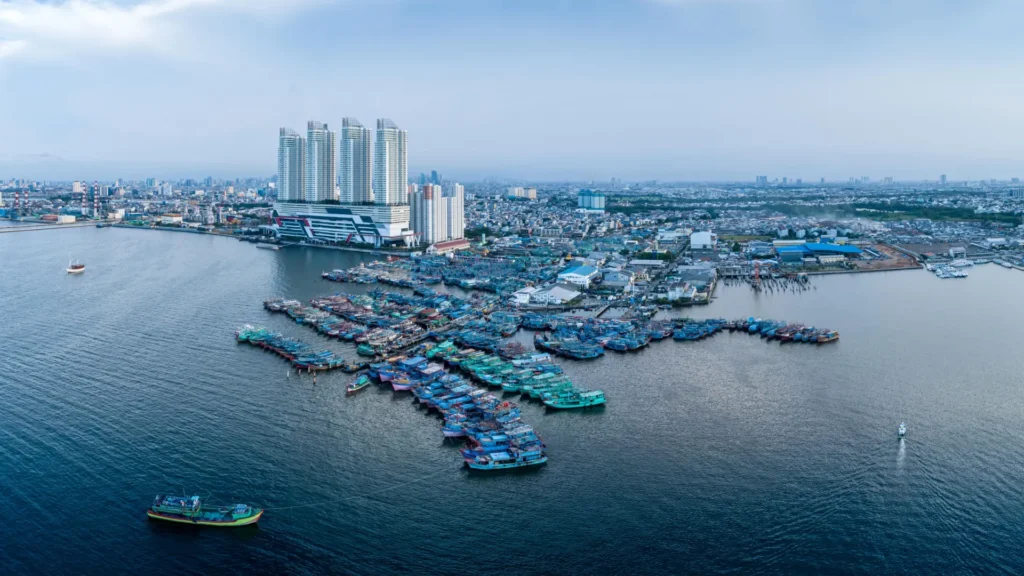
The disparity within urban centers can be jarring. In Jakarta, the rate of subsidence reaches an astonishing 13.7 mm/year on average, though specific neighborhoods have been measured sinking by up to 42 mm/year. Other high-risk cities include:
- Tianjin, China: 13.5 mm/year
- Bangkok, Thailand: 8.5 mm/year
- Lagos, Nigeria: 6.7 mm/year
- Alexandria, Egypt: 4.0 mm/year
In contrast, the United States, the Netherlands, and Italy sit in a moderate range of 4 to 5 mm/year, reflecting more advanced, albeit still struggling, management infrastructures.
Official Responses: Lessons from Tokyo and Texas
The research team emphasizes that because much of this sinking is caused by human activity, it is also potentially reversible—or at least preventable. Tokyo, once a poster child for urban sinking, serves as the global blueprint for success.
In the mid-20th century, parts of Tokyo were sinking by as much as 24 centimeters per year. Through a rigorous combination of groundwater regulation, the implementation of alternative water supplies (such as treated surface water and desalination), and industrial restrictions, the city successfully arrested its subsidence.
Similarly, the Harris-Galveston Subsidence District in Texas represents a successful policy intervention. By creating a regulatory body empowered to limit groundwater pumping and incentivize the use of surface water, the region halted the rapid sinking that had threatened the integrity of the Houston-Galveston metropolitan area.
Professor Florian Seitz, Director of DGFI-TUM, notes that these examples prove that "local political and water-management decisions can make a significant difference." The takeaway for policymakers is clear: while climate change requires global cooperation, land management is a local responsibility that can provide immediate, tangible results.
Implications: The Road Ahead
The implications of this research are profound. Coastal defense strategies can no longer rely solely on sea walls and levees designed to combat rising tides. If the land is sinking, a sea wall that is adequate today will be obsolete in a decade.
1. Re-evaluating Urban Planning
Planners must incorporate geological stability data into zoning laws. Building heavy, high-density infrastructure on compressible deltaic soil must be reassessed if the city lacks the water-management infrastructure to offset the resulting subsidence.
2. The "Uplift" Exception
It is important to note that not all land is sinking. In Scandinavia, specifically Sweden and Finland, parts of the coast are rising due to postglacial rebound—the earth slowly springing back after the massive weight of ancient ice sheets melted. In these regions, the land is rising faster than the sea, offering a natural buffer. However, these areas are the exception, not the rule, and they highlight the need for granular, site-specific coastal management.
3. A Call to Action
The scientific community’s consensus is shifting. Dr. Oelsmann and his colleagues stress that to "respond effectively, we must not only observe the ocean but also the land itself." We are currently living in a period where human activities—through the depletion of natural aquifers and the pressure of urban sprawl—are effectively magnifying the climate crisis.
As the world continues to grapple with the overarching challenge of global warming, the findings from TUM and Tulane University provide a clear, actionable roadmap. By addressing the root causes of land subsidence—primarily through sustainable water management and strict regulation of groundwater extraction—nations can buy themselves the most precious commodity in the climate fight: time. Without these interventions, millions will find themselves on the front lines of an accelerating disaster, where the water is not just rising, but the ground is failing to hold its position.