In the quiet, meticulous workshops of Glashütte, Germany, A. Lange & Söhne continues to uphold its reputation as one of the world’s most uncompromising watchmakers. As the horological world turns its eyes toward the prestigious Hampton Court Palace Concours of Elegance, the brand has announced a refined evolution of its iconic 1815 Up/Down model. These two new limited-edition releases, arriving in 18k pink gold and 18k white gold, represent more than just a aesthetic refresh; they serve as a masterclass in balance, German engineering, and the enduring allure of traditional manual-winding movements.
Main Facts: A Dual-Metal Tribute to Horological History
The 2026 release of the 1815 Up/Down series introduces two distinct, highly exclusive references: the 244.037 in 18k pink gold and the 244.028 in 18k white gold. Both models are limited to a strict production run of 300 pieces each, ensuring their place as sought-after collector’s items.
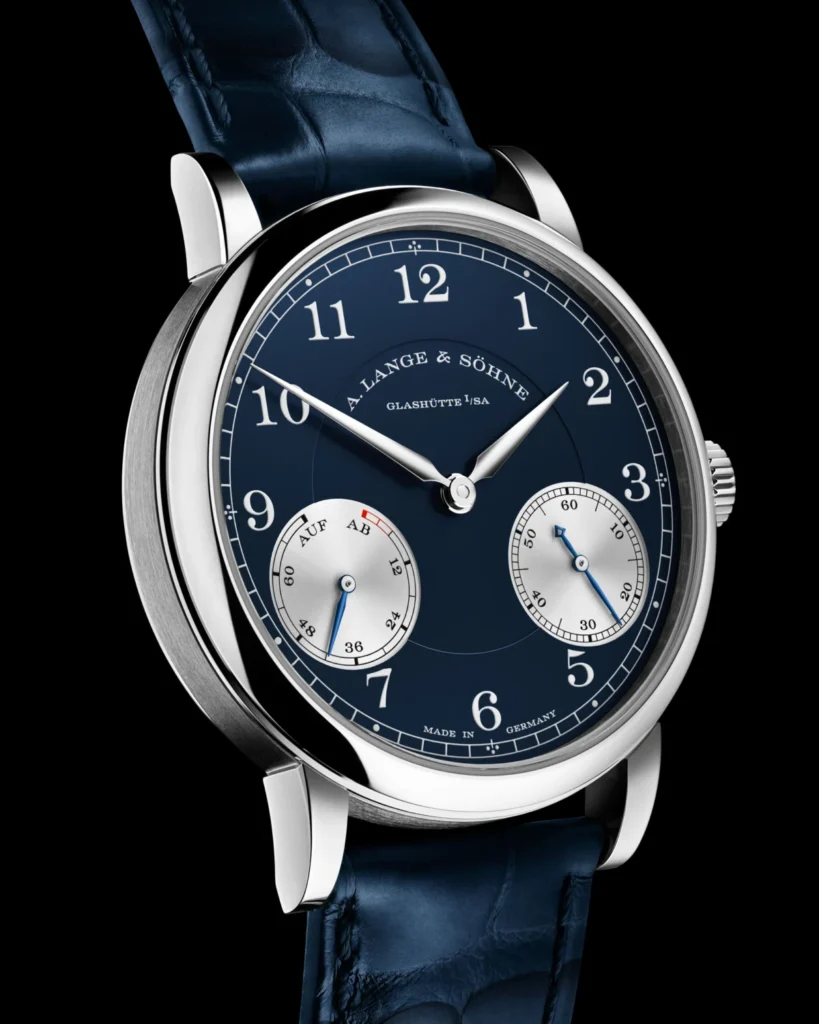
The aesthetic foundation of these timepieces is a solid 925 silver dial, which provides a crisp, luminous backdrop for the contrasting subdials. The design language is quintessentially Lange—an homage to the brand’s founder, Ferdinand Adolph Lange, and the pocket watches that defined the company’s 19th-century origins. Measuring 37.5mm in diameter and a slender 8.7mm in height, these watches occupy a "sweet spot" for modern collectors who prefer a classic, understated wrist presence over the bloated dimensions often found in contemporary luxury watchmaking.

The defining feature remains the "Up/Down" indicator—the German Auf/Ab—which serves as an elegant power reserve complication. By integrating this indicator seamlessly into the dial’s asymmetric layout, Lange has managed to solve the common anxiety associated with manual-winding watches: the fear of the mainspring running dry.
A Brief Chronology: The Evolution of the 1815 Line
To understand the significance of this 2026 launch, one must look back at the historical trajectory of the 1815 collection. Launched in 1995, the 1815 was designed as a tribute to the birth year of Ferdinand Adolph Lange. It was meant to capture the spirit of the pocket watches that made Glashütte a hub of horological excellence.
- 1995: The inaugural 1815 collection debuts, focusing on simplicity, legibility, and high-quality manual-wound movements.
- 2013: The introduction of the 1815 Up/Down complication fundamentally changed the utility of the collection. By adding the Auf/Ab indicator, Lange provided an essential tool for the daily wearer.
- 2020–2025: The collection saw various iterations, including different metals, complications, and subtle dial variations, but consistently remained the benchmark for the "refined manual" category.
- 2026: The unveiling of the limited-edition pink and white gold models at the Concours of Elegance marks a return to the "classic" spirit of the 1815, focusing on color contrast and the use of noble materials to celebrate the intersection of automotive design and mechanical watchmaking.
Supporting Data: The Mechanical Engine
At the heart of these timepieces lies the Caliber L051.2, a manual-winding movement that is as much a piece of art as it is a timekeeping device. Operating at a frequency of 3Hz (21,600 vibrations per hour), the movement offers a robust power reserve of 72 hours—a full three days of autonomy.

The architecture of the movement is typical of the Glashütte tradition. It features:
- Three-Quarter Plate: Crafted from untreated German silver, the plate will develop a distinct golden patina over time, a signature of Lange’s material choices.
- Gold Chatons: These represent the historical necessity of securing jewels in pocket watches, a tradition that persists in modern Lange movements to maintain the brand’s "high-watchmaking" pedigree.
- Hand-Engraved Balance Cock: Each balance cock is hand-engraved by a master artisan, ensuring that no two movements are identical. This is the ultimate "fingerprint" of the watchmaker.
- Blued Steel Screws: A stark, beautiful contrast to the warm tone of the German silver, providing a visual depth that can only be appreciated through the exhibition sapphire caseback.
The decision to place the sub-seconds dial and the power reserve indicator in a non-symmetrical, lower-positioned configuration is not merely an aesthetic choice; it is a calculated design strategy. By pulling the eyes downward, the watch maintains a sense of "organized chaos," which is a hallmark of the 1815 series.
Official Perspectives and Market Implications
The decision to debut these watches at the Hampton Court Palace Concours of Elegance is a deliberate branding move. By aligning the 1815 Up/Down with the world of vintage and luxury automobiles, A. Lange & Söhne is emphasizing the parallels between car collecting and watch collecting: both require an appreciation for mechanical engineering, history, and the pursuit of perfection.

While the brand has remained characteristically modest in its press materials, the industry response has been one of quiet enthusiasm. Analysts suggest that the 1815 Up/Down is perhaps the most "accessible" entry point into the brand’s highest level of craftsmanship. Despite the roughly €45,000 price point, the watch is viewed as a "value proposition" in the context of high-end horology, given the level of hand-finishing involved.
However, the lack of a formal water-resistance rating in the brand’s literature remains a point of minor contention among purists. While it is widely assumed to be at least 30 meters, the silence on this technical specification is a reminder that Lange designs its pieces for the parlor and the boardroom, not the swimming pool. It is an unapologetically formal timepiece.
Implications: The Future of Traditional Watchmaking
The release of these two 1815 Up/Down models serves as a reminder that there is still a massive, loyal market for manual-winding watches. In an era where smartwatches and automatic movements dominate, the ritual of winding one’s watch—the haptic feedback of the crown, the visual check of the power reserve, the tactile connection between man and machine—remains a powerful differentiator.

For the collector, these watches represent a stable investment. Limited to 300 pieces per metal, the scarcity factor is high enough to generate interest, yet the design is timeless enough to avoid the volatility of "hype" watches.
As we look toward the future, A. Lange & Söhne’s refusal to compromise on their "outsize date" terminology, their unique German-specific naming conventions, and their insistence on hand-engraving every balance cock suggests a company that is entirely unbothered by the rapid pace of the broader tech-integrated watch industry. They are not competing with the present; they are continuing a legacy that began in 1845.
In conclusion, the 2026 1815 Up/Down limited editions are a testament to the idea that true luxury is found in the details that others might overlook. Whether it is the subtle hue of the reddish-brown alligator strap on the pink gold model or the precise, balanced geometry of the dial, these watches are destined to become centerpieces in any serious horological collection. They are, quite simply, the embodiment of "Auf" (Up)—a rising standard for what a manual-wound timepiece can be in the modern age.
Technical Specifications Summary
- Model: A. Lange & Söhne 1815 Up/Down
- References: 244.037 (Pink Gold), 244.028 (White Gold)
- Movement: Caliber L051.2, Manual-Wound
- Power Reserve: 72 Hours (3 days)
- Case Diameter: 37.5 mm
- Case Height: 8.7 mm
- Dial: Solid 925 Silver
- Limited Edition: 300 pieces per reference
- Estimated Price: ~€45,000 EUR