By Editorial Staff
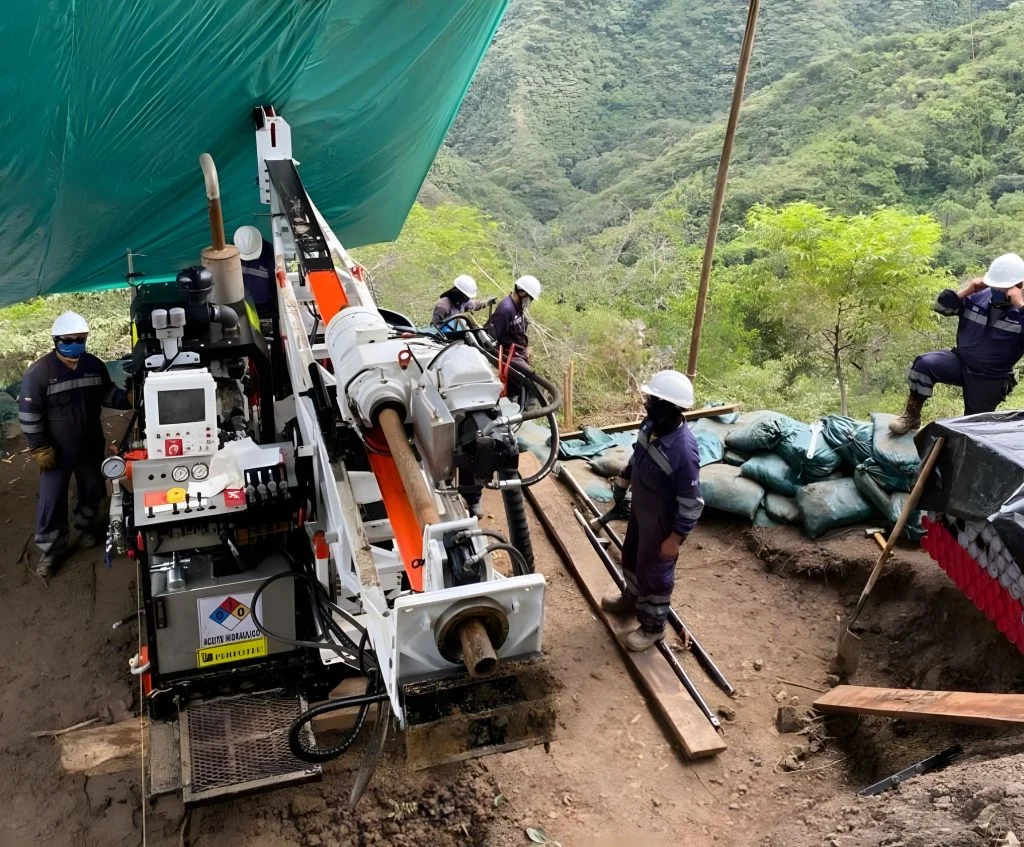
Orosur Mining Inc. [TSXV: OMI] has officially entered a high-activity phase at its flagship Anzá Project in Colombia. With a strategic land package spanning approximately 530 square kilometers in the heart of the prolific Mid-Cauca gold belt, the company is aggressively advancing a multi-front exploration strategy. By deploying three active drill rigs across its primary prospects—Pepas, APTA, and the newly inaugurated El Cedro—Orosur is positioning itself to unlock significant value in one of South America’s most underexplored yet geologically endowed regions.
Main Facts: The Anzá Project Landscape
The Anzá Project, situated west of Medellín, is currently 100% owned and operated by Orosur through its Colombian subsidiaries, Minera Anzá and Minera Monte Aguila. The project’s geological footprint consists of a blend of granted exploration titles and strategic applications, totaling 530km².
The company’s current operational focus is divided into three distinct geological targets:
- Pepas: A shallow, high-grade gold deposit that serves as the company’s current flagship for resource definition. A Maiden Mineral Resource Estimate (MRE) was successfully published on February 10, 2026.
- APTA: A well-documented high-grade gold system that has seen over 40,000 meters of historical drilling since 2012. Operations here are currently focused on structural understanding to unlock deeper value.
- El Cedro: A massive gold/copper porphyry cluster in the southern sector of the project area. This prospect represents the company’s newest frontier, where inaugural drilling operations have just commenced to test high-potential intrusions.
Chronology: A Path to Systematic Discovery
The development of the Anzá Project is a testament to the persistence of geological modeling and the evolution of exploration techniques.
Early Reconnaissance and Dormancy
The project’s potential was first recognized years ago by industry majors, specifically Anglo American, who conducted extensive reconnaissance mapping and sampling. Their efforts successfully identified a highly prospective gold/copper porphyry system. Soil geochemistry, coupled with rock chip assays yielding up to 10g/t gold and 2% copper, highlighted the region’s immense potential. However, the project remained largely dormant until late 2021, when Orosur’s former joint venture partner, Minera Monte Aguila (MMA), returned to the field to validate Anglo American’s historical data. This work confirmed the presence of large dioritic intrusions and significant epithermal systems.
The Orosur Resurgence
Since re-assuming full control of the project in late 2024, Orosur has moved with tactical speed. Throughout 2025 and early 2026, the company shifted from regional observation to targeted, high-resolution geochemical surveys. The goal was to pinpoint specific structures and epithermal features proximal to the porphyry intrusions that might host concentrated metal accumulations.
The 2026 Drilling Surge
The culmination of this planning occurred in late August 2026, when the first-ever drilling campaign at El Cedro began. Simultaneously, the company has continued to refine the Pepas and APTA targets, transitioning from broad reconnaissance to tactical, resource-focused drilling.
Supporting Data: Drilling Results and Geological Insights
The technical data emerging from the project suggests a high degree of geological continuity and significant mineralization potential.
El Cedro: A New Porphyry Discovery
The maiden drill hole at El Cedro, CED001, is designed to reach a depth of 500 meters. Preliminary observations are highly encouraging; the drill core has immediately intersected a porphyry intrusion characterized by robust stockwork veining, silicification, and potassic alteration—classic indicators of a mineralized system.
Pepas West: Refined Methodology
Following the release of the February 2026 MRE, drilling at Pepas West has revealed a surficial, heavily oxidized zone of medium-grade mineralization. Recent highlights include:
- Hole PEP106: 19.45 meters at 1.02 g/t gold, including a high-grade interval of 2.25 meters at 3.11 g/t gold.
- Hole MAP108: 78.95 meters at 0.38 g/t gold.
Orosur’s technical team has identified a logistical challenge: the geometry of the Pepas West mineralization is "surficial, thin, and broad." Standard diamond drilling is inefficient for this type of deposit due to frequent rig moves. Consequently, the company is pivoting to an auger-based sampling system. This trial program aims to rapidly assess unconsolidated material up to 10 meters in depth, which, if successful, could provide a cost-effective path to expanding the current resource base.
APTA: Structural Decoding
At APTA, the objective is not just to find more gold, but to understand the controls of the gold already identified. Hole MAP108 provided critical insights into the structural architecture of the system. By drilling "off-section," the team is better mapping the fault zones that likely served as conduits for the high-grade mineralization previously identified in the area.
Official Responses and Strategic Vision
Brad George, CEO of Orosur Mining, expressed significant optimism regarding the current trajectory of the project. In a recent corporate update, George noted:
"The Anza project is now ramping up with three rigs running, one at each of Pepas, APTA and El Cedro and planned to remain for some time. More prospects are also being advanced to the drill stage, demonstrating the extraordinary potential of this licence holding."
The company’s management is clearly focused on "socialization"—ensuring that the project maintains a strong social license to operate. This is reflected in their recent land application strategy. By securing 360km² of new applications to complement their 170km² of granted titles, Orosur is not merely expanding for size; they are acting strategically to protect access roads, river banks, and infrastructure corridors, effectively creating a defensive moat around the project’s future logistics.
Implications: The Mid-Cauca Advantage
The implications of Orosur’s progress are significant for both the company and the broader Mid-Cauca gold belt.
1. Scaling for Resource Expansion
By utilizing three different drilling strategies simultaneously—deep diamond drilling at El Cedro, structural mapping at APTA, and rapid auger sampling at Pepas—Orosur is optimizing its capital expenditure. They are not treating every target with the same cookie-cutter approach, but rather tailoring the technology to the specific geological nature of each deposit.
2. De-risking the Asset
The presence of gold/copper porphyry systems, as confirmed at El Cedro, adds a layer of economic durability to the project. Porphyry systems are globally recognized for their potential to host world-class, multi-million-ounce deposits. If the initial results from CED001 are mirrored in subsequent holes, the valuation potential of the Anzá Project could shift significantly.
3. Logistical Mastery
The decision to include forest reserves and riverside applications in their recent filings highlights a sophisticated understanding of Colombian regulatory and logistical environments. By controlling the access points, Orosur is mitigating the risk of future operational bottlenecks, a common pitfall in high-altitude or remote exploration projects.
4. A Template for Success
If the auger sampling trial at Pepas proves successful, it could provide Orosur with a new, low-cost exploration model to test "blind" targets—those hidden beneath a thin veneer of transported cover. This would allow the company to explore the remaining 530km² of their land package with far greater efficiency than traditional drilling would allow.
Conclusion
Orosur Mining is currently in a phase of aggressive growth. The transition from exploration junior to a focused operator with multiple active, well-funded fronts is evident in their 2026 performance. As the company continues to digest data from the El Cedro porphyry and refines its resource estimation models at Pepas, the market will be watching closely to see if the Anzá Project can solidify its place as a cornerstone of Colombia’s mineral sector. With a clear operational plan, a proven management team, and a vast, prospective land package, Orosur is well-positioned for a transformative year.
Disclaimer: Resource World Magazine Inc. has prepared this editorial for general information purposes only and should not be considered a solicitation to buy or sell securities in the companies discussed herein. The information provided has been derived from sources believed to be reliable but cannot be guaranteed. This editorial does not take into account the reader’s investment criteria, financial condition, or financial goals. Recipients should rely on their own due diligence and seek professional advice before investing.