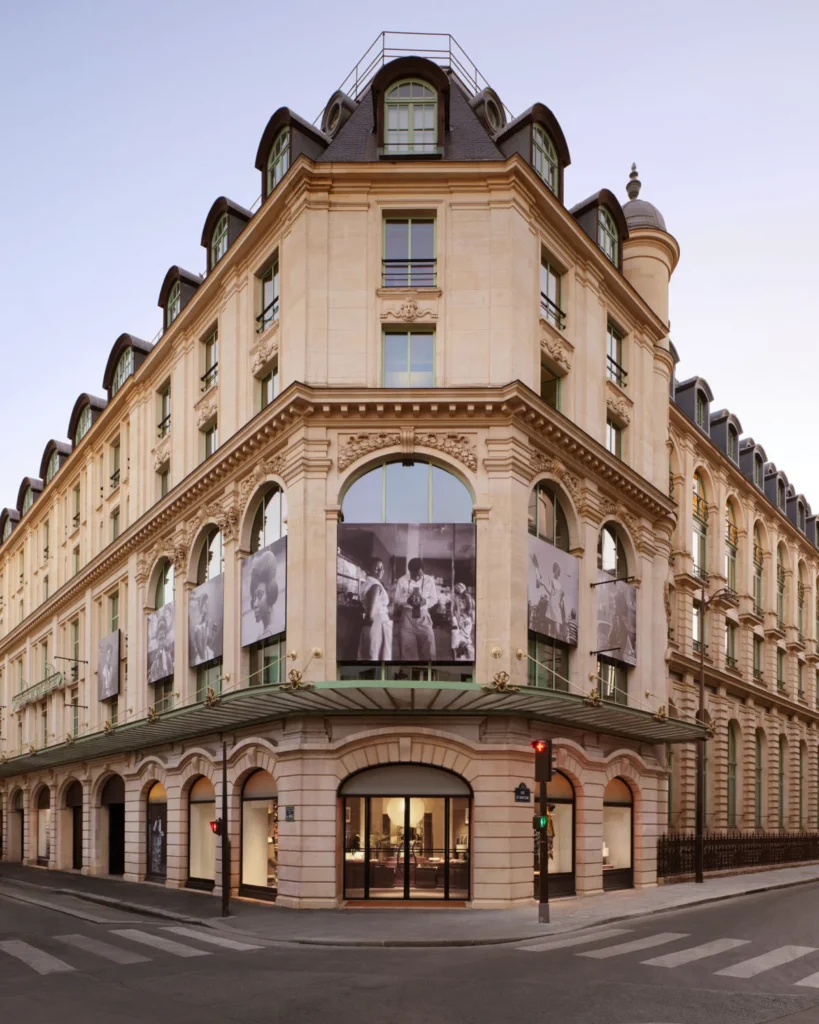
PARIS — In the heart of Saint-Germain-des-Prés, where the cobblestones of Rue du Bac hum with the history of Parisian intellectualism, a new chapter is being written for one of fashion’s most successful digital-native success stories. Sézane, the French label that redefined "effortless chic" for a generation of global consumers, is signaling a profound metamorphosis. With the opening of a sprawling, high-concept temporary flagship at 117 Rue du Bac, founder Morgane Sézalory is not merely expanding her retail footprint; she is recalibrating the soul of the brand.
The 3,700-square-foot space, a former home to Conran and most recently a Zara Home pop-up, stands directly across from the iconic Le Bon Marché. It serves as a physical manifestation of a two-year internal audit that has seen Sézane overhaul its logo, refresh its digital interface, and pivot toward a more sophisticated, curated aesthetic. This is a "laboratory" for the future of the brand—a place where the signature vintage-inspired French girl style meets a new, elevated "Scandi-cool" edge.
A Strategic Pivot: From Digital Darling to Cultured Lifestyle
For Sézalory, this project is profoundly personal. Having once lived on this very street before centralizing her corporate headquarters there in 2021, the location feels like home. However, the store is designed to be far more than a point of sale. By incorporating the brand’s first-ever in-store café, managed in partnership with sustainable roaster Ten Belles, and a curated bookstore in collaboration with the legendary Galignani, Sézane is transforming retail into a community hub.
The boutique features a rich, warm palette—tobacco tones, lacquered wood, and tactile textures—that move away from the hyper-feminine aesthetic of the early 2010s. Instead, the fall 2026 collection on display favors structure: oversized leather outerwear, chunky, heritage-inspired knits, and substantial leather goods. It is a mature, deliberate evolution.
"I really wanted us to have a space where we could bring to life and make tangible everything I’d been working on for the past two years," Sézalory explained in an exclusive interview. "It felt perfect to have a place that would function as a blank canvas and a laboratory."

Chronology: The Journey from eBay to Global B Corp
To understand the significance of this shift, one must look at the meteoric rise of the brand.
- 2013: Morgane Sézalory officially launches Sézane, evolving from a side project selling curated vintage finds on eBay into a fully fledged digital-native brand.
- 2015: The brand opens its first physical touchpoint, "L’Appartement," in Paris’s second arrondissement, establishing the "apartment-style" retail model that would become its signature.
- 2018: Seeking fuel for international expansion, Sézane invites U.S. equity firm General Atlantic to take a minority stake.
- 2021: The company achieves B Corp certification, formalizing its commitment to social and environmental responsibility.
- 2022: Téthys Invest, the holding company of the Bettencourt-Meyers family, acquires a minority stake, providing institutional backing from one of the most powerful families in luxury.
- 2024–2025: Sézalory begins a period of deep introspection, triggered by her mother’s illness. She decides to hit the "pause" button on rapid expansion to focus on quality control and brand identity.
- September 2026: The opening of the Rue du Bac "laboratory" store, marking the debut of the brand’s new logo, website, and elevated design philosophy.
Supporting Data: The Economics of “Slowing Down”
In an era where fashion labels are often forced to choose between the speed of fast-fashion trend cycles or the exclusivity of high-end luxury, Sézane occupies a challenging middle ground. The brand operates 27 locations worldwide, including major hubs in New York, San Francisco, and Los Angeles, as well as high-traffic pop-ups in cities like Boston and Atlanta.
Despite this physical presence, the brand remains a digital powerhouse, with 85 percent of its revenue generated online. This lean operational model allows Sézalory to maintain profitability while avoiding the pitfalls of the wholesale market, which she continues to reject.
However, the brand’s rapid growth—often hitting 30 percent annually—came with growing pains. Some long-term customers expressed concern that the brand had lost its "in-the-know" cachet. Sézalory’s response was characteristically bold: she chose to deliberately brake. By focusing on fewer, higher-quality references and investing in the in-store experience, she is betting that the long-term health of the brand depends on scarcity and craftsmanship rather than sheer volume.
Cultural Integration and Social Impact
A defining feature of the new flagship is its integration of culture. The store facade is adorned with seven large-scale photographs by James Barnor, the pioneer of Ghanaian photojournalism. This is not mere decoration; it reflects a deepening of the brand’s commitment to artistic narrative. The brand is also launching its first photography book dedicated to Barnor’s 97-year-old career.

Furthermore, the store serves as a conduit for philanthropy. All net proceeds from the curated bookstore—a selection spanning art, fashion, and design—will be donated to Demain, the social impact program founded by Sézalory. Since its inception, Demain has supported global charities focusing on women and children, as well as the nonprofit Libraries Without Borders.
"Sézane grew out of a series of lucky coincidences and choices that were never mapped out with a clear destination in mind," Sézalory noted. "I had never allowed myself to step back and see the bigger picture. My mother’s illness two years ago forced that reflection."
Implications: A Template for the Future of Retail
The Rue du Bac space is not just a one-off; it is a prototype for the future of Sézane’s retail operations. As the brand prepares to renovate its original Rue Saint-Fiacre boutique, the lessons learned from this six-month "laboratory" will be instrumental.
The decision to move the men’s line (October) and the children’s line (Petit Sézane) to the permanent store across the street while keeping the pop-up focused on the new, elevated women’s aesthetic suggests a strategy of segmented, highly curated experiences.
For the industry, Sézane’s pivot serves as a case study in "conscious entrepreneurship." In a market that is increasingly polarized, where mid-tier brands are being squeezed out, Sézalory is doubling down on the very qualities that built her initial success: community, storytelling, and an unwavering commitment to the "Sézane experience."

"We don’t have a conventional retail strategy because that isn’t our core business," Sézalory stated. "If we open a space, it has to have meaning and a little something extra—otherwise, we won’t do it."
As the brand moves forward, the message is clear: Sézane is no longer just selling clothes. It is selling a lifestyle that is intentional, culturally literate, and, above all, enduring. By turning the "pause" into a period of creative reinvention, Sézane is proving that the most powerful move a brand can make is to stop, reflect, and re-align with its own DNA. With the Rue du Bac store, the brand has created a mirror—not just for the clothes it sells, but for the values it holds—and it is a vision that appears to have captured the attention of the fashion world once again.