By TechCrunch News Desk
September 6, 2026
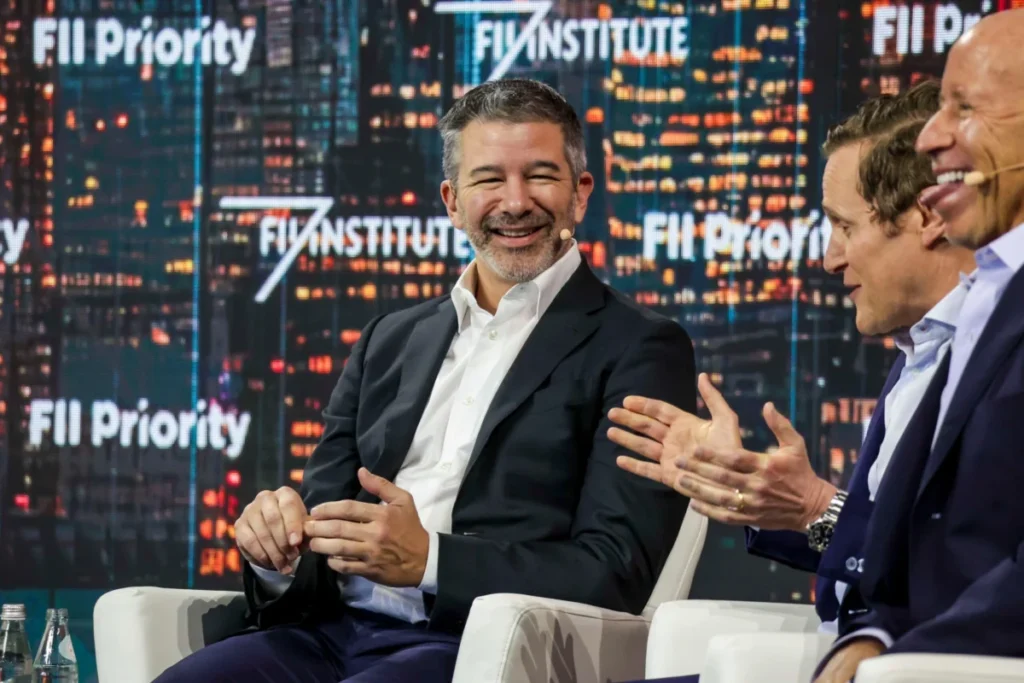
Travis Kalanick, the polarizing architect behind the ride-sharing revolution that defined the last decade, is once again positioning himself at the center of the next great mobility transformation. Earlier this summer, his mysterious robotics venture, Atoms, sent shockwaves through Silicon Valley by securing a staggering $1.7 billion funding round led by venture capital powerhouse Andreessen Horowitz (a16z).
For weeks, the tech industry speculated on the true nature of Atoms. Was it a hardware play? A software play? Or a pivot back to the very industry that once defined Kalanick’s career? New reporting from the Financial Times has finally pulled back the curtain, revealing that Atoms is preparing for a massive aggressive expansion—one that involves a hiring spree, strategic acquisitions, and a potential, full-circle collision with his former creation, Uber.
The Strategic Vision: Beyond the Buzzwords
While Kalanick has historically remained tight-lipped regarding his specific objectives, referring to the recent funding round simply as "unfinished business," the picture emerging from industry insiders suggests a focus on the holy grail of transportation: autonomous vehicle (AV) technology.
Atoms is not merely looking to compete; it is looking to integrate. Reports indicate that the startup has entered into high-level discussions with Uber regarding the deployment of Atoms’ proprietary robotaxi technology. For Kalanick, this represents a unique narrative arc. After building Uber into a global transportation behemoth—only to be forced out during a turbulent 2017—the prospect of his new company providing the "brains" for a future fleet of driverless Ubers is as poetic as it is strategic.
The company’s roadmap appears to go beyond passenger transit, however. By leveraging the expertise of high-profile acquisitions and massive capital reserves, Atoms is positioning itself to be a modular platform player, capable of serving various segments of the autonomous market, including logistics, long-haul trucking, and industrial automation.
A Chronology of the Atoms Evolution
To understand where Atoms is going, one must look at the path Kalanick has traveled since his departure from Uber.
- 2017–2020: The Post-Uber Era: Following his exit from Uber, Kalanick focused on CloudKitchens, a ghost-kitchen startup. However, industry observers always sensed he was biding his time, looking for a way to re-enter the deep-tech space.
- The Pronto Acquisition: A pivotal moment for Atoms occurred with the acquisition of Pronto, the autonomous mining technology startup. Pronto was founded by Anthony Levandowski, a figure intrinsically linked to the early, controversial days of self-driving development.
- July 2026: Atoms officially breaks cover with the announcement of a $1.7 billion funding round, the largest of its kind for a robotics startup in recent memory.
- August 2026: Uber confirms a $100 million investment in Atoms, signaling a thawing of relations between the ride-hailing giant and its founder. Additionally, Atoms secures key executive talent, including the appointment of Uber’s former finance chief as CFO.
- September 2026: Reports surface that Atoms is preparing for a "hiring spree" and a series of strategic acquisitions to solidify its position as an industry leader in AV.
Supporting Data: Why the Market is Watching
The $1.7 billion investment from Andreessen Horowitz is not just a vote of confidence in Kalanick; it is a signal of the current market valuation for "full-stack" autonomy.

Current industry data indicates that the autonomous taxi market is projected to reach trillions in value by the early 2030s. However, the path to profitability has been littered with failures, regulatory hurdles, and extreme capital expenditure requirements. Atoms’ $100 million infusion from Uber is particularly telling. It suggests that Uber, which has spent years navigating a complex web of autonomous partnerships (including deals with Waymo and others), sees unique value in the specific technological architecture Atoms is building.
Furthermore, the recruitment of top-tier engineering talent from firms like Tesla, Waymo, and Aurora suggests that Atoms is prioritizing "edge case" resolution—the ability for robots to navigate complex, unpredictable environments—which remains the primary barrier to mass adoption of autonomous vehicles.
The Levandowski Factor: A Controversial Legacy
The involvement of Anthony Levandowski is perhaps the most discussed element of the Atoms story. Levandowski’s history is inextricably linked to the high-stakes legal battles between Google (Waymo) and Uber over trade secrets. After being convicted of stealing intellectual property and receiving an 18-month prison sentence, Levandowski was granted a presidential pardon in the final days of the Trump administration.
By bringing Levandowski into the fold via the Pronto acquisition, Kalanick is signaling that he is less concerned with the "legacy" baggage of the past and entirely focused on the technical capability of the team. For the industry, this is a reminder that in the high-stakes world of Silicon Valley, intellectual property and specialized talent often trump public relations concerns.
Implications for the Future of Mobility
What does this mean for the average consumer?
1. The Consolidation of the Robotaxi Market
If Atoms becomes the primary software provider for companies like Uber, we may see a standardization of autonomous vehicle tech. Rather than every ride-hailing company building their own fleet, the industry may shift toward a "platform" model where firms like Atoms provide the autonomous operating system, allowing ride-hailing companies to focus on customer experience and local fleet management.
2. Regulatory and Safety Hurdles
With Kalanick’s history of "move fast and break things," the entry of Atoms into the public road network will undoubtedly face intense scrutiny from the National Highway Traffic Safety Administration (NHTSA) and local municipal governments. The public’s trust in autonomous vehicles is fragile; one high-profile incident involving an Atoms-powered vehicle could have catastrophic consequences for the company’s valuation.
3. The "Unfinished Business" Strategy
Kalanick’s choice of words—"unfinished business"—hints at a desire to complete the mission he started at Uber: the total automation of logistics. Whether it is moving people or goods, Kalanick views the human driver as a transitional component. Atoms appears to be the engine intended to complete that transition.

Official Responses and Industry Sentiment
While Atoms remains largely quiet, official statements from the firm have emphasized that they are currently in a "building phase." The company has declined to comment on the specific nature of their discussions with Uber, though the financial reports confirm the investment.
Analysts remain split. Some view the $1.7 billion funding as a sign of an overheating market, while others argue that the caliber of investors—and the specific focus on robotics—indicates that Atoms is one of the few companies with a legitimate shot at solving the "last mile" of autonomous navigation.
"Travis knows the ride-hailing game better than anyone," says a senior venture analyst in San Francisco. "He understands the unit economics of the gig economy. If he can remove the human driver from the equation, he isn’t just building a company; he’s rebuilding the entire supply chain of urban movement."
Conclusion: A High-Stakes Bet
As we move into the final quarter of 2026, all eyes are on the recruitment and acquisition activity coming out of the Atoms headquarters. The company is currently in a race against time and capital to prove that their technology is ready for prime time.
For Kalanick, the stakes are existential. Having been pushed out of the company he helped create, Atoms represents his second act—a chance to prove that his vision for the future was not flawed, merely ahead of its time. Whether this leads to a new era of transportation or another chapter of corporate controversy remains to be seen. But one thing is certain: in the world of autonomous robotics, Travis Kalanick has once again made himself the person to watch.
As the hiring spree begins and the acquisitions are finalized, the industry waits to see if Atoms will indeed become the foundation of a driverless future, or if the "unfinished business" of Travis Kalanick will prove to be a bridge too far.