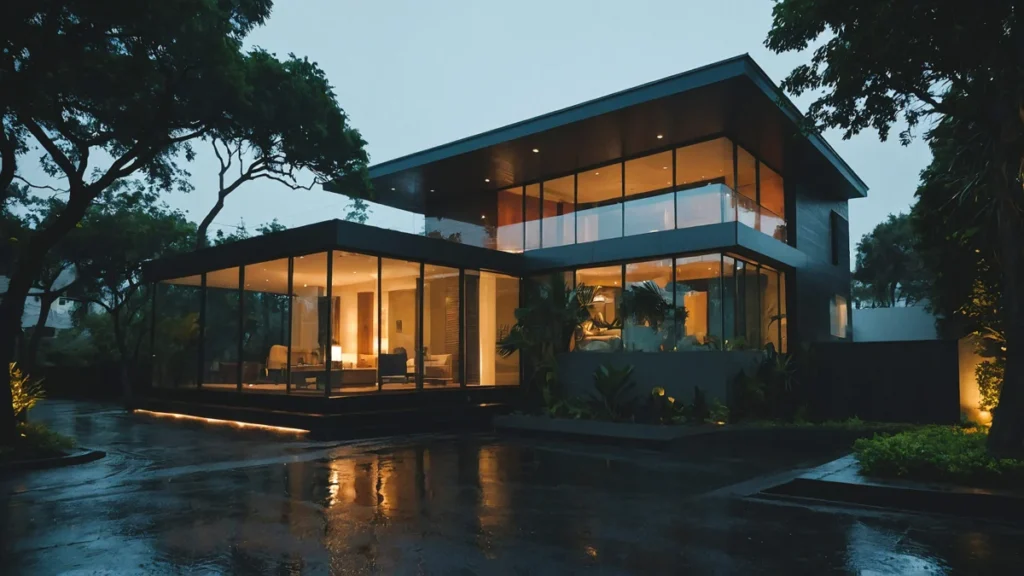
Luxury living in the third decade of the 21st century has undergone a profound metamorphosis. The era of ostentatious display—defined by sprawling square footage, gilded finishes, and grand, sterile foyers—is rapidly receding. In its place, a new paradigm has emerged: the bespoke residence. Today’s most discerning homeowners are moving away from the "trophy home" model, opting instead for architectural narratives that are as deeply personal as they are structurally sophisticated.
This shift signifies a transition from luxury as a measure of cost to luxury as a measure of fit. Whether perched on a rugged cliffside or tucked into an urban infill site, the modern bespoke home is no longer just a building; it is a highly calibrated environment designed to harmonize with the inhabitant’s lifestyle, values, and the unique topography of its site.
The Evolution of Residential Luxury: From Status to Substance
The traditional definition of luxury real estate was historically rooted in volume. If a home was large enough, featured imported marble, and maintained a commanding presence on the street, it was deemed "luxury." However, architectural trends since the post-pandemic era suggest a pivot toward intentionality.
Homeowners are increasingly prioritizing wellness, functional flow, and emotional resonance. The luxury home has become a sanctuary—a private ecosystem that facilitates everything from high-stakes professional output to restorative meditation. This evolution has elevated the role of the architect from a mere drafter of plans to a strategist of human experience. By analyzing the intersection of psychological needs and physical space, architects are now creating homes that act as an extension of the self.
The Bespoke Process: Designing from the Inside Out
The journey toward a truly bespoke home begins long before the first shovel breaks ground. Unlike production-built residences, which rely on standardized floor plans optimized for speed and cost-efficiency, the bespoke process is forensic in its discovery phase.
The Discovery Phase
Architects now conduct what many call "lifestyle audits." This involves deep-dive consultations regarding the occupants’ daily rhythms. Do they wake at dawn to yoga, or do they thrive in the late-night quiet of a home library? Does the family dynamic require a centralized, open-concept hub for communal interaction, or are there distinct requirements for acoustic privacy and individual study?
For a homeowner who frequently hosts, the focus may shift to "the theater of arrival"—designing an entry sequence that transitions guests from the outside world into a curated social experience. Conversely, for a family prioritizing intimacy, the architecture may favor "pockets of repose"—secluded courtyards, secondary dens, and bedroom suites that feel like private, hotel-grade retreats. By mapping these routines, the architect ensures that every square foot serves a distinct purpose, eliminating the "dead space" common in oversized, generic mansions.
Environmental Symbiosis: Architecture as a Dialogue with Nature
Perhaps the most significant advancement in luxury design is the rejection of the "sited-anywhere" home. Modern bespoke architecture prioritizes environmental context, viewing the landscape not as an obstacle to be leveled, but as the primary catalyst for the home’s design language.
Analyzing the Site
When an architect approaches a plot, they are essentially reading a map of environmental possibilities. Orientation is paramount; the movement of the sun dictates the placement of glass, the depth of overhangs, and the thermal strategy of the building envelope.
- Coastal Environments: Homes here often feature cantilevers that extend toward the horizon, using marine-grade alloys and treated cedar that develop a natural patina rather than deteriorating under the stress of salt air.
- Mountainous/Rugged Terrain: These structures often utilize stone quarried from the site itself, blurring the line between the built environment and the geological history of the region. Expansive glazing is used strategically here, not just for the view, but to frame the landscape as a "living artwork" that changes with the seasons.
This level of site-responsiveness is the ultimate luxury. It reduces reliance on artificial lighting and climate control, as the home effectively "breathes" with the landscape, utilizing passive cooling and natural light as a matter of structural design.
The Architecture of Details: Craftsmanship as the New Currency
If the floor plan is the skeleton of the home, the finishes are the nervous system. In the world of high-end bespoke design, "luxury" is found in the joinery, the tactile quality of a hand-finished wall, and the perfect transition between two disparate materials.
The Return of the Artisan
There is a growing movement toward hyper-specialized craftsmanship. Modern luxury is increasingly defined by:
- Sculptural Elements: Custom-cast metal staircases or hand-carved stone fireplaces that serve as the focal point of a room.
- Bespoke Joinery: Cabinetry that is built in situ, tailored to the specific dimensions of a collection—be it fine wine, rare books, or an art collection.
- Material Integrity: The use of raw, authentic materials—raw brass, honed marble, rift-sawn oak—that age with dignity.
In high-rise urban residences, where spatial volume is limited, this focus on detail becomes even more vital. Precision becomes the primary driver of elegance. When a door casing sits perfectly flush with a wall, or a light cove is hidden with millimetric accuracy, the subconscious result is a sense of calm and order that generic luxury cannot replicate.
Seamless Integration: The "Invisible" Smart Home
The integration of technology has historically been a point of friction in luxury design. Bulky wall panels, tangled wires, and prominent hardware often disrupt the aesthetic flow of a clean, modern interior. The modern bespoke approach, however, treats technology as a phantom—present and powerful, but never intrusive.
Invisible Infrastructure
The current gold standard involves "invisible" automation. Speakers are integrated into wall panels behind acoustic fabric or seamlessly into drywall. Climate sensors are tucked into ceiling coffers, and lighting scenes are managed through intuitive, AI-driven systems that adjust color temperature based on the time of day and the room’s specific usage.
The goal is to move beyond "gadgetry" and toward "ambient intelligence." When a homeowner walks into a room, the environment should respond automatically—adjusting the lighting to a warm, inviting glow or initiating a specific ventilation protocol—without the need for a single physical switch or a complex mobile app.
Implications for the Future of Real Estate
The rise of the bespoke home has broader implications for the real estate market. As high-net-worth individuals increasingly seek property as a manifestation of personal values, the "resale value" paradigm is changing.
The Durability of Design
While standardized luxury homes are often designed for the "average" buyer to maximize mass appeal, bespoke homes are built for the occupant. Interestingly, this does not decrease value; rather, it creates a "legacy asset." A home that is fundamentally connected to its land and built with enduring, high-quality materials often holds its value better than a trendy, mass-produced luxury home that will inevitably feel dated within a decade.
The Shift in Market Demand
Market data suggests that properties offering high-level architectural integrity and deep site integration are commanding premiums even in volatile markets. Buyers are becoming more sophisticated; they are looking for the "why" behind a design choice. They are hiring architects not just to build a house, but to solve the problem of how to live well.
Conclusion: The Ultimate Luxury is Belonging
Ultimately, the surge in bespoke architecture represents a shift in our collective understanding of success. We are moving away from the era of the "showcase home"—a space designed to impress others—and toward the era of the "inhabited home"—a space designed to sustain the occupant.
By prioritizing individual identity, deep-rooted site connections, artisanal craftsmanship, and seamless technology, bespoke architecture provides more than just shelter. It provides a container for life that evolves alongside the inhabitant. In a world that is increasingly noisy, digital, and transient, the luxury of a home that is truly one’s own—a space that feels as natural and personal as a second skin—has become the most exclusive, and most valuable, commodity of all.