In the realm of landscape architecture, walls are frequently misunderstood as mere barriers—static lines drawn to demarcate property boundaries or shield a home from prying eyes. However, for the modern homeowner and designer, the outdoor wall represents a sophisticated tool for spatial choreography. When integrated thoughtfully, a wall acts as the backbone of an outdoor living environment, framing nature, establishing privacy, defining zones of entertainment, and anchoring the visual identity of a property.
As outdoor living becomes an extension of the interior floor plan, the demand for walls that do more than “divide” has reached an all-time high. Whether it is a rustic stone barrier that grounds a garden in the earth or a sleek, rendered surface that mirrors the minimalism of a contemporary home, the right design can transform an ordinary yard into a curated sanctuary.
1. The Anatomy of Choice: Six Architectural Approaches
Selecting the right wall requires an understanding of material science, environmental conditions, and aesthetic intent. Here are the six primary design typologies currently defining modern outdoor spaces.
I. Natural Stone: The Eternal Classic
Natural stone remains the gold standard for landscape integration. Because each piece possesses unique fissures, grains, and color variations, stone walls feel inherently organic, bridging the gap between a built structure and the living earth.
- Aesthetic Impact: Rough-hewn stone creates a tactile, rustic charm, while precision-cut ashlar masonry offers a clean, architectural sharpness that complements luxury estates.
- Strategic Use: These walls excel at retaining slopes, framing pathways, or creating a rugged backdrop for native planting schemes.
II. The Modern Slatted Wall
The slatted wall is a masterclass in the balance between transparency and seclusion. By utilizing timber or composite slats—arranged either vertically to draw the eye upward or horizontally to elongate a space—designers can manipulate light and airflow.
- Functional Privacy: The "breathable" nature of slats means they do not create a dead-end "box" feel. By adjusting the spacing between boards, homeowners can control visibility, ensuring a sense of enclosure without losing the connection to the wider landscape.
III. The Rendered Wall: Minimalist Sophistication
For the contemporary property, the rendered wall—a smooth, continuous coat of cement or lime-based plaster—is the preferred choice. It provides a crisp, neutral canvas that allows lighting, sculptures, and botanical features to pop.
- Cohesive Design: Rendered walls allow for seamless visual continuity between the home’s exterior and the landscape, effectively "stretching" the indoor aesthetic into the open air.
IV. Brick: The Textural Staple
Brick offers a timeless, familiar warmth that few materials can replicate. Beyond its durability, the versatility of brick lies in its application: from classic running bond patterns to intricate herringbone designs, the wall itself becomes a work of art.
- Architectural Dialogue: Brick is the ideal material for bridging the aesthetic of older, heritage-style homes with modern patio upgrades, offering a sturdy, low-maintenance finish that ages gracefully.
V. The Feature Wall: The Heart of the Hearth
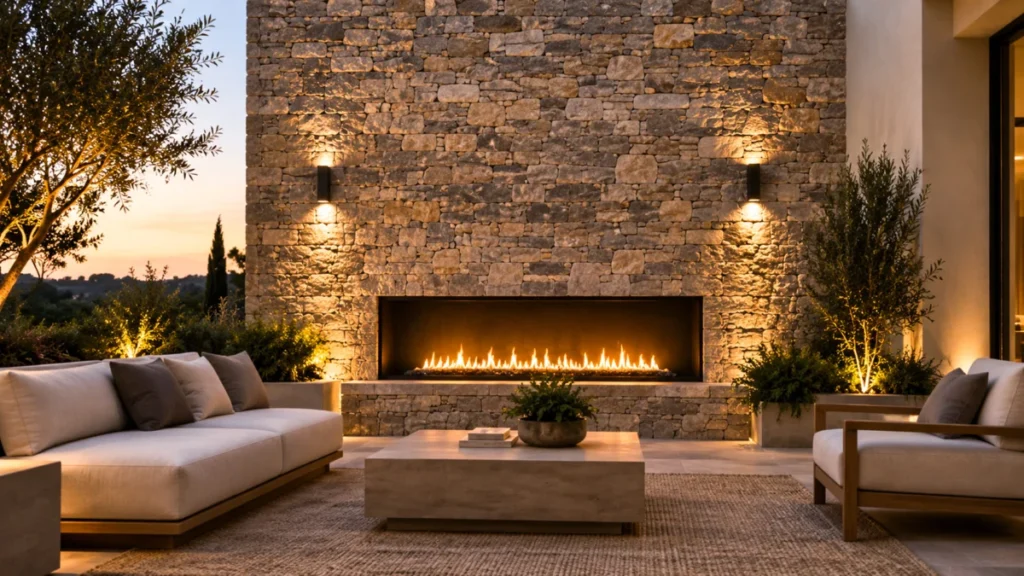
The "feature wall" transcends utility by serving as a central anchor for social activity. By integrating an outdoor fireplace or a high-end pizza oven, the wall evolves from a boundary into a destination.
- The Social Catalyst: A fireplace installation acts as a magnet for guests, especially in climates like those found in Calgary, where masonry heat retention extends the patio season by several months. These walls provide both the structural integrity to house fire-safe components and the ambient backdrop for evening gatherings.
VI. Multi-Purpose Zoning Walls
In larger footprints, a wall acts as a room divider. Using low-height masonry or partial-height partitions allows for the creation of "outdoor rooms"—a dining area separated from a lounge, or a kitchen zone distinct from a garden sanctuary—without compromising the overall flow of the yard.
2. Chronology of Design: From Concept to Construction
The process of integrating an outdoor wall into a landscape follows a distinct professional sequence:
- Site Analysis & Zoning (Weeks 1-2): Assessment of elevation changes, soil composition, and existing infrastructure (utility lines, drainage).
- Structural Engineering (Weeks 3-4): Critical for tall walls, this stage involves calculating load-bearing requirements, particularly for walls supporting fire features or earth retention.
- Material Procurement (Weeks 5-6): Sourcing high-quality masonry or sustainable timber.
- Foundation & Drainage Installation (Weeks 7-8): Often the most overlooked stage; without proper footing and drainage (weep holes and aggregate backfill), even the most beautiful wall will fail due to hydrostatic pressure.
- Finishing & Integration (Weeks 9-10): Installation of electrical for lighting, final cladding, and landscaping of adjacent zones.
3. Supporting Data: The Impact of Material Longevity
When selecting materials, homeowners must weigh the cost-to-longevity ratio.
- Masonry (Stone/Brick/Concrete): These materials offer the longest lifespan (50+ years) but require higher upfront investment and professional installation. Their thermal mass makes them ideal for environments with fluctuating temperatures.
- Timber/Composite: Composite slats offer a 20-25 year lifespan with near-zero maintenance, whereas natural timber requires annual oiling or staining to prevent degradation in harsh UV or moisture-heavy environments.
- Operational Benefits: Properly constructed masonry walls with built-in heating elements have been shown to increase property valuation by 10-15% in suburban markets, as they move the needle from "backyard" to "outdoor living space."
4. Professional Perspective: Expert Insights
"The most common mistake is building a wall in isolation," says a lead architect at a boutique design firm. "An outdoor wall is a conversation piece. If it’s too heavy, it dominates; if it’s too flimsy, it fails to offer the sanctuary the client needs. The goal is to make the wall feel like it grew out of the landscape, not like it was dropped into it."
When asked about the inclusion of fire features, engineers emphasize the importance of non-combustible material selection. "When you integrate a fireplace, you are dealing with thermal expansion and contraction. The wall must be engineered to withstand heat cycles, or you will see cracking within the first two seasons. This is why professionals prioritize specialized masonry liners and fire-rated mortar."
5. Implications: Lighting and Sustainability
A wall is only as effective as its presence at night. Lighting is not an accessory; it is a structural necessity.
- Texture Highlighting: By placing LED uplights or grazing fixtures at the base of a stone or brick wall, the dramatic shadows accentuate the texture, adding depth to the yard after dark.
- Environmental Considerations: Modern wall design now incorporates sustainable practices, such as using permeable materials or creating "living walls" where climbing ivy or vertical gardens are trained to grow on the masonry, providing natural cooling and carbon sequestration.
6. Final Verdict: The Strategic Investment
Ultimately, an outdoor wall is a permanent investment in the quality of one’s home life. It is the boundary that allows for freedom. By choosing materials that reflect the surrounding environment, keeping proportions in check to avoid "enclosure fatigue," and integrating functional elements like lighting and fire, homeowners can craft a landscape that is both beautiful and resilient.
Whether you are looking to define a cozy nook for a morning coffee or a grand stage for summer entertainment, the modern outdoor wall is the essential element that turns open ground into a sophisticated, private, and deeply personal environment. The key is not to build more, but to build better—ensuring that every layer of mortar, every slab of stone, and every slat of wood serves a purpose in the greater narrative of your home.