By PS Editorial Staff
October 23, 2026
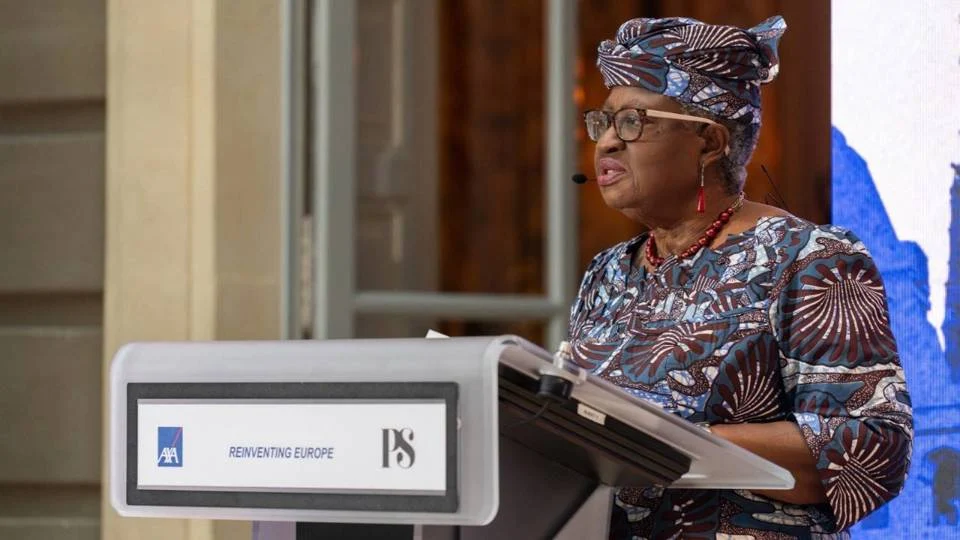
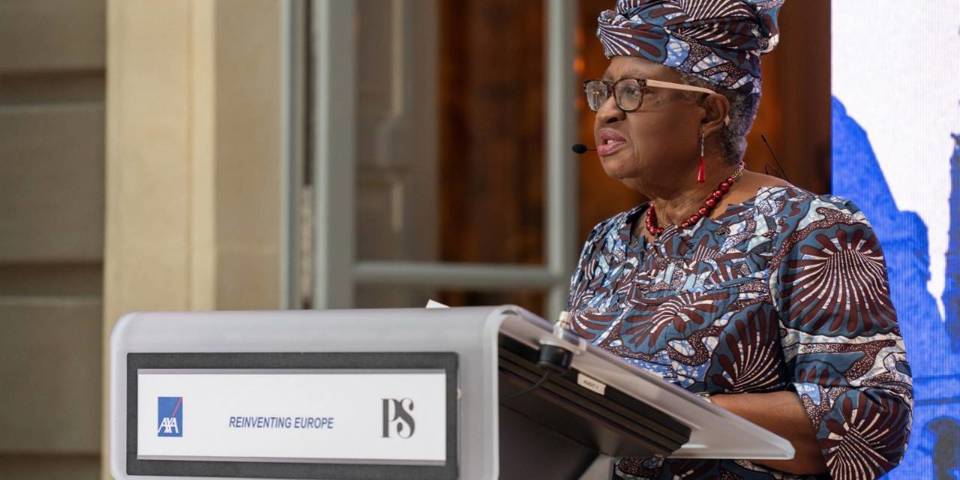
In an era defined by geopolitical volatility, supply-chain fragmentation, and the rapid acceleration of artificial intelligence, the discourse surrounding the European Union’s future has frequently devolved into a narrative of declinism. However, during her recent closing keynote at the Reinventing Europe summit, World Trade Organization (WTO) Director-General Ngozi Okonjo-Iweala offered a sharp corrective to this pessimism.
Dr. Okonjo-Iweala argued that the continent’s impulse to reinvent itself—while necessary—is often hindered by an undue focus on perceived failures, leading to a "panic-driven" policy agenda. By centering her argument on the inherent strengths of the European model, she proposed a pivot toward measured, strategic reform that leverages Europe’s existing status as a global powerhouse in science, research, and international trade.
The Core Thesis: Resilience Over Reinvention
The central premise of Dr. Okonjo-Iweala’s address is that "reinvention" is a misnomer if it ignores the foundational systems that already function with high efficiency. For the WTO Director-General, the global trading system has been a primary victim of unnecessary skepticism. Despite the pressures of the post-pandemic landscape, protectionist headwinds, and regional conflicts, the international trade framework has displayed a remarkable degree of resilience.
The Myth of European Irrelevance
A recurring theme in contemporary economic critique is Europe’s lack of a "Big Tech" champion comparable to those found in the United States or China. While Okonjo-Iweala acknowledges that this gap in the digital economy presents a structural challenge, she warns against using it as a proxy for total economic weakness.
"Europe is not a continent in decline; it is a continent undergoing a necessary structural transition," she noted. She highlighted that Europe remains the world’s most significant trade bloc when considering the integration of services, high-end manufacturing, and intellectual property. The continent’s dominance in R&D and scientific output remains a primary engine of global innovation, a fact often obscured by the outsized media focus on the platform economies of Silicon Valley and Shenzhen.
Chronology: The Path to the Current European Stance
To understand the context of Dr. Okonjo-Iweala’s remarks, one must look at the recent evolution of European economic policy:
- 2023–2024 (The Era of Strategic Autonomy): Following the energy shocks of 2022, the EU moved aggressively toward "Strategic Autonomy," focusing on de-risking supply chains and reducing dependence on single-source energy and raw materials.
- Early 2025 (The Productivity Gap Debate): As US growth surged due to massive investment in AI, European leaders began a public dialogue regarding the "Draghi Report" and similar analyses, which pointed to a widening productivity gap.
- Mid-2025 (Regulatory Fatigue): The EU faced criticism regarding the burden of its green and digital regulations (such as the AI Act and CSRD), leading to internal debates over whether to pause or accelerate regulatory expansion.
- October 2026 (The Summit Context): The Reinventing Europe event served as a focal point for this tension, pitting those who demand radical deregulation against those who argue for a deepened, more integrated European Single Market.
Supporting Data: Europe’s Economic Footprint
Dr. Okonjo-Iweala’s perspective is anchored in the reality of trade flows. Despite the headlines, the empirical data suggests that Europe remains a pillar of global economic stability.
Trade Powerhouse Metrics
- Export Dominance: The EU remains the world’s largest exporter of goods and services combined, consistently accounting for over 15% of global trade.
- Research Leadership: European institutions continue to dominate the top tiers of global scientific citations, particularly in pharmaceuticals, green energy technology, and materials science.
- The Single Market Advantage: The internal market of 450 million consumers remains the most lucrative regulatory space in the world. As the WTO head pointed out, companies from around the globe continue to prioritize compliance with European standards (the "Brussels Effect") as a prerequisite for global market entry.
The Africa Opportunity
One of the most compelling points in the keynote was the untapped potential of the Europe-Africa trade corridor. With the African Continental Free Trade Area (AfCFTA) now gaining momentum, Okonjo-Iweala posits that Europe has a strategic partner that can provide the demographic dividend and raw materials that the continent requires to maintain its industrial base.
Official Responses and Political Implications
The speech has ignited a lively debate among EU policymakers, trade economists, and industry leaders.
The Pro-Reform Consensus
Many institutionalists within the European Commission have welcomed the Director-General’s call for "measured reforms." They argue that the "panic" she describes often leads to fragmented national responses—such as state-aid races between member states—which ultimately undermine the Single Market. By emphasizing global trade integration, Okonjo-Iweala provides a mandate for these leaders to resist protectionist urges that might satisfy local political interests but harm long-term growth.
The Skeptical View
Conversely, some industry lobbyists argue that "measured" reform is a luxury Europe can no longer afford. They point to the "valley of death" facing European startups, where the cost of scaling is prohibitively high compared to the US. From their perspective, the "resilience" mentioned by the WTO head is actually a form of stagnation, and that without a "Big Bang" approach to capital markets and digital regulation, Europe will continue to fall behind.
Implications: The Way Forward
The implications of Dr. Okonjo-Iweala’s keynote are twofold: it serves as a warning against the dangers of reactionary policy and as a roadmap for sustainable competitiveness.
1. Shift from Protectionism to Integration
If Europe follows the advice of the WTO, it will move away from reflexive protectionist measures and toward the harmonization of its internal market. The focus should be on removing the "friction" that prevents European companies from achieving the scale of their American or Chinese counterparts.
2. Deepening the Global Partnership
The emphasis on Africa is not merely diplomatic; it is an economic necessity. By lowering trade barriers and increasing investment in the Global South, Europe can create a new layer of resilience that reduces its reliance on high-risk geopolitical zones.
3. Science-Led Growth
Europe’s edge lies in its labs and universities. Dr. Okonjo-Iweala suggests that the focus should be on commercializing this research more effectively. Instead of trying to replicate the consumer-facing tech giants of the past decade, Europe should lean into its comparative advantages in deep tech, quantum computing, and sustainable manufacturing.
Conclusion: A Measured Renaissance
As the Reinventing Europe summit concluded, the message from Ngozi Okonjo-Iweala was clear: Europe is not broken. It is, however, misidentifying the cause of its anxiety. By moving past the fear of irrelevance and embracing a strategy of steady, measured, and outward-looking development, the continent can secure its position as a central, indispensable architect of the 21st-century global economy.
The question that remains for the European Council and the Parliament is whether they possess the political courage to ignore the "panic" and stay the course of long-term structural integration. The tools are present, the partners are waiting, and the global trade system remains open for those willing to engage with it on their own, refined terms.