To mark three decades of disrupting the status quo, Swedish fashion powerhouse Acne Studios has turned its lens toward one of the most significant visual storytellers of the modern era. The brand has tapped acclaimed photographer and activist Nan Goldin to helm its 30th-anniversary campaign—a move that underscores the label’s enduring commitment to the ethos that defined its inception: “Ambition to Create Novel Expressions.”
For Goldin, whose career has been built on the raw, unfiltered documentation of intimacy and the fringes of society, this collaboration represents a homecoming of sorts. Rather than opting for the polished, detached aesthetic typical of luxury fashion, the campaign functions as a tactile exploration of the brand’s “creative family.”
The Main Facts: A Portrait of a Creative Universe
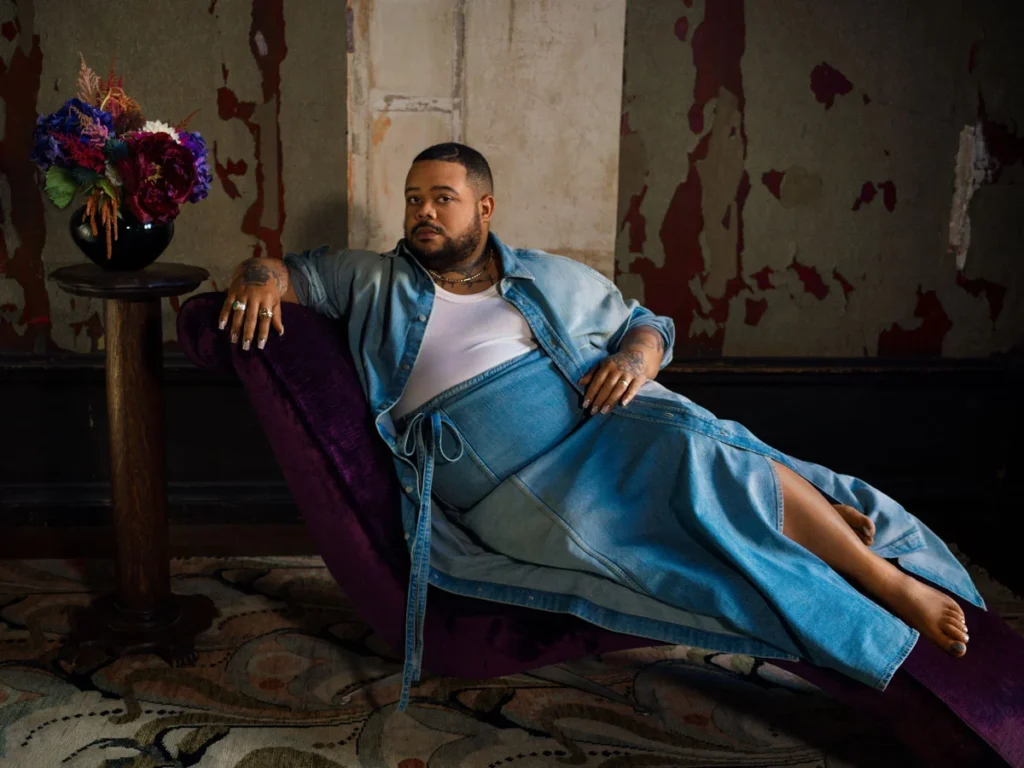
The campaign, unveiled this month, features a curated ensemble of artists, actors, and musicians who have long orbited the Acne Studios ecosystem. Among the subjects captured by Goldin are artist Jonathan Lyndon Chase, sculptor and photographer Peter Schlesinger, visual artist Sandra Poulson, actor-musician Juliette Lewis, singer Ellie Rowsell, model-photographer Guinevere Van Seenus, photographer Jordan Hemingway, and actors Raya Martigny and Rila Fukushima.
The imagery—characterized by Goldin’s signature saturated color palettes, soft focus, and deep emotional resonance—focuses heavily on denim. It is a deliberate aesthetic choice. When Jonny Johansson, cofounder and creative director of Acne Studios, launched the brand in 1996, his first act was the production of 100 pairs of raw denim jeans with distinctive red stitching. These were not initially sold to the public, but rather gifted to a circle of friends, artists, and creative collaborators in Stockholm.
By centering the 30th-anniversary campaign on denim, Acne Studios is effectively signaling a return to its roots while celebrating the individuals who have helped it evolve from a boutique experiment into a global fashion entity.
A Chronology of Collaboration and Creative Evolution
To understand the weight of this partnership, one must look at the timeline of both the brand and the artist.
- 1996: Jonny Johansson founds Acne Studios in Stockholm. The brand’s identity is forged in the "Ambition to Create Novel Expressions" (A.C.N.E.), emphasizing experimentation over mass-market trends.
- 1985–Present: Nan Goldin gains international recognition for The Ballad of Sexual Dependency, a seminal work documenting the lives of her friends and the LGBTQ+ community in New York. Her work becomes a cornerstone of contemporary photography.
- 2010–2024: Goldin begins to bridge the gap between fine art and commercial fashion, collaborating with brands like RVCA, Rodarte, Medea, Supreme, and, most notably, Gucci in 2024.
- 2026: Acne Studios reaches its 30th-anniversary milestone. Johansson, seeking an “icon” who can capture the intimacy of the brand’s history, approaches Goldin.
- September 2026: The campaign is officially launched, featuring the inaugural series of portraits, with a final "friend of the house" portrait promised for a future date.
Supporting Data: The Intersection of Art and Commerce
Nan Goldin’s transition into commercial fashion photography has not been without its financial and critical scrutiny. In her 2024 collaboration with Gucci, which featured portraits of Debbie Harry and Kelsey Lu, the commercial intent was married to the fine-art market. Following the campaign, Goldin exhibited those six photographs at the Gagosian gallery. The prints were offered in editions of seven, with starting prices set at $28,000—a testament to the high demand for her work even when produced within a corporate framework.

The Acne Studios campaign follows a similar trajectory. It is an exercise in brand-building through the lens of institutional memory. By choosing subjects like Jonathan Lyndon Chase—who famously designed the set for the brand’s Spring/Summer 2025 runway show—the campaign reinforces the idea that Acne Studios is not just a clothing company, but a hub for interdisciplinary exchange.
Johansson’s rationale for the casting is clear: "I wanted friends, not models." This deliberate avoidance of traditional industry casting reflects a shift in luxury marketing toward "authentic" social circles, a trend that Goldin, as a chronicler of subcultures, is uniquely qualified to navigate.
Official Responses and Creative Vision
The dialogue between the photographer and the creative director has been one of mutual admiration. In a formal statement accompanying the campaign launch, Jonny Johansson expressed a long-standing reverence for Goldin’s aesthetic.
"I have been inspired by Nan and her work for years," Johansson said. "So, when we realized we had 30 years to celebrate, it felt like the right moment to ask her. I wanted an icon, but I also wanted something very intimate and personal. She does that."
For Johansson, the choice of denim as the primary material for the campaign is philosophical. "Denim is the perfect canvas," he explained. "We’re rooted in it. It’s a material of today that also ages and becomes something else through its story. Denim personalises itself through wear—it becomes yours."
This sentiment is echoed by the subjects themselves. Jonathan Lyndon Chase, reflecting on the process, noted, "Denim is part of my everyday wear inside the studio, or out for dinner. I love its multifaceted materiality."
Implications: The Burden of the Public Intellectual
While the Acne Studios campaign serves as a milestone for the brand, it exists in the shadow of Goldin’s complex political identity. Goldin is as well-known for her fierce activism as she is for her photography. Her founding of P.A.I.N. (Prescription Addiction Intervention Now) in 2017—an organization dedicated to exposing the Sackler family’s role in the opioid crisis—fundamentally altered the relationship between museums and their donors.

However, her recent political stances have invited both controversy and personal cost. Goldin has become one of the most prominent voices in the art world supporting Palestine, consistently using her platform to condemn the conflict in Gaza.
In a 2024 speech at Berlin’s Neue Nationalgalerie, she labeled the war in Gaza a "genocide," a sentiment she reiterated during a talk in Arles, France, in 2025. These stances have had tangible effects on her professional life. In a candid conversation with Palestinian activist Mahmoud Khalil, Goldin admitted to the volatility of her position in the current market: "My career tanked—my market tanked from one day to the next because of my support of Palestine."
The decision by Acne Studios to align itself with Goldin at this specific juncture is a calculated move. In an era where brands are increasingly scrutinized for their corporate values, associating with an artist of Goldin’s stature—someone who refuses to separate her creative output from her ethical convictions—suggests that Acne Studios is positioning itself as a brand that values "free expression" and "proud individuality," even when those expressions are politically challenging.
Conclusion: A Legacy of Novel Expressions
The 30th-anniversary campaign is more than a series of advertisements; it is a synthesis of three decades of cultural observation. By documenting the "creative family" of a brand that started as a small, experimental collective, Goldin has managed to capture the very spirit of the "Ambition to Create Novel Expressions" that birthed Acne Studios.
As the brand looks toward the next 30 years, this campaign serves as a reminder that the most enduring luxury is not found in a garment’s price tag, but in the community and the stories that define it. Through the lens of Nan Goldin, the denim-clad subjects are not merely wearing clothes; they are representing a history of collaboration and a future of continued, uncompromising expression.
Whether this campaign will serve as a bridge between the commercial fashion world and the increasingly polarized sphere of art-world activism remains to be seen. However, for now, Acne Studios has successfully centered its anniversary on the only thing that has kept it relevant for thirty years: the people who wear, create, and live within its universe.