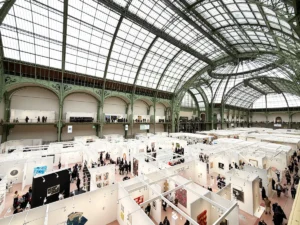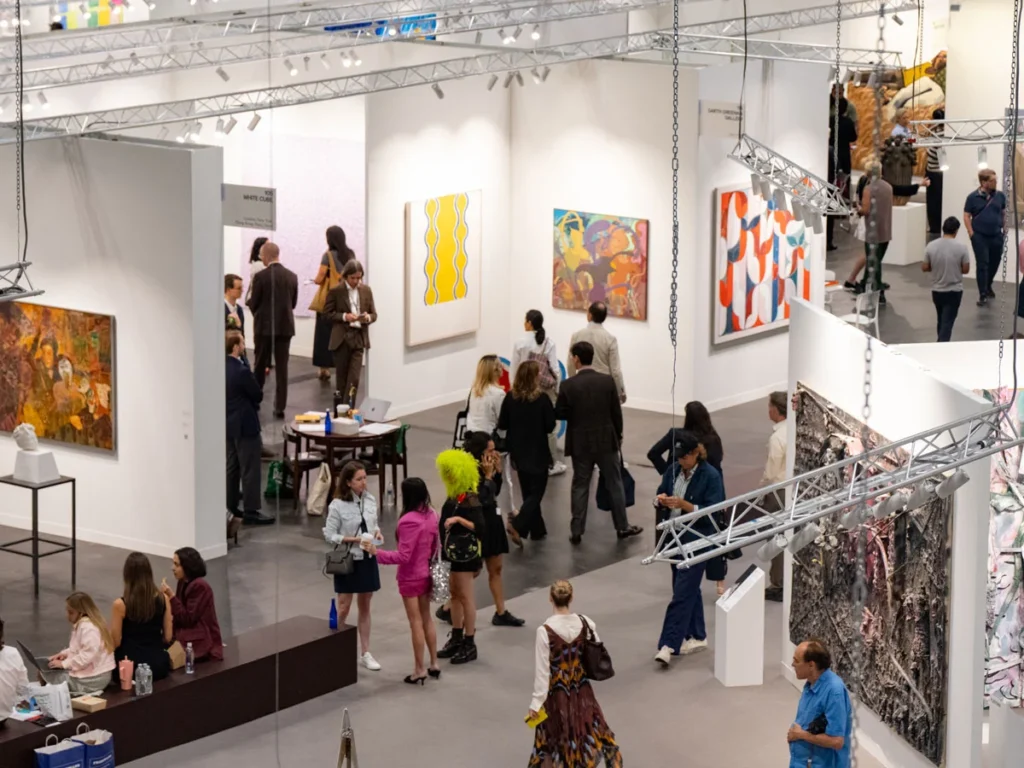
The New York art calendar has long been anchored by The Armory Show, a cornerstone event that transforms the city into a global epicenter for contemporary art. As the fair prepares for its 2026 edition, slated to run from September 24–27 at the Javits Center, it has announced a series of ambitious initiatives designed to bridge the gap between the commercial art market and the institutional world. Central to this expansion are two new museum acquisition prizes—established in partnership with the Pérez Art Museum Miami (PAMM) and the Bronx Museum—which aim to provide direct support to artists while enriching the permanent collections of these vital cultural institutions.
By formalizing these partnerships, The Armory Show is positioning itself as more than just a marketplace; it is evolving into a critical site for institutional discovery and historical record-keeping. The 2026 edition arrives at a time of significant transition for the fair, following its acquisition by Frieze and its strategic shift to a September timeslot, which effectively kicks off the autumn art season in the Northern Hemisphere.
Main Facts: A Dual Investment in Contemporary Narratives
The headline of this year’s announcement is the introduction of the Pérez Art Museum Miami (PAMM) Acquisition Prize and the Bronx Museum Acquisition Prize. These awards are not merely honorary; they carry significant financial weight intended to facilitate the purchase of artworks directly from the fair floor.
The PAMM Acquisition Prize will allot $20,000 at each edition of The Armory Show. This fund is specifically earmarked for acquisitions that will benefit both the museum’s permanent collection and the Green Family Foundation Caribbean Cultural Institute (CCI) at PAMM. The selection process will focus on the fair’s "Focus" section, which in 2026 is dedicated to artists with deep ties to the Caribbean. This section is curated by María Elena Ortiz, the esteemed curator at the Modern Art Museum of Fort Worth, who brings a rigorous scholarly lens to the presentation.
In tandem, the Bronx Museum Acquisition Prize will launch with a $15,000 annual allocation. This prize is designed to support the Bronx Museum’s mission of championing diverse voices and social justice through art. Unlike the PAMM prize, the Bronx Museum’s focus will be on the "Presents" section of the fair. This sector is traditionally reserved for emerging galleries—those in business for ten years or less—providing a platform for solo and dual-artist presentations by younger or under-recognized talents.
Beyond these prizes, the 2026 edition will feature the "Platform" section for large-scale installations, the "Sculpture" section, and a special "Spotlight" booth featuring El Museo del Barrio. The fair will also debut "Armory After Hours," a program intended to extend the fair’s cultural reach into the evening through performances and community engagement.
Chronology: The Evolution of the September Fair
The trajectory of The Armory Show has been one of constant adaptation. Historically held in March, the fair’s move to September was a calculated effort to align with the start of the New York gallery season and avoid the crowded spring international fair circuit.
The 2026 schedule reflects an "intentionally extended Armory Week," a concept spearheaded by Director Kyla McMillan. This chronology began with the fair’s shift to the Javits Center, providing a centralized, world-class venue that allowed for the "Platform" and "Sculpture" sections to expand in scale.
- Early 2024–2025: Following its acquisition by Frieze, The Armory Show began restructuring its curatorial framework to emphasize thematic depth over mere volume.
- September 2025: The fair solidified its September presence, drawing record attendance from international collectors who were already in New York for the fall auctions and gallery openings.
- Early 2026: The announcement of the PAMM and Bronx Museum prizes marks the latest chapter in this evolution, signaling a move toward "institutionalizing" the fair experience—ensuring that the works shown have a life beyond the private living rooms of collectors.
- September 24–27, 2026: The fair will open its doors, featuring the debut of "Armory After Hours" and the live performance Special Blue: Act I by Tavares Strachan.
Supporting Data: Curatorial Sections and Financial Impact
To understand the scale of The Armory Show’s 2026 edition, one must look at the data driving its various sectors. The fair remains one of the largest in North America, but its strength lies in its segmented approach to curation.
The Focus Section: Caribbean Connectivity
Under the guidance of María Elena Ortiz, the "Focus" section serves as a dedicated space for regional inquiry. By focusing on the Caribbean, the fair is tapping into a vibrant, globalized art scene that has historically been underrepresented in major New York fairs. The $20,000 PAMM prize ensures that at least one significant work from this section will enter a public collection each year, creating a tangible link between the New York market and Miami’s cultural ecosystem.
The Presents Section: Emerging Talent
The "Presents" section will feature 55 emerging galleries in 2026. This is a crucial data point for the Bronx Museum, which has a long history of being the first institution to acquire works by artists who later become household names. The $15,000 prize is specifically scaled to the price points typically found in the "Presents" section, where works by emerging artists often fall within the $5,000 to $20,000 range.
Platform and Sculpture: Large-Scale Ambition
The "Platform" section, curated by Jovanna Venegas of SculptureCenter, is titled "Passages and Threshold." It will feature monumental works by artists including:
- María Magdalena Campos-Pons: Known for her multidisciplinary work exploring Afro-Cuban identity.
- Hew Locke: A British-Guyanese artist whose work often critiques symbols of imperial power.
- Bony Ramirez: A Dominican-born artist whose neo-mannerist paintings have gained rapid market traction.
- Lucia Hierro and Margarita Cabrera: Artists whose work deals with consumerism, labor, and the immigrant experience.
The Sculpture section will complement this with works by Sonya Clark, Rafael Ferrer, and Kaloki Nyamai, further diversifying the medium and narrative scope of the fair.
Official Responses: Voices from the Institution
The leaders of the participating institutions have expressed that these prizes are not just financial transactions, but ideological alignments.
Franklin Sirmans, Director of PAMM, emphasized the importance of regional identity. He told ARTnews that the prize is an extension of the Green Family Foundation Caribbean Cultural Institute’s mission. "While long-term research, programming, and community initiatives have been our priority, expanding the collection as it relates to the region is equally important," Sirmans stated. He noted that the acquisition represents Miami’s "deep ties to the Caribbean," effectively using the New York fair to bolster a Miami-based narrative.
Shamim M. Momin, Director and Chief Curator of the Bronx Museum, highlighted the career-altering potential of the prize. "The Bronx Museum is honored to receive this new Acquisition Prize… it is a meaningful investment in the Museum’s work to support diverse voices in contemporary art and provide vital support to artists at pivotal moments in their careers," Momin said. Her comments reflect the museum’s role as a "scout" for talent, utilizing the Armory Show’s platform to identify the next generation of masters.
Kyla McMillan, Director of The Armory Show, framed these developments as part of a broader vision for audience engagement. "The 2026 edition reflects our ambition to create a more connected experience," she said. By introducing "Armory After Hours" and expanding the prizes, McMillan is attempting to make the fair a "vital platform for experimentation, discovery, and exchange" rather than a closed-door event for the elite.
Implications: A New Model for Art Fair Sustainability
The introduction of museum acquisition prizes at The Armory Show carries several long-term implications for the art world.
1. The "Institutional Seal of Approval"
In a volatile art market, the "institutional seal of approval" is the ultimate currency. When a museum like PAMM or the Bronx Museum acquires a work from a fair, it validates the artist’s practice and the gallery’s program. This often leads to increased interest from private collectors, effectively "de-risking" the purchase of contemporary art. For the 55 emerging galleries in the "Presents" section, the possibility of a museum sale is a significant draw that justifies the high cost of participating in a New York fair.
2. Diversifying Public Collections
The specific focus on Caribbean artists and diverse voices aligns with a broader movement within the museum sector to decolonize collections. By dedicating funds specifically to these areas, The Armory Show is actively participating in the correction of historical imbalances in museum holdings.
3. The Fair as a Cultural Festival
The debut of "Armory After Hours" and the live performance by Tavares Strachan (sponsored by Marian Goodman Gallery) suggest that art fairs are increasingly competing with biennials and festivals. The inclusion of a processional performance led by DJ Foreigner in honor of the Caribbean focus indicates a shift toward "experience-based" attendance. This approach helps the fair remain relevant to a younger, broader audience that may not be in a position to buy a $50,000 painting but wants to participate in the cultural moment.
4. Strengthening the New York Ecosystem
By partnering with the Bronx Museum and El Museo del Barrio, The Armory Show is rooting itself more deeply in the local New York community. This prevents the fair from feeling like an "island" of wealth dropped into the city and instead creates a network of support that benefits local non-profits and smaller institutions.
As the 2026 edition approaches, the art world will be watching to see how these acquisitions shape the fair’s legacy. If successful, the PAMM and Bronx Museum prizes could become blueprints for other international fairs looking to integrate institutional philanthropy into their commercial models. For now, The Armory Show remains a critical barometer for the health and direction of the global contemporary art scene.