Spectroscopy, the scientific discipline of observing and measuring how matter interacts with electromagnetic radiation, has quietly become an indispensable cornerstone of modern gemmology. Far beyond the realm of mere observation, this sophisticated methodology, coupled with its advanced instrumentation, provides gemmologists with the power to reliably determine a gemstone’s identity, origin, and even its history of treatment. This article delves into the fascinating evolution and profound significance of spectroscopy in the world of precious stones, as explained by Pat Daly, a distinguished Gem-A Gemmology Tutor.
The Dawn of Spectral Insight: From Newton to Fraunhofer
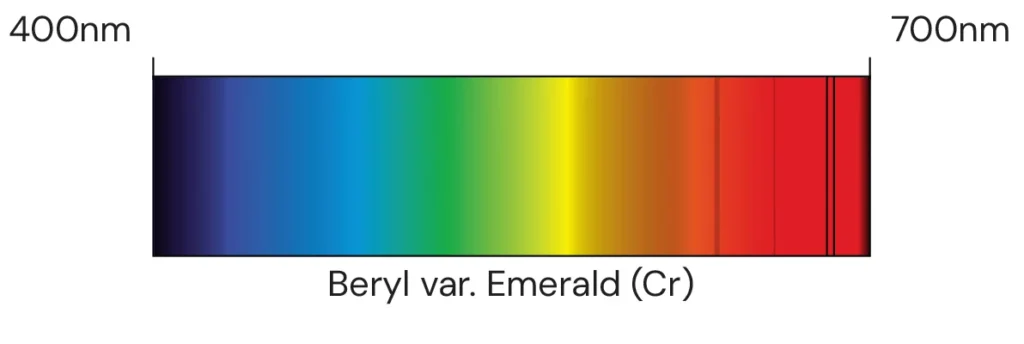
The journey of spectroscopy in understanding light and matter began centuries ago. In 1672, Sir Isaac Newton’s groundbreaking experiments with prisms revealed the visible spectrum of light, dissecting white light into its constituent colors. However, it was in the early 19th century that Joseph Fraunhofer significantly advanced the field by developing a spectroscope. His ingenious design incorporated a narrow slit to focus light and a diffraction grating to meticulously spread the spectral colors. When Fraunhofer directed daylight through his spectroscope, he observed a series of dark lines within the spectrum. These lines, now understood to represent wavelengths of light absorbed by specific chemical elements in the sun’s atmosphere, were a crucial early insight into the fingerprinting capabilities of spectral analysis. For gemmologists today, these Fraunhofer lines remain a vital reference point for calibrating and focusing spectroscope instruments.
A Century of Spectral Sleuthing: Spectroscopy’s Ascent in Gemmology
The application of spectroscopy to gemstones gained significant traction in the latter half of the 19th century. By the 1860s, researchers were meticulously recording the absorption spectra of various gemstones. Early foundational work appeared in A.H. Church’s seminal book, "Precious Stones," which detailed the spectral characteristics of zircon and almandine.
The development of the hand-held spectroscope in the 1930s marked a pivotal moment, transforming spectroscopy from a laboratory curiosity into a practical tool for gemmologists. The Gem Testing Laboratory in London played a crucial role in refining this instrument, which has since become an essential fixture in any gemmologist’s toolkit, standing shoulder-to-shoulder with the refractometer and the microscope.
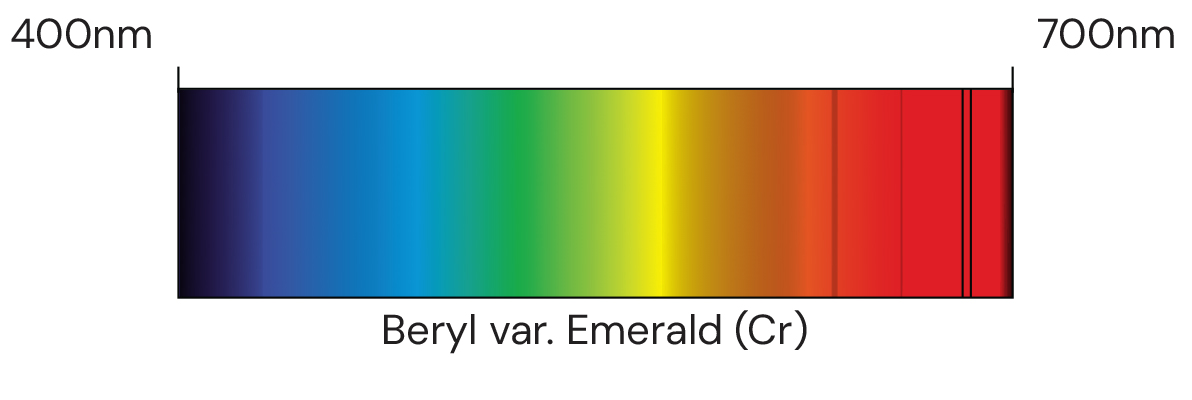
The enduring value of spectroscopy lies in its ability to reveal unique absorption and emission bands within a gemstone. The precise positions, widths, and intensities of these spectral features act as remarkably reliable indicators of a gemstone’s identity. In many cases, these spectral signatures can even help differentiate between natural and synthetic stones, and crucially, detect the presence of color treatments.
Beyond Visible Light: Expanding the Spectral Horizon
While the visible spectrum laid the groundwork, the true power of spectroscopy in gemmology was unlocked with the exploration of invisible electromagnetic radiation. The advent of more sophisticated technology allowed for the development and commercial availability of instruments that could probe these less accessible wavelengths.
The interaction of infrared radiation with materials, first observed in the early 1900s, remained largely theoretical until spectrometers became commercially viable in the 1940s. Similarly, the Raman effect, discovered in the late 1920s, required the revolutionary invention and subsequent development of lasers in the 1960s to become a practical tool for gemstone analysis. These advancements broadened the spectral window, revealing a wealth of information previously hidden from view.
Diverse Instruments, Unified Purpose: A Spectrum of Analytical Tools
The modern gemmologist has at their disposal a suite of specialized spectroscopic instruments, each offering a unique perspective on a gemstone’s composition and structure.
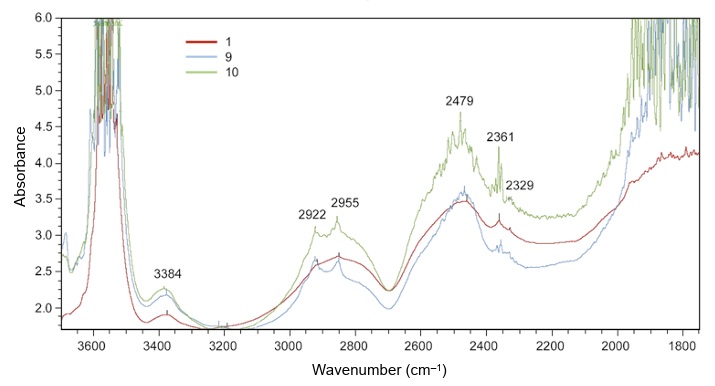
FTIR (Fourier Transform Infrared) Spectroscopy: Unveiling Molecular Signatures
FTIR spectrometers operate by measuring the absorption of infrared radiation across a range of wavelengths, typically expressed as wavenumbers (the number of waves per centimeter). Infrared wavelengths span from approximately 700 nanometers to 1 millimeter. The resulting absorption patterns provide invaluable insights for identifying gem materials, distinguishing between natural and synthetic counterparts, and detecting the presence of coatings or filling materials.
A compelling example of FTIR’s utility lies in diamond identification. Different types of diamonds exhibit distinct FTIR spectra. For instance, naturally colored blue diamonds are almost invariably Type IIb, characterized by the presence of boron and a lack of detectable nitrogen. Conversely, near-white Type I diamonds, which contain significant amounts of nitrogen (hundreds to thousands of parts per million), are generally accepted as natural. This is because most comparable synthetic diamonds contain less than five parts per million of nitrogen. Furthermore, treatments like resin impregnation, which can be difficult to detect with standard tests, often leave a distinct spectral signature in the infrared region, particularly for jadeite.
UV-Vis-NIR Spectroscopy: Probing Color and Origin
UV-Vis-NIR (Ultraviolet-Visible-Near Infrared) spectrometers scan a broader wavelength range, extending from short-wave ultraviolet to one or a few thousand nanometers. This technique is particularly adept at analyzing the color-causing elements and impurities within gemstones.
In diamonds, for example, an absorption at 415 nm, attributable to nitrogen aggregates, strongly indicates a natural origin. Conversely, absorptions at 484 nm and 884 nm, linked to nickel, and at 737 nm, associated with silicon, are more commonly observed in synthetic diamonds.
Beyond diamonds, UV-Vis-NIR spectroscopy plays a vital role in tracing the provenance of other precious stones. It can help differentiate sapphires originating from igneous versus sedimentary rocks, and in emeralds, the relative proportions of chromium and iron, which vary significantly between different mining localities, can be identified. For rare and valuable Paraiba tourmalines, the presence of characteristic copper peaks can definitively distinguish them from less costly, visually similar imitations that lack this element.
X-ray Diffractometry: Mapping the Atomic Architecture
X-rays, with their incredibly short wavelengths, interact with the atomic structures of gemstones in a phenomenon known as diffraction. X-ray diffractometers measure the precise distances between layers of atoms within a crystal lattice. Given that atoms of different elements possess distinct sizes and are arranged in unique patterns within different materials, X-ray diffraction provides a highly sensitive and definitive method for identifying mineral species.
This technique is not limited to single crystals; it can also analyze polycrystalline aggregates, including rocks, allowing for the identification of constituent mineral species. The atomic structures and symmetry of single crystals can be meticulously investigated, a process that is crucial for the characterization of newly discovered minerals. A notable historical instance is the mineral taaffeite, which was first identified and described through X-ray diffraction analysis after being found as a fashioned gemstone.
Furthermore, X-rays possess sufficient energy to dislodge electrons from the inner shells of atoms. When an electron from an outer shell moves to fill this vacancy, it emits an X-ray photon with an energy characteristic of the specific element. Detectors record these emissions, providing a partial chemical analysis of the material. This capability is instrumental in identifying gemstones, coatings, and distinguishing between natural and synthetic stones. For instance, the presence of nickel or silicon in diamonds, more typical of synthetic stones, can be readily detected. Similarly, the trace element proportions of chromium, vanadium, and iron in rubies can help differentiate between natural and synthetic origins.
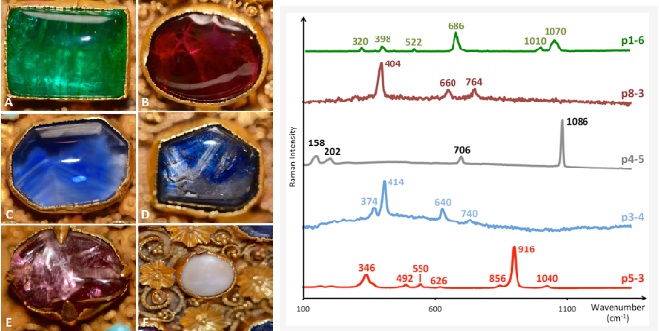
Raman Spectroscopy: Illuminating Molecular Vibrations
Raman spectroscopy utilizes a focused laser beam, typically of infrared or visible light, directed at a gemstone. While most of the light is scattered elastically at the same wavelength, a small fraction undergoes inelastic scattering, resulting in a shift in wavelength. This phenomenon is known as the Raman effect.
The differences in scattered wavelengths are displayed as a distinctive series of peaks on a screen or chart, forming a "fingerprint" that can be compared against a database to identify the material. While Raman spectroscopy is excellent for material identification, it is not always capable of distinguishing between natural and synthetic stones. However, sophisticated Raman instruments can identify inclusions, even if they are not directly exposed to the laser, as long as they are close to the surface.
The lasers used in Raman spectroscopy can also excite luminescence in gemstones. The intensity of this luminescence can be measured at different wavelengths, providing additional analytical data. This technique is particularly effective for diamonds, especially when samples are cooled to low temperatures using liquid nitrogen. While diamonds are generally robust enough to withstand this process, other gem species may be susceptible to damage. Raman spectroscopy can detect defects in diamonds at very low concentrations, offering critical evidence of their natural or synthetic origin and revealing subtle treatments, such as high-pressure, high-temperature color enhancements, which can be challenging to confirm by other methods.
Spectroscopy for the Professional Gemmologist: Precision and Provenance
While many spectroscopic methods are non-destructive and require no sample preparation, some advanced instruments may involve the removal of minute amounts of material from the gemstone’s surface, creating a microscopic pit. This highly precise sampling is often justified by the significant price premium placed on natural stones and those originating from specific, highly prized localities. The vaporized material is then analyzed by a spectrometer, allowing for detailed elemental and isotopic analysis. Through careful comparison with comprehensive databases, these analyses can provide strong evidence for a gemstone’s geographical origin.
The Evolving Landscape: Keeping Pace with Innovation
The methods employed in synthesizing and treating gemstones are becoming increasingly sophisticated. To counter these advancements, continuous improvement and innovation in spectroscopic instrumentation are essential for both gemmological laboratories and practicing gemmologists.
Spectroscopy has been a vital tool for gemmologists for over a century, and its evolution is far from over. As new challenges emerge in the identification and authentication of gemstones, spectroscopy promises to adapt and develop, remaining at the forefront of scientific gemmological analysis. The ongoing quest for accuracy and insight in the world of precious stones ensures that spectroscopy will continue to play a pivotal role in uncovering the hidden stories within every gem.
About Gem-A: The Gemmological Association of Great Britain (Gem-A) is the world’s leading provider of internationally recognized gemmological qualifications. For over 100 years, Gem-A has been dedicated to promoting gemmological education and research. Explore their accredited programs and introductory courses to deepen your understanding of gemmology.
Image Credits: Gem-A Archives