By Dambisa Moyo
August 19, 2026
The contemporary discourse surrounding artificial intelligence has been largely sequestered within the narrow confines of labor economics. We obsess over the "productivity paradox," the impending specter of job displacement, and the reallocation of human capital in an automated future. While these concerns are valid, they are fundamentally myopic. To view AI merely as a tool for corporate efficiency is to miss the horizon of its true impact.
AI represents not just a technological inflection point, but a civilizational one. By revolutionizing the three pillars that have historically defined the human experience—disease, warfare, and the structural engines of economic growth—AI is poised to alter the very terms of our existence.
The Historical Triad: Disease, War, and Wealth
Throughout the long sweep of human history, the trajectory of our species has been dictated by three volatile forces: the biological threat of disease, the existential volatility of war, and the quest for economic expansion. These forces have acted as the primary drivers of migration, innovation, and societal collapse.
Until the 21st century, these domains were governed by human limitations—our cognitive capacity, our physical speed, and our biological vulnerability. AI removes these constraints. By accelerating the discovery of complex biological patterns and optimizing logistical operations at a scale impossible for the human mind, AI is not just changing how we do things; it is changing what is possible.
Chronology of the Algorithmic Revolution
To understand our current position, we must look at the rapid maturation of AI integration:
- 2015–2020: The Heuristic Phase: AI began as a data-processing tool, focusing on narrow tasks like language translation and image recognition. These were years of foundational architecture and "Big Data" accumulation.
- 2021–2023: The Generative Leap: The emergence of Large Language Models (LLMs) shifted AI from a diagnostic tool to a generative one. We saw the democratization of synthetic content, causing the first ripples of anxiety in the global labor market.
- 2024–2025: The Integration Epoch: AI moved from digital sandboxes into the "real" world—the integration of machine learning into material science, military logistics, and precision medicine.
- 2026 and Beyond: The Autonomous Frontier: We are currently entering a phase where AI systems possess the agency to iterate on their own discoveries, particularly in pharmaceutical development and strategic defense planning, effectively removing human friction from the innovation cycle.
Supporting Data: The Magnitude of Shift
The economic and social data underscores a paradigm shift that goes beyond mere job loss:
- Pharmaceutical Discovery: Traditional drug discovery takes an average of 10–15 years at a cost of $2.5 billion per successful drug. AI-driven molecular modeling has reduced the discovery phase by nearly 60% as of late 2026, pointing toward a future where "orphan diseases" become economically viable to treat.
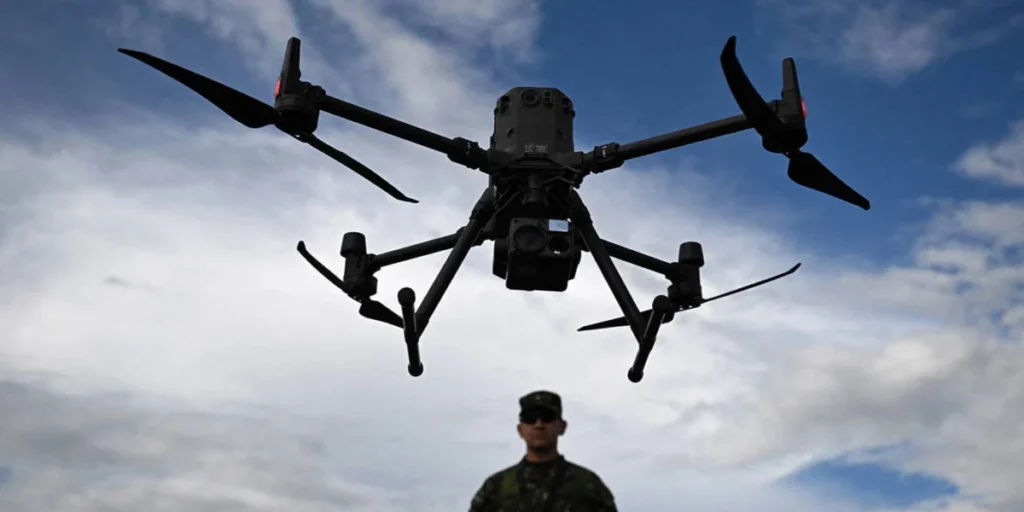
- Military Logistics: According to recent defense sector reports, AI-driven predictive maintenance and autonomous logistical coordination have increased the combat readiness of naval and aerial fleets by an estimated 22% in the last 24 months, fundamentally changing the "speed of war."
- Capital Efficiency: Investment in AI-augmented infrastructure is currently yielding a 3.5x multiplier on output compared to traditional IT investments. This is not just replacing workers; it is redefining capital intensity across the manufacturing and services sectors.
Official Responses and Geopolitical Stance
The response from global institutions has been a mixture of cautious optimism and defensive regulatory posturing.
The Regulatory Scramble
In the European Union, the implementation of the AI Act has evolved into a more stringent framework, focusing on "Human-in-the-Loop" requirements for critical infrastructure. Conversely, the United States has favored a "sectoral approach," allowing the private sector to lead innovation while enforcing antitrust measures to prevent a monopolistic concentration of compute power.
The "Global South" Perspective
Emerging economies, represented by groups such as the G77, have expressed growing concern regarding the "Digital Divide." They argue that if AI is the new engine of economic growth, those without access to advanced computational infrastructure will be relegated to a new form of technological vassalage. The United Nations has recently called for a "Global AI Commons" to ensure that the breakthroughs in medicine and energy are not gated behind the balance sheets of a few Silicon Valley titans.
Implications for Human Existence
1. The Biological Mandate: Winning the War on Disease
For millennia, human mortality was an exogenous variable, largely controlled by pathogens. AI is transforming medicine from a reactive, symptom-based discipline to a proactive, predictive one. By mapping protein structures and simulating cellular interactions, AI is shortening the gap between discovery and application. We are approaching an era where the concept of "incurable" may be relegated to the history books, fundamentally increasing human longevity and altering social structures like retirement and the intergenerational transfer of wealth.
2. The Nature of Conflict: Automated Warfare
The integration of AI into military strategy is perhaps the most harrowing development. The "algorithmic battlefield" removes the lag time between observation and response. As military systems become increasingly autonomous, the decision-making process in war moves at machine speed. This creates a terrifying "Flash War" scenario—where hostile actions are triggered by algorithmic errors before human leaders can intervene. The ethical implications of "lethal autonomous systems" remain the most contentious point of international law today.
3. Economic Growth and the End of Scarcity
Economic history is the story of managing scarcity. AI challenges this by driving down the marginal cost of intelligence. When the cost of complex cognitive labor trends toward zero, the definition of "economic value" must be rewritten. We are moving toward an economy of abundance, but one that threatens the social contract built on the exchange of labor for sustenance. If AI produces the goods and services, how do we distribute the dividends of that growth? This is the fundamental political question of the next decade.
Conclusion: The New Human Contract
We are currently operating under a legacy framework—a social, legal, and economic system designed for a world where human cognition was the primary factor of production. That world is vanishing.
The true challenge of AI is not whether it will replace our jobs, but whether we can redesign our civilization to thrive when the traditional roles of human effort—in medicine, war, and economic production—are no longer the primary variables of success. We are moving toward a future where our value as a species may no longer be tied to our output, but to our ability to define the values that govern the machines we have created.
As we stand on this precipice, we must look beyond the quarterly earnings reports and the headlines about software updates. We are rewriting the source code of human existence. The question is not what AI will do to us, but who we choose to be in a world where the constraints of the past no longer apply. The responsibility rests not with the algorithms, but with the architects of our future society.