

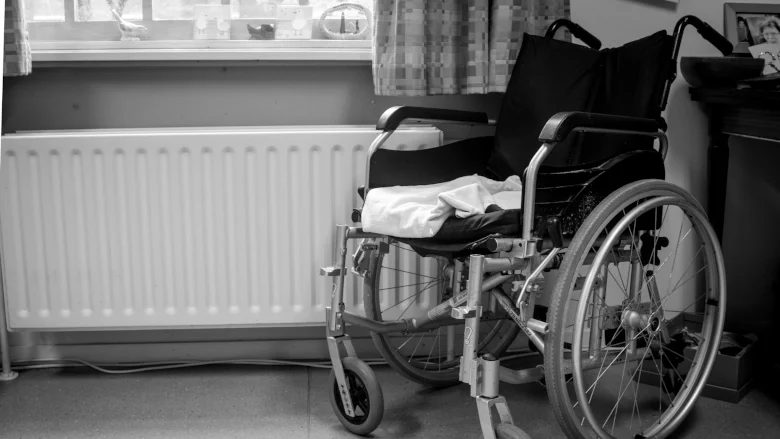
The sanctity of a care facility is defined by the safety and dignity it provides to its most vulnerable residents. However, a chilling “mystery death” at Russets Care Home in the United Kingdom has prompted a sweeping re-evaluation of how residential facilities manage internal physical security and patient oversight. Following the death of 65-year-old resident Sandra Moon, who was discovered at the base of a stairwell while strapped to her wheelchair, local authorities and care providers are grappling with systemic failures that have necessitated an urgent overhaul of safety protocols.
The Incident: A Life Cut Short
In the autumn of last year, the staff at Russets Care Home—a facility operated under the oversight of the Portsmouth City Council—discovered the body of Sandra Moon. Moon, a long-term resident of eleven years, was known to staff and fellow residents alike for her routine. Despite suffering from learning difficulties and complex health challenges, she was described as being acutely aware of her surroundings and capable of recognizing danger.
The circumstances surrounding her death were immediately flagged as highly suspicious by medical examiners and coroners. Moon was found at the bottom of a flight of stairs, having sustained fatal injuries. The critical discrepancy, however, lay in her positioning: Moon had been secured in her wheelchair. Given her physical condition and the nature of the stairwell, it was deemed highly improbable, if not physically impossible, that she could have navigated the stairs or propelled her chair into the danger zone independently.
Chronology of the Investigation
The timeline following the discovery of Ms. Moon’s body reveals a complex intersection of medical inquiry, administrative oversight, and a lack of criminal culpability, leaving many questions unanswered for the victim’s family.
- September 2025: Sandra Moon is found deceased at the base of a stairwell at Russets Care Home. Initial assessments by facility staff prompt an immediate internal notification to social services and local law enforcement.
- Late 2025 – Early 2026: A formal coroner’s inquest is opened. During this period, the Hampshire Police conduct a preliminary review. After investigating the circumstances, authorities determine that there is insufficient evidence to pursue a criminal investigation, officially categorizing the death as "unexplained."
- Mid-2026: Coroner Sarah Whitby releases a formal "Prevention of Future Deaths" report. This document acts as the primary catalyst for the subsequent security upgrades. The report explicitly challenges the notion of an accidental fall, casting doubt on the security of the stairwell door.
- Late 2026: Portsmouth City Council announces a comprehensive suite of security measures, including the installation of advanced access control systems and updated staff training protocols, effectively signaling a shift in the facility’s operational philosophy.
The Coroner’s Findings: A Failure of Containment
In her scathing report, Coroner Sarah Whitby highlighted the fundamental security lapses that allowed this tragedy to occur. "The deceased had some learning difficulties and significant health issues, but was aware of danger," Whitby wrote. "Her ability to enter the stairwell of her own accord are in doubt and it is not known if another person opened the stairwell door to enable access."
The coroner’s report serves as a diagnostic tool for the facility’s failures. By questioning how a secured, wheelchair-bound resident gained access to a restricted area, the report effectively suggests that either the physical barriers (the doors) were compromised or that human intervention—intentional or negligent—played a role in the access. The lack of a definitive explanation remains a source of deep distress for the community, underscoring the reality that in many care settings, "unexplained" is often a synonym for "avoidable."
Official Responses and Remediation
Portsmouth City Council, facing mounting scrutiny, has moved to address the deficiencies identified by the coroner. The council’s public statements reflect a pivot toward a more technology-driven safeguarding framework.
Strengthening Infrastructure
The Council stated that the primary objective was to eliminate the possibility of unauthorized access to high-risk areas. "A range of improvements have been implemented at Russets Care Home, including enhanced access controls, stairwell door alarms, strengthened risk assessment processes, and additional governance oversight," a spokesperson for the council noted.
The installation of alarm systems on stairwell doors acts as a critical secondary layer of defense. In the past, such areas were often secured by traditional locks or latches which, as demonstrated by the Moon case, can be prone to mechanical failure or human error. By integrating automated alarms, the facility now ensures that any attempt to breach these areas triggers an immediate notification to the nursing station.
Broadening the Scope of Safety
The impact of the Russets tragedy has rippled beyond the walls of the individual home. The Portsmouth City Council has confirmed that it has performed a top-down review of stairwell risks across all adult social care settings within its jurisdiction. By sharing these "lessons learned" through professional safeguarding networks, the council is attempting to turn a singular tragedy into a broader standard for regional care safety.
The Role of Technology in Vulnerable Care
The death of Sandra Moon serves as a sobering case study in the necessity of "smart" security in healthcare. In the modern era, the physical safety of patients cannot rely solely on the vigilance of staff—a group often overworked and prone to the realities of human error.
Access Control Systems
In healthcare environments, access control is not merely about keeping intruders out; it is about keeping residents safe from the architecture of their own environment. Advanced access control systems, such as magnetic locks with delayed egress or biometric verification, can be calibrated to the specific risk profiles of residents. For individuals with mobility issues or cognitive impairments, these systems act as a digital safety net.
The Human-Technology Balance
While technology provides the hardware of safety, it must be supported by a culture of rigorous risk assessment. The council’s mention of "strengthened risk assessment processes" suggests an understanding that hardware is only as good as the policy governing it. If staff do not properly categorize the mobility and mental capacity of a resident, even the most advanced alarm system may be rendered useless.
Implications for the Care Industry
The Russets Care Home incident acts as a bellwether for the wider care industry. As populations age and the complexity of care needs increases, facilities are facing increased pressure to maintain high-tech security standards while preserving a "homelike" atmosphere.
Accountability and Transparency
The fact that this case led to a "Prevention of Future Deaths" report highlights the importance of institutional transparency. When a resident dies under mysterious circumstances, the impetus for reform often rests on the external pressure provided by coroners and judicial oversight. The industry is moving toward a model where "governance oversight" is no longer a buzzword, but a measurable metric of safety.
The Future of Safeguarding
Moving forward, care facilities are likely to see an increase in:
- Integrated Monitoring: Real-time tracking of resident location within the facility, particularly for those with cognitive decline.
- Environmental Audits: Regular, third-party inspections of physical infrastructure—stairwells, elevators, and exits—specifically designed to identify potential hazards for residents with mobility aids.
- Staff Training: Mandatory training on the nuances of patient-centric security, emphasizing that resident safety involves understanding individual risk, not just general facility safety.
Conclusion
The passing of Sandra Moon remains a profound tragedy, one that has left a permanent mark on the community of Portsmouth and the staff at Russets Care Home. While the changes currently being implemented—the alarms, the updated governance, the systemic reviews—are welcome, they arrive too late for the woman who lost her life in a stairwell that should have been a place of safety.
However, the legacy of this event lies in the paradigm shift it has forced. By acknowledging that traditional security measures were insufficient to protect a vulnerable resident, the authorities have paved the way for a more rigorous, technology-integrated approach to care. In the final analysis, the duty of a care facility is to ensure that every resident is protected from the vulnerabilities of their condition and the potential dangers of their surroundings. As the sector continues to evolve, the lessons learned from the Russets tragedy must remain at the forefront of the conversation regarding the safety, dignity, and security of our most vulnerable citizens.



