Beneath the serene blue waters south of Japan lies a subterranean titan that once reshaped the Holocene epoch. New research conducted by a team at Kobe University has revealed that the Kikai caldera—a massive, mostly submerged volcanic system—is not merely a relic of the past, but an active, breathing entity. Data indicates that a vast reservoir of magma is currently refilling beneath the caldera, providing scientists with a rare, real-time look at how Earth’s most formidable volcanoes recover from catastrophic eruptions.
This discovery, published in the journal Communications Earth & Environment, offers a significant leap forward in our ability to monitor "super-volcanoes." By mapping the plumbing system of Kikai, researchers hope to decode the warning signs that precede giant eruptions, potentially offering a template for understanding similar systems globally, including the famed Yellowstone caldera in the United States and the Toba system in Indonesia.
A Legacy of Catastrophe: The Holocene’s Largest Eruption
To understand the gravity of this discovery, one must look back to the origins of the Kikai caldera. Roughly 7,300 years ago, Kikai unleashed the most powerful volcanic event of the current Holocene epoch. This was not a typical volcanic eruption; it was a "caldera-forming" event of such immense scale that the earth literally buckled under the pressure.
When a volcano of this magnitude erupts, the sheer volume of magma expelled is so vast that the subterranean reservoir collapses in on itself. Instead of the iconic, towering mountain profile, the aftermath is a wide, sunken depression—a caldera. The scale of the original Kikai event is almost incomprehensible: the magma displaced in that single eruption could have buried New York City’s Central Park under 12 kilometers of molten rock.
These systems are notoriously complex. Unlike smaller volcanoes that operate on predictable cycles, giant calderas are enigmatic. While scientists know they are capable of multiple eruptions, the specific mechanisms that allow them to accumulate the necessary volume of magma over millennia have remained largely theoretical—until now.
Seismic Imaging: Listening to the Earth’s Heartbeat
Investigating an underwater volcano presents a unique set of challenges, but for the team led by Kobe University geophysicist Nobukazu Seama, the ocean proved to be an unexpected ally. Because the Kikai caldera is largely submerged, researchers were granted a unique "blank canvas" for systematic, large-scale geophysical surveying.
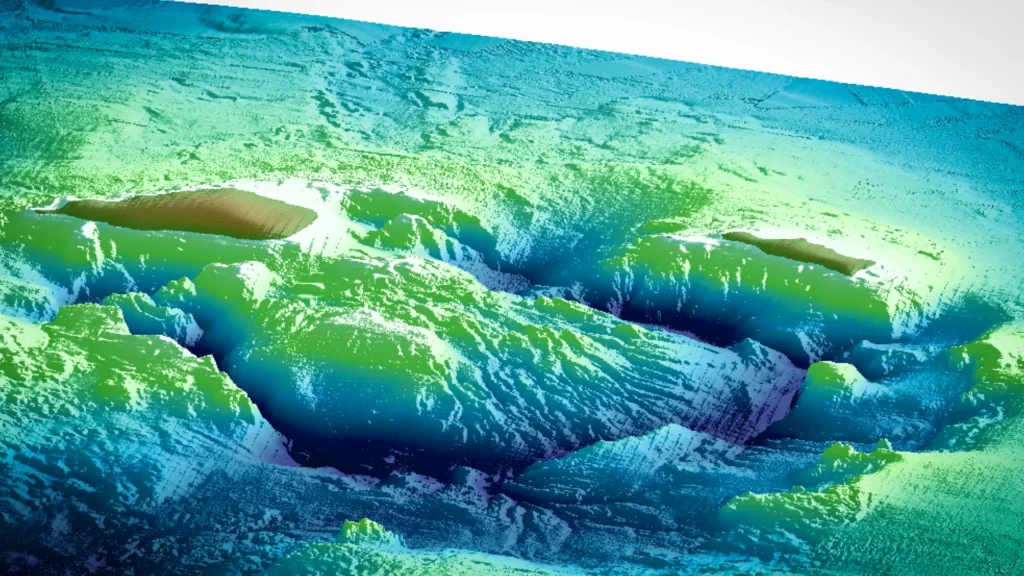
Working in collaboration with the Japan Agency for Marine-Earth Science and Technology (JAMSTEC), the team deployed a sophisticated array of instruments to peer through the ocean floor. They utilized airgun arrays—devices capable of producing controlled, high-intensity seismic pulses—to "ping" the geological structures beneath the seabed. By placing a network of seismometers on the ocean floor to record how these seismic waves traveled through the crust, the researchers were able to create a high-resolution tomographic image of the volcanic subsurface.
"Seismic waves change speed and direction depending on the materials they pass through," Dr. Seama explained. "By measuring those changes, we can build an image of underground structures and identify regions that may contain partially molten rock."
The data revealed a substantial, magma-rich region located directly beneath the epicenter of the ancient 7,300-year-old eruption. The shape and extent of this reservoir confirm that it is the very same "plumbing system" that fueled the historic catastrophe, a finding that definitively proves these giant reservoirs can remain active for thousands of years.
Chronology of a Rebuilding System
The current state of the Kikai caldera is the result of a process that has been unfolding over millennia. Following the massive collapse 7,300 years ago, the system did not go dormant. Instead, it entered a long, slow period of recovery.
- 7,300 Years Ago: The Kikai caldera-forming eruption occurs, creating a massive depression and emptying the primary magma chamber.
- 3,900 Years Ago: A new lava dome begins to emerge near the center of the caldera. The formation of a lava dome is a telltale sign of volcanic activity; it occurs when viscous, thick magma rises slowly to the surface, piling up rather than flowing away.
- The Present Day: The research team has confirmed that this lava dome is part of a larger, ongoing process of replenishment. Chemical analyses of the material released by the dome show a clear distinction from the magma released during the ancient super-eruption.
This chemical signature is the "smoking gun" that proves fresh, new magma is being injected into the system. It suggests that the reservoir is not merely stagnant, but is actively being "recharged" by deep-seated volcanic processes.
Official Responses and Scientific Implications
The scientific community has received the findings with a mix of fascination and professional caution. Dr. Seama and his colleagues are quick to emphasize that this discovery does not mean Kikai is on the verge of another catastrophic eruption. Instead, the evidence provides a clearer understanding of the "re-injection model"—a theory positing that giant calderas rebuild their capacity through the slow, intermittent addition of new molten material.
"This magma re-injection model is consistent with the existence of large shallow magma reservoirs beneath other giant calderas like Yellowstone and Toba," Dr. Seama stated. "We want to refine the methods that have proved to be so useful in this study to more deeply understand the re-injection processes."
The implications for global hazard monitoring are profound. By observing the speed at which fresh magma enters these reservoirs, and analyzing how it affects the surrounding crust, volcanologists may eventually be able to differentiate between the standard "breathing" of a dormant volcano and the critical, rapid expansion that precedes a major event.
The Japanese government, through the Ministry of Education, Culture, Sports, Science and Technology (MEXT), has prioritized this research as part of its ongoing earthquake and volcano hazard reduction programs. The collaboration with JAMSTEC ensures that this, and future studies, will continue to leverage cutting-edge marine technology to monitor these deep-seated threats.
The Future of Volcano Forecasting
The study of Kikai is a gateway to a broader understanding of planetary mechanics. As researchers continue to monitor the influx of magma beneath the caldera, the focus is shifting toward "early warning" indicators.
For many years, the primary challenge in forecasting giant eruptions has been the lack of data regarding the state of the "reservoir" itself. Because these chambers exist miles beneath the surface, they are often invisible to traditional satellite observation or surface monitoring. The success of the Kobe University team in utilizing seafloor seismic imaging provides a roadmap for future monitoring missions at other major volcanic sites.
In the case of Kikai, the reservoir is currently in a state of rebuilding. While there is no immediate cause for public alarm, the existence of a substantial, active magma chamber confirms that the system is "alive." Moving forward, the goal of the international scientific community is to translate these static images into a dynamic monitoring network. By establishing a baseline of how the reservoir changes over time, scientists hope to eventually identify the specific physical and chemical "signatures" that mark the transition from a period of quiet replenishment to a period of impending eruption.
The Kikai research stands as a testament to the importance of long-term geological surveillance. It reminds us that Earth’s most transformative events—those capable of altering global climates and topography—are rarely spontaneous. They are the result of immense, slow-motion processes that, with the right technology and persistence, we are finally beginning to see with clarity. As the team at Kobe University continues to refine their seismic techniques, they move one step closer to their ultimate objective: turning the mystery of the super-volcano into a manageable, monitored, and understood phenomenon.
This research was funded by the Ministry of Education, Culture, Sports, Science and Technology (MEXT) (The Third Earthquake and Volcano Hazards Observation and Research Program) and the Japan Society for the Promotion of Science (grant 20H00199).